
Air Canada has just unveiled the new cabins for its Boeing 787-10 and Airbus A321XLR aircraft that will be coming into the fleet, and its new “Glowing Hearted” design language. I spoke to the airline’s Executive Vice President and Chief Operating Officer, Mark Nasr, to learn more about the products and the airline’s plans to carry those through the rest of its fleet.
We’ve seen a lot of new product refreshes – within the last year American Airlines debuted their new Boeing 787-9 business class and their Airbus A321XLR. United Airlines introduced their new 787-9 Polaris cabin. Delta just announced new business products on its Airbus A350-1000 and a better – but 9 year old seat – for their Airbus A330s. This is a very competitive business, and Air Canada’s new cabins look fantastic.
From video, imagery and descriptions it’s clear that the details matter. Air Canada doesn’t just lead with product attributes like bed size, they highlight “red stitching and bespoke fabrics provide a subtle Canadian touch paired with a palette of greys and stone.” “Natural wood grain details are complemented by bronze metal accents.” “Leather-grain surfaces and metal finishes.”
This product is about the details in design, and I’m here for it.
On the Airbus A321XLR, a backlit canopy of maple leaves for an unmistakably Canadian welcome for every customer as they board.
On the Boeing 787-10, premium customers are greeted by a wave-like entrance monument, inspired by Canada’s waterways and anchored by the Air Canada rondelle cast in bronze.
Air Canada’s New Boeing 787-10s
Air Canada has a firm order for 14 aircraft, each with 332 seats:
- 42 business class seats (4 of which are ‘Signature Plus Suites’)
- 28 premium economy seats
- 262 economy seats
The business class seat is the Elevate Ascent (née Adient Ascent) used by both their joint venture partner United Airlines for its new Polaris Suite, as well as by Qatar Airways on its Boeing 787-9, American Airlines and Alaska Airlines. The differences, then, are in customization.
Like American and United (and JetBlue and Virgin Atlantic) there’s extra space at the front of the cabin, and that gets leveraged for Air Canada Signature Plus which feature a 2 meter bed (2 inches longer than Delta’s new bed). The center seats offer companion guest seats as well as fully retractable privacy panels. That allows up to 4 people traveling together to share the two spaces inflight, or for a solo passenger to maintain privacy from other passengers.
These feature:
- A 27-inch 4K OLED in-flight entertainment screen with Bluetooth audio.
- A quartzite stone table and a guest seat for visits while at cruising altitude.
- Two centre suites with a fully retractable sliding privacy panel, creating an open social space for up to four (for use at cruise only).
- Seats with multiple high-powered USB-C and AC outlets.
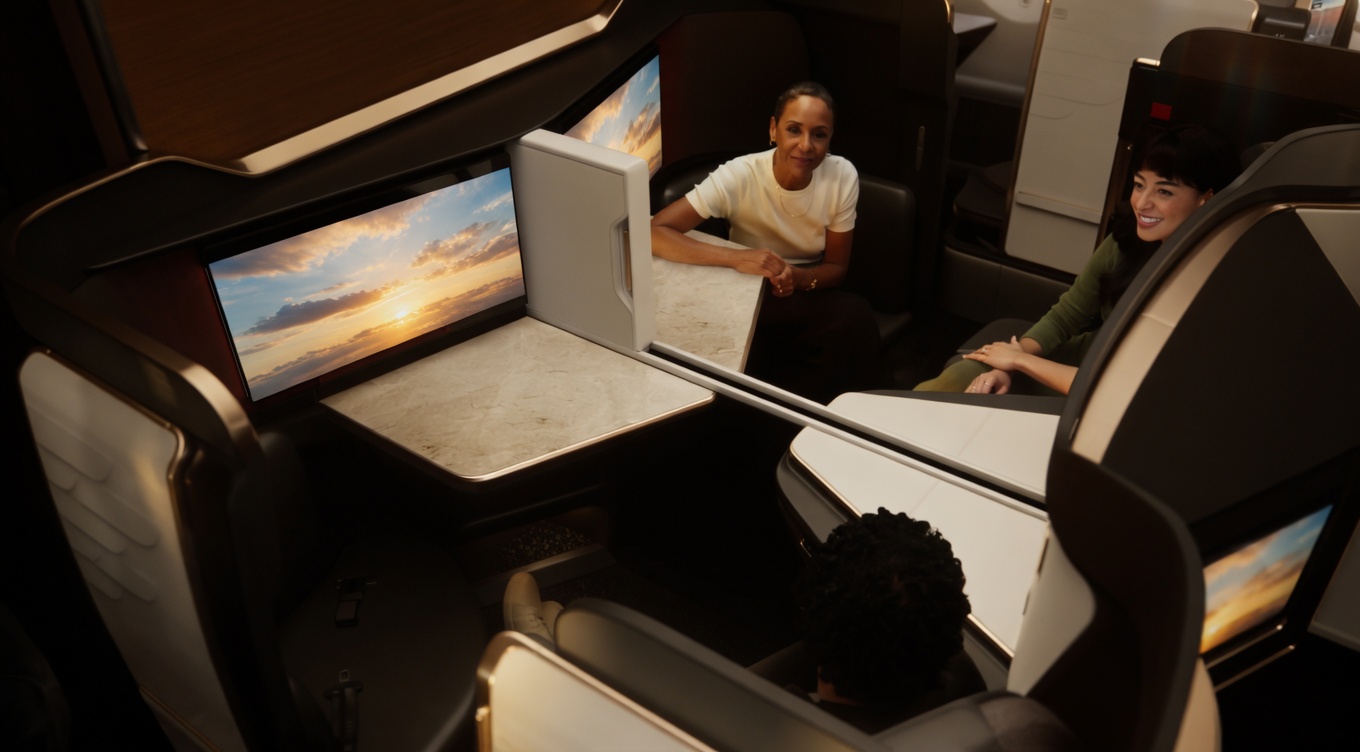
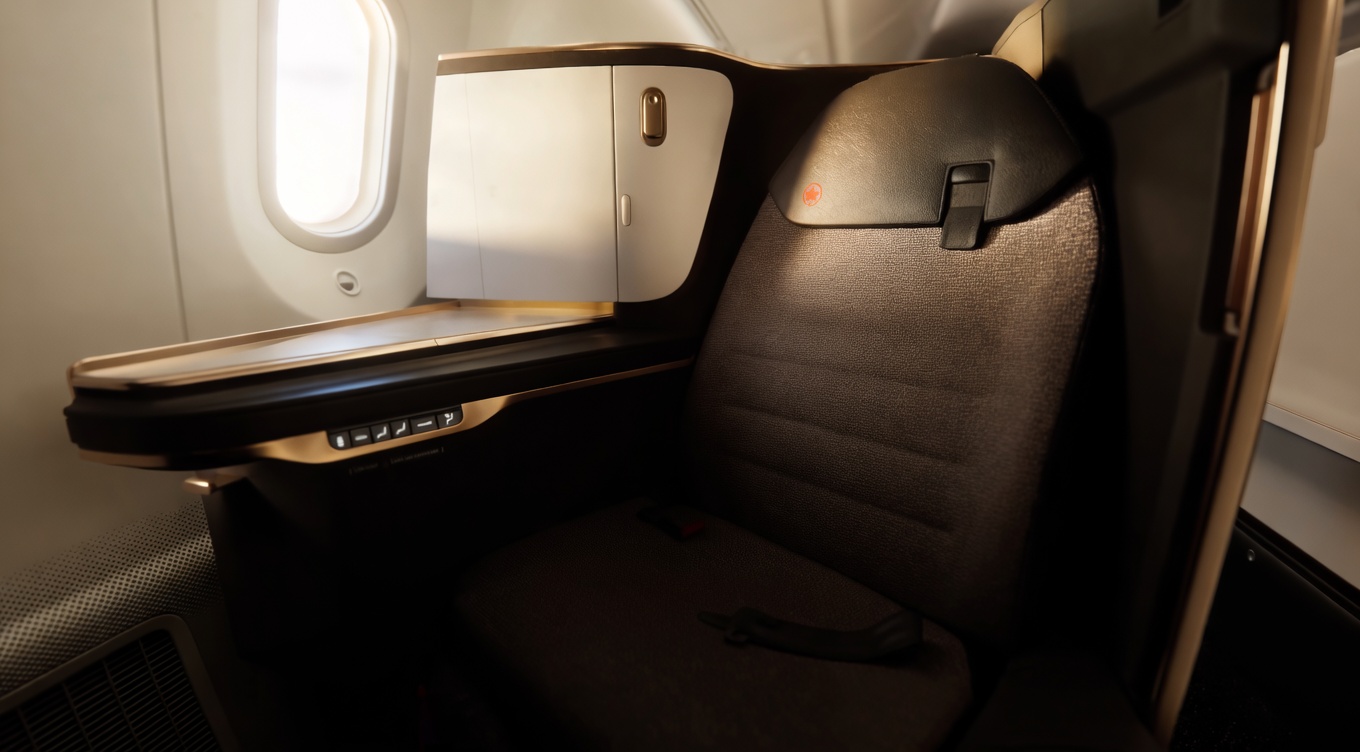
Business class offers what’s become standard for top of the industry products – lie flat direct aisle access with privacy panels, a 19-inch 4K screen with bluetooth, as well as multiple AC and USB-C outlets.
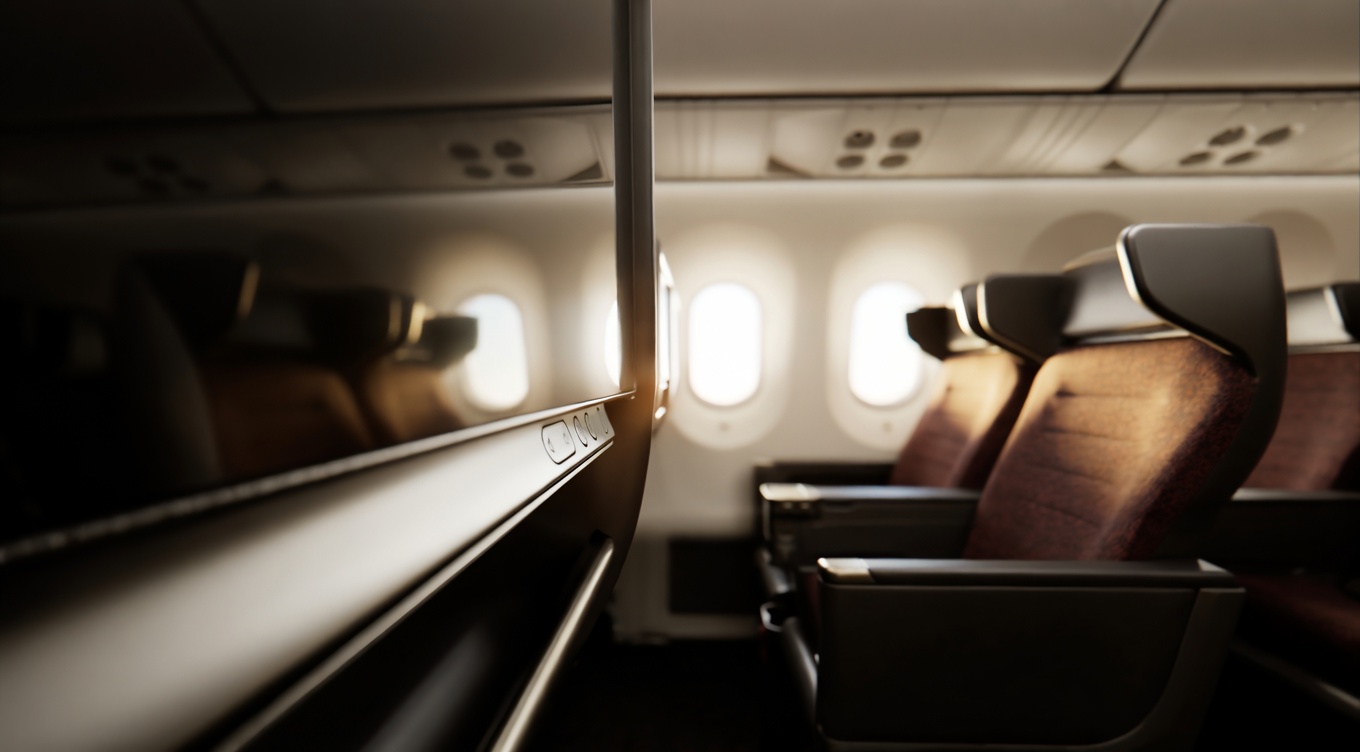
Premium economy Recaro seats have privacy wings creating a sense of separateness from the cabin, since you don’t see your neighbors so much (even if someone walking down the aisle would see you). There are 16-inch 4K entertainment screens with bluetook, AC and USB power, and seat storage as well as bottle holders.
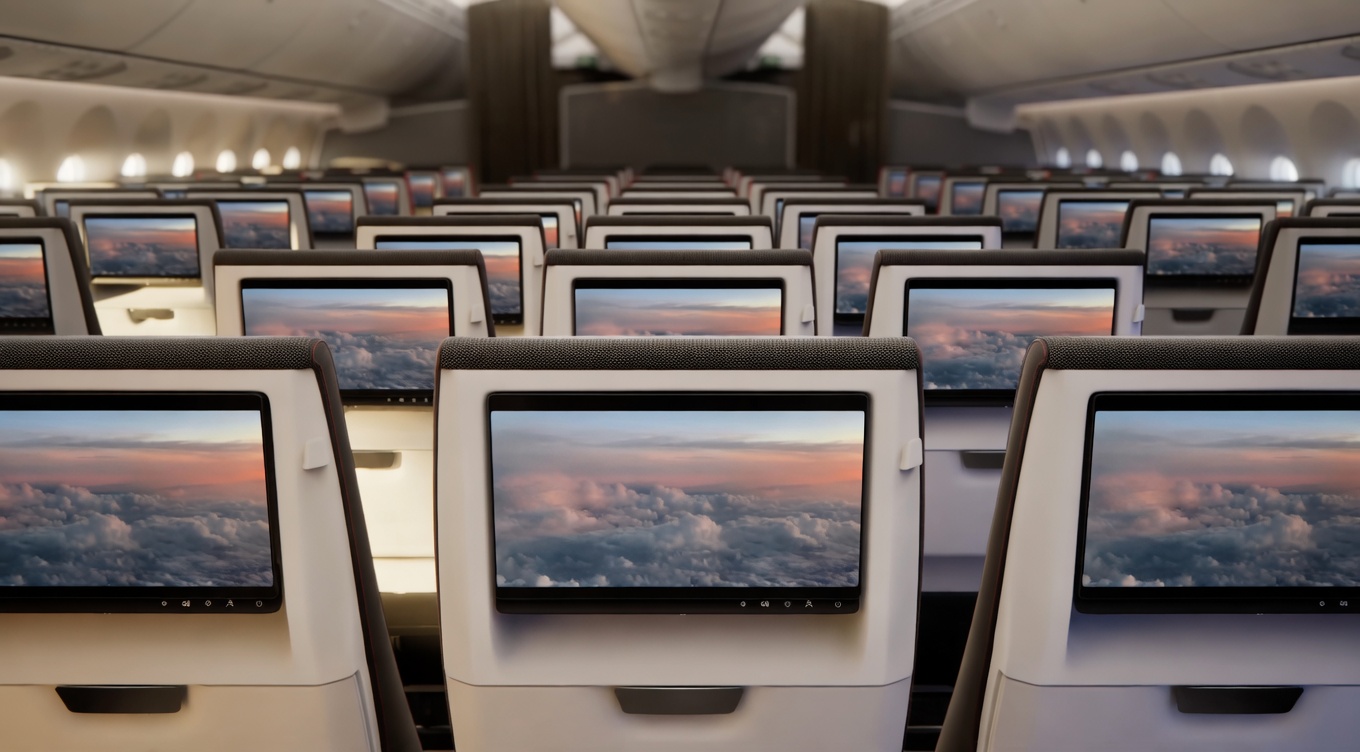
Coach has 13-inch entertainment screens with bluetooth, AC and USB power. The seats have tablet holders.
Air Canada expects their first Boeing 787-10 to enter service by end of the year. As their most premium aircraft we can expect it to fly premium routes, so London Heathrow is a good bet to start.
Air Canada’s New A321XLRs
Air Canada’s order of 30 Airbus A321XLRs will allow narrowbody planes to fly long distances – short transatlantics from the East Coast of Canada (Montreal and Toronto), premium routes across Canada, and between Canada and the United States.
This plane should fly on routes like Montreal and Toronto to Tenerife (a rare winter route to Europe), to Berlin and to Palma de Mallorca. A coming update to the Pratt & Whitney geared turbofan engine should give them additional thrust and range. It will begin by flying transcon routes within Canada.
- 14 business class seats
- 168 coach seats
Business class will offer lie flat seats on the Collins Aurora platform with direct aisle access, one seat on each side of the aisle. These will be suites with privacy panels, along with wireless charging and AC and USB-C power and 19 inch 4K entertainment screens with Bluetooth audio..
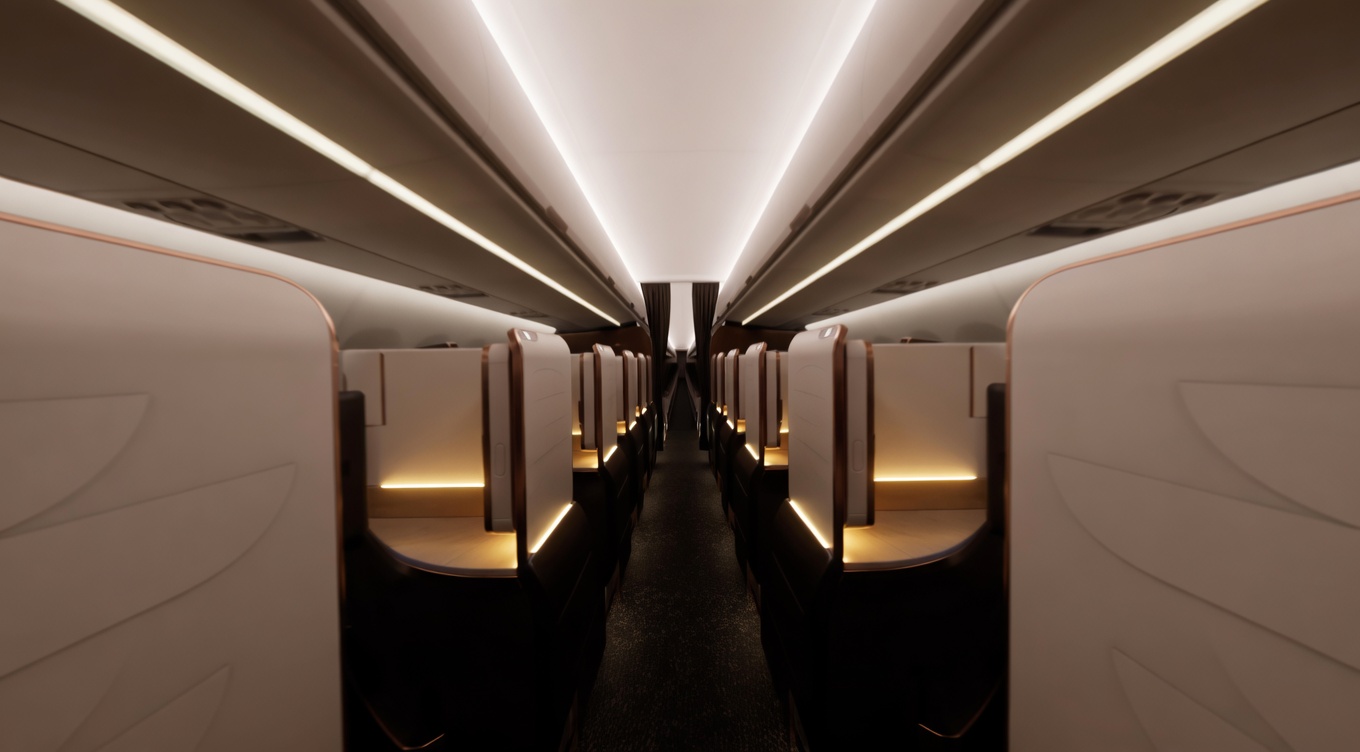
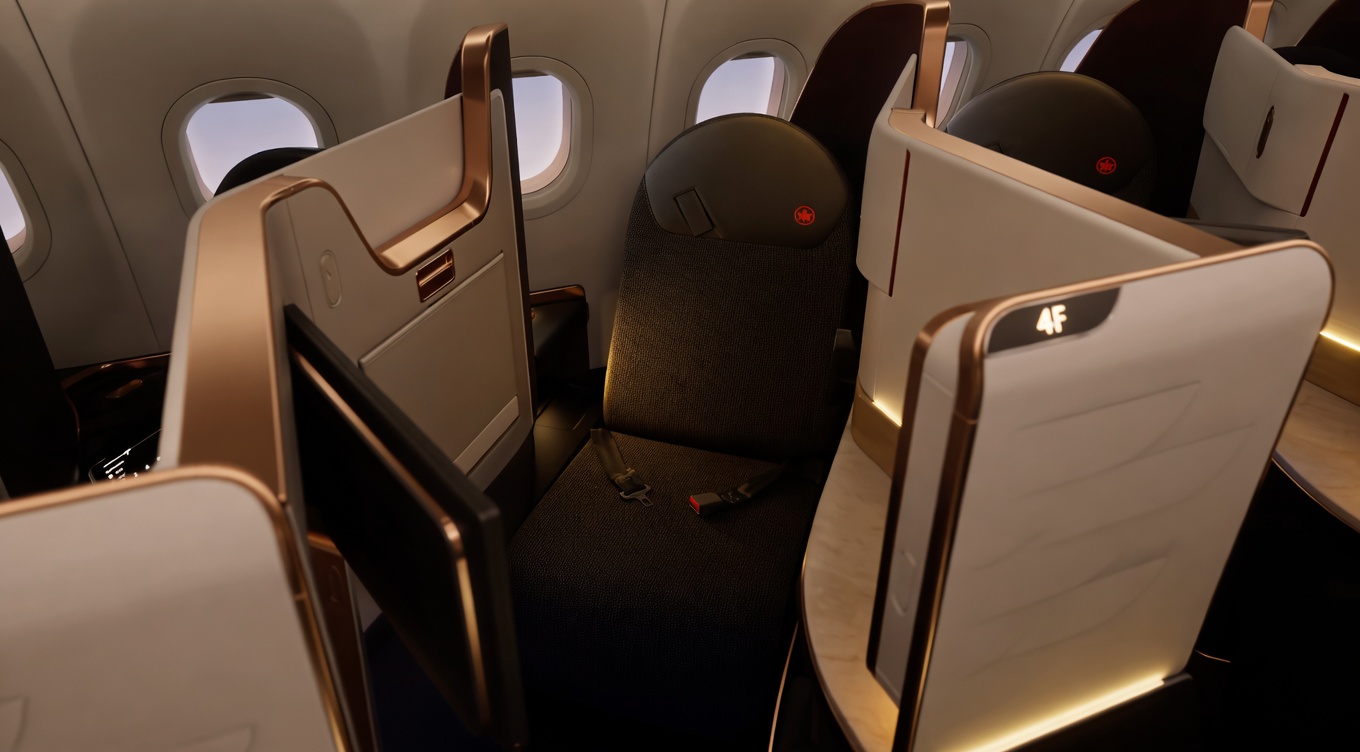
There are no doors on the XLR suite. Mark Nasr told me that it’s easier to put the door on, since other airlines already have a door on that seat platform. They had to do additional design and certification work without it – but it gets them a bed that’s 2 inches longer on either side, and the cabin aisle is 5 inches wider at elbow level.
Plus, the oversized Airspace bins come down so far, that the doors can’t be very tall, and don’t provide much privacy.
So while they have the door on the 787-10, and are committed to it for widebodies, they think it’s a better experience without it.
It all comes down to the tradeoff of inches in a narrowbody aircraft – the same reason for the herringbone seat that faces away from the window. I think a door is less important at your feet than it is along your side. But I also prefer the Stelia Opera and Safran Vue seats that give you forward or more traditional window views. They also take up more space in the cabin. I can’t wait to fly the aircraft and see whether I think that the doors are actually a net negative on this plane or not.
This aircraft also won’t have premium economy. Mark Nasr says that the economics of premium economy isn’t going to work as well for this plane, in the markets they’ll be using it. They need to make it work for their network.
While it’s “great transatlantic” they’re also going to be using it on premium cross-country routes within Canada, “some Caribbean and Latin flying,” and while “business class is just as good” on those routes as across the Atlantic, the economic profile for Los Angeles and San Francisco to Toronto as well as premium domestic flying and leisure sun routes won’t work as well.
Nonetheless, having true lie flat business is going to be a strong advantage for one-stop business class. This should help them compete for and grow share in the U.S. transoceanic market.
There will be 36 extra legroom coach seats. Economy seatback screens are 14-inch, with Bluetooth audio. The tray table is bi-fold with built-in tablet holder.
One Easter egg of sorts is an active surface that they’ve installed, using new technology borrowed from the automotive industry. It allows them to broadcast text behind solid surfaces. So the business class seat, in lie flat mode, will reveal a leather, cloth-like surface. When you touch it, it lights up but isn’t very bright (so as not to disturb you as you come out of sleep). It’ll show how long is left in the flight along with other information, and allow you to make seat adjustments. It’s inspired by the four inch panel on the left side of the Qantas A380 first class suite.
They’ll be taking delivery of their first Airbus A321XLR in just over a week, and expect it to enter revenue service by late May.
Will Business Class Doors Be Certified When The 787-10 Enters Service?
American Airlines launched its new business class products on both its Boeing 787-9 and Airbus A321XLRs (different seats each) without working doors. The doors hadn’t yet been certified by regulators. United Airlines has the same issue on its new 787-9 Polaris Suites.
So I asked Mark Nasr about the path to certification on the Air Canada 787-10. He acknowledged that while “a few airlines have recently taken delivery of new cabins with the same seating platform with doors locked” referring to American and United which both use the Adient Ascent seat, it’s “too soon to say for sure if [Air Canada will have door certification] right in time by entry to service.”
He says there are “multiple ways to achieve the objective,” that they are both following the same path as other airlines as well as a separate one, and that they’re committed to having customers able to benefit from the full features of the product right away.
Plans To Reconfigure Existing Aircraft
Mark tells me that they “absolutely plan to reconfigure” existing planes to this new cabin and design standard – that they will retrofit their fleet of Boeing 787s, “probably” the 777s, but not their Airbus 330s.
For the Airbus A330s, they’ve reconfigured 18 of their 20 aircraft with the current Super Diamond seat, and he noted that the remaining two former Singapore Airlines planes will be reconfigured to that standard as well.

Legacy Singapore Airlines Business Class Seats
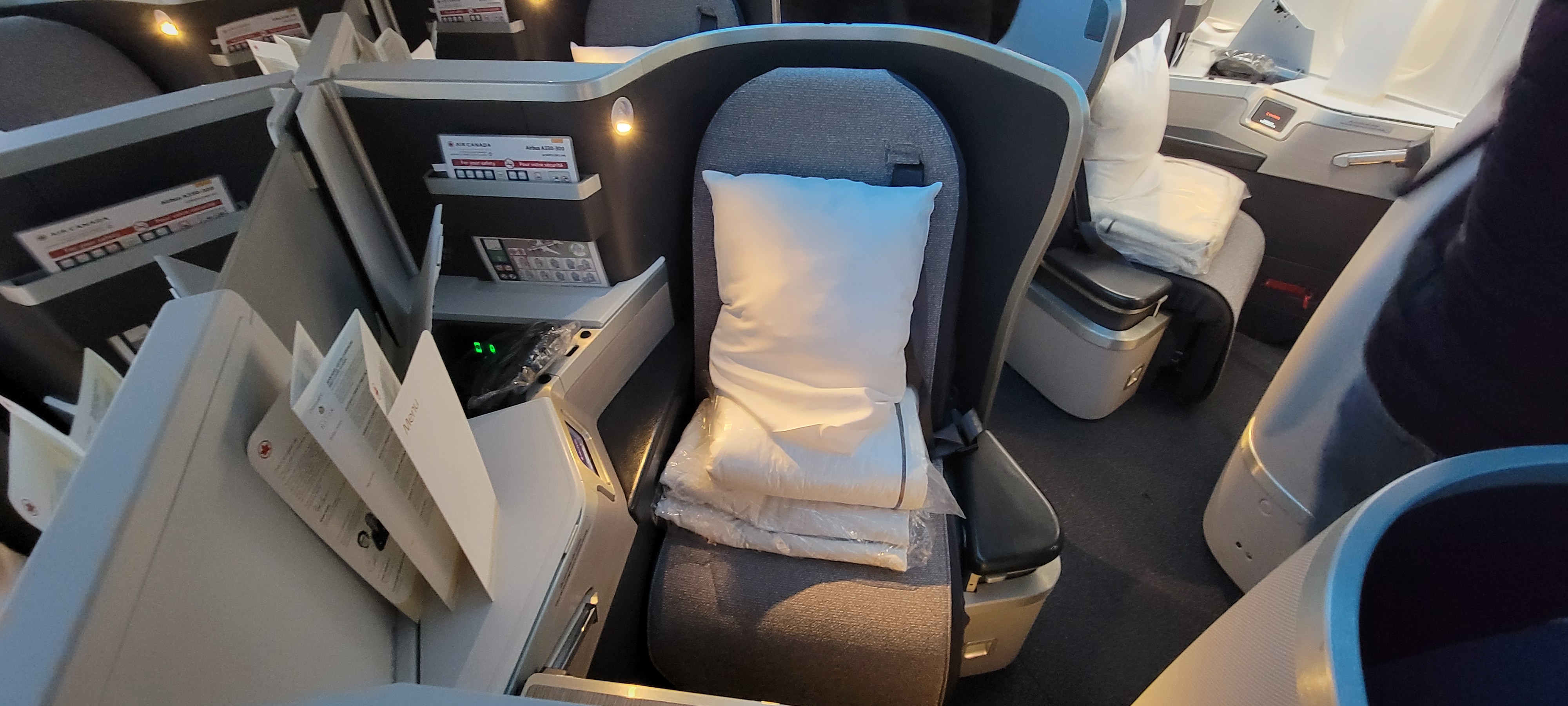
Air Canada Super Diamond Seats
What Went Into Designing These Cabins
These seats and cabins will be an upgrade for Air Canada, but Nasr emphasized that “details matter a lot.” He recognizes that they are “using seating platforms that many other airlines are using or will debut,” so while the hard product may be the same, they still want the experience to be “totally different.”
Looking at other airline new products, where brand new cabins will have scuff marks, scratched seats, and beaten up lavatories, they went through a series of testing, changes, and materials investments wanting to avoid “that kind of wear and tear on seats.”
Their new signature interior will come with real improvements to the soft product, which will be announced this summer. That will “extend to all of fleet types not just these two [and will be] launching sooner and scaling.” Come the summer they’ll really be talking about Glowing Hearted and the soft materials.
The soft product rollout is meant to be a change to every element of the soft product, from digital to food and beverage, to how wifi login is done – “a holistic approach of soft product and service delivery” – and might include taking preorder meals a step further “like in Southeast Asia” (presumably a reference to Singapore Airlines ‘Book the Cook’ although Mark did not say this).
Today’s announcement is about two plane types, that’s about their whole product suite, so they see them as different announcements.
They’ve been working with flight attendants boht on the soft product improvements, but also on service flow and cabin design of the 787-10s and A321XLRs. They’ve redesigned the Boeing 787 rear galley. They committed that the A321XLR experience wouldn’t be less than the widebody experience across the Atlantic.
That meant customizing not just galleys but seat designs, as well as staff roles onboard. Nasr gave me the example of the Airbus A321XLR business class seat – they “came up with IP that other airlines” license and use; their inflight entertainment screen has a smaller bezel. They sculpted it to the seat in a way that “gives 3-4 extra inches when the TV is open to pass service items.”
I specifically asked about this, given the problem American Airlines has had, requiring passengers to stow their TVs for meal service. He sat in the foam and wood mockups o fthe seat himself, as well as the first production of the seat. And he assures that flight attendants “can pass meal trays with TVs open” and passengers “can leave their meal tray on the side console.”
In fact, they “designed a release button on the bottom of the screen” so that it pivots “closer to the flight attendant, the flight attendant can open or close monitors from the aisle.” Details matter.
How A Business Class Seat is Judged
British Airways pioneered fully flat seats in business class over a quarter century ago. Twenty years ago that was still a differentiator. United Airlines launched this in 2006, while American Airlines didn’t have it until their Boeing 777-300ER in 2013. American’s new seat – the first of many at the airline across its fleet – offered direct aisle access.
But by 2016, when United announced Polaris, they were behind without direct aisle access. And so was British Airways, until they announced their current Club World seat in 2019. Neither one had direct aisle access for all of its business class seats.
BA, though adopted something that several airlines were already moving towards – suites with doors. JetBlue was the first airline to put a door on a business class suite, but it wasn’t on all the seats in the cabin or flying long haul. Qatar Airways was the first with long haul doors. Delta often claimed they were first, but Qatar beat them to market. Now Delta, which was the third to offer doors, says they were first in a new category: U.S. airline to offer doors throughout the entire business cabin.
Doors have become something of a standard, like direct aisle access had been, and fully flat before that. It’s interesting that they’ve decided not to do doors on their A321XLR, but they believe the tradeoff on a narrowbody gets them a better experience.
Those are basic attributes, though, and nobody has really come up with anything for business class beyond that. There are sometimes front rows of business class with extra space, like you’ll find on this new Air Canada seat, Virgin Atlantic, JetBlue, American and United. But anything more than that – like a separate bedroom and private shower – is the province of true first class or beyond.
And that means most business class differentiation now comes down to:
- how much space is each seat allocated?
- industrial design
- materials
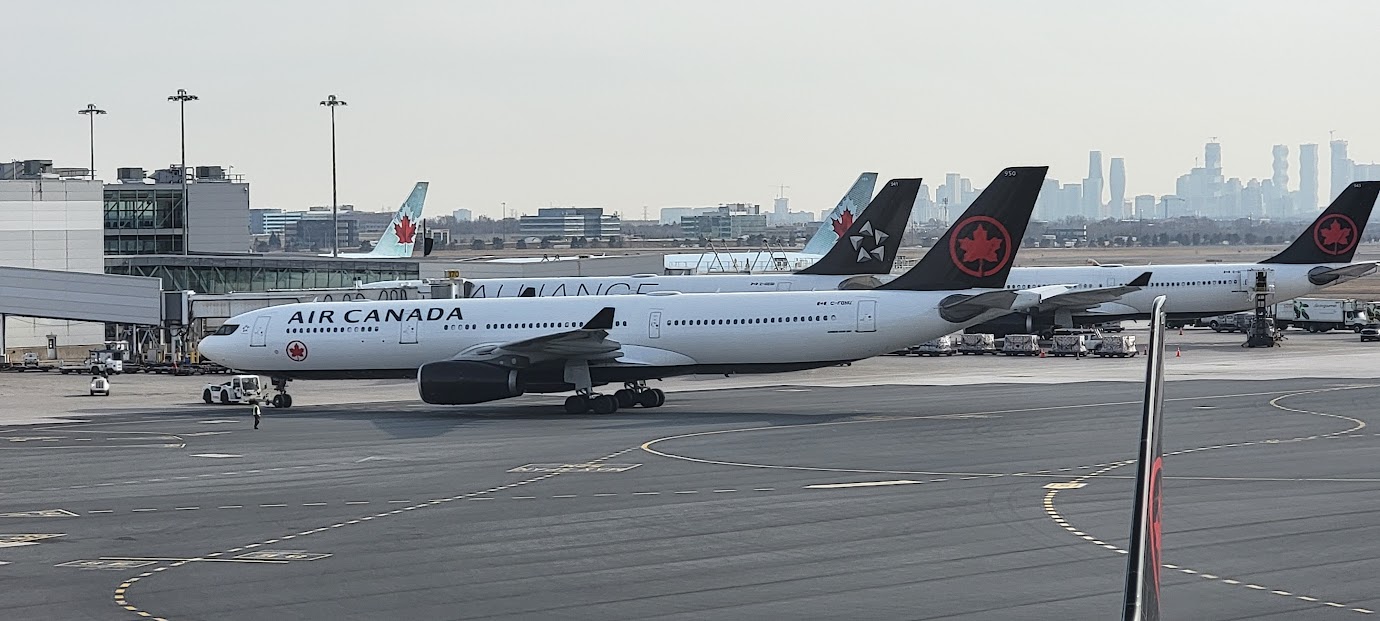
How comfortable is the seat? What kind of materials are used? How much storage is there, and is that storage accessible? Does the seat seem clean and well maintained, is it soft and supportive on a long journey (since you’ll be sitting in it for so many hours)? How is the seat angled? What color scheme is used, and does the whole cabin feel peaceful and premium?
These are seemingly small details but they make the difference between a seat that checks the basic hardware boxes and an elevated experience that sets the airline apart – alongside, of course, things like service, food and beverage, and amenities.
I found Air Canada’s business class to be perfectly fine already, and was happy to fly it. I think these cabins look absolutely gorgeous. They’ll certainly check the boxes of fully flat, direct aisle access, with privacy.
And it’s clear that a lot of thought has gone into the details – but how that cashes out in practice and compares to the best products in the industry comes down to how those details work in practice to allow for calm, comfort and sleep and that’s something I won’t actually know until I’ve experienced it.



If there’s saver space available and my size 14 feet can fit in the foot cubby then this is great news indeed.
This all looks great but it won’t amount to much when the service from cabin crew is institutionally mediocre.
Wow! Beautiful! And well-done on the A321XLRs, actually going with lie-flat. This is the way. More narrow-bodies with lie-flat, please!
(For some reason, Delta gave up on that, while American, United, and even Air Canada seem to be managing it. @Tim Dunn, lie-flat is superior to recliners.)
@Gary: Cf. Frontier preferred seating.
Interesting to see Asian and Middle East carriers installing UHD screens while North American ones are still stuck with simple OLEDs that are almost a decade old.
@Mary — I’ll say, ANA’s newer business class “The Room” has the largest, most vivid screen I’ve ever seen in J. Their First Class screen is like a Jumbotron!
Good to see Mark Nasr and Scott O’Leary, “COInsider” from Continental, make good at Air Canada
Refreshing to see interiors with nice fabrics and a warm palette