
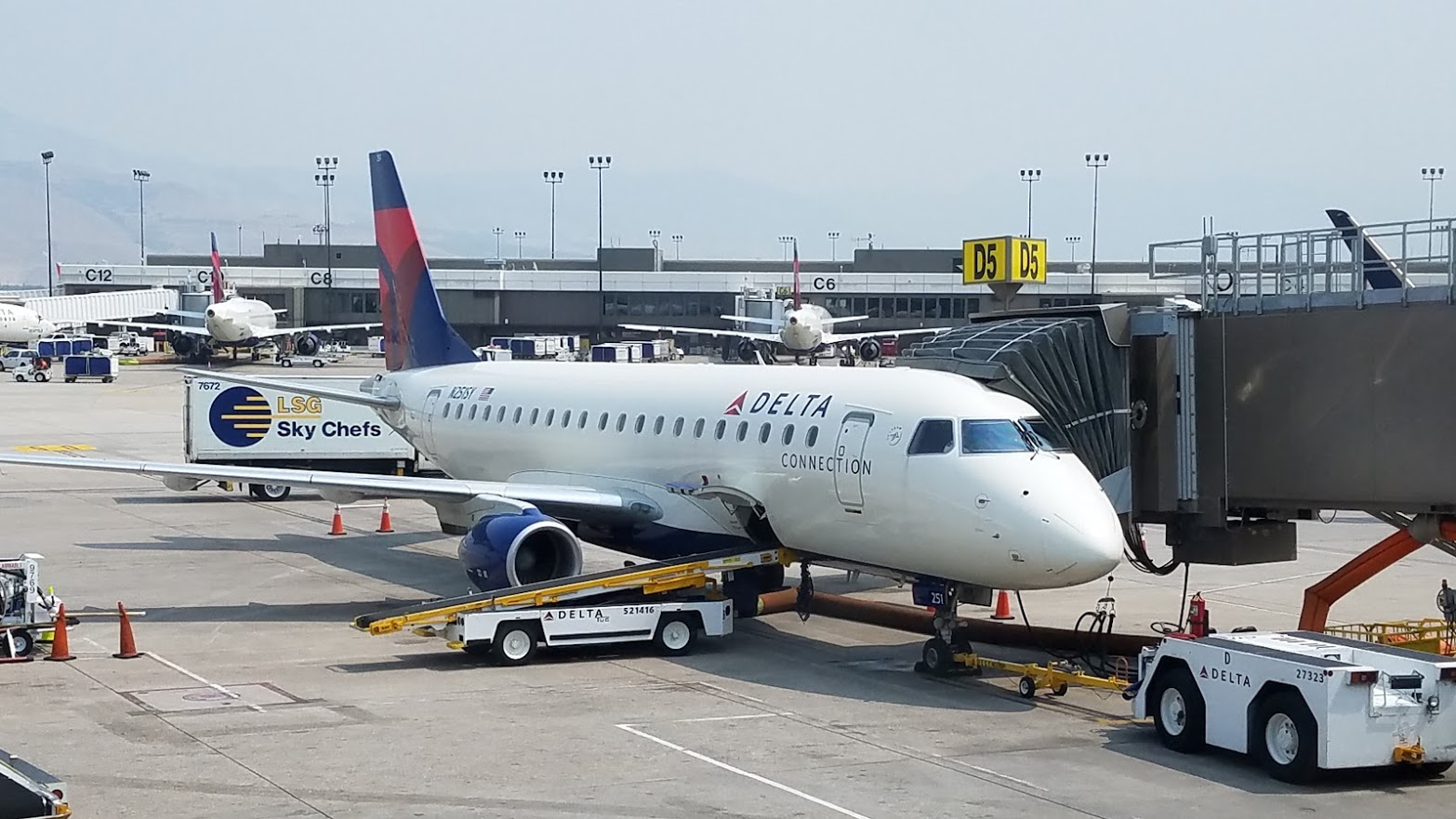
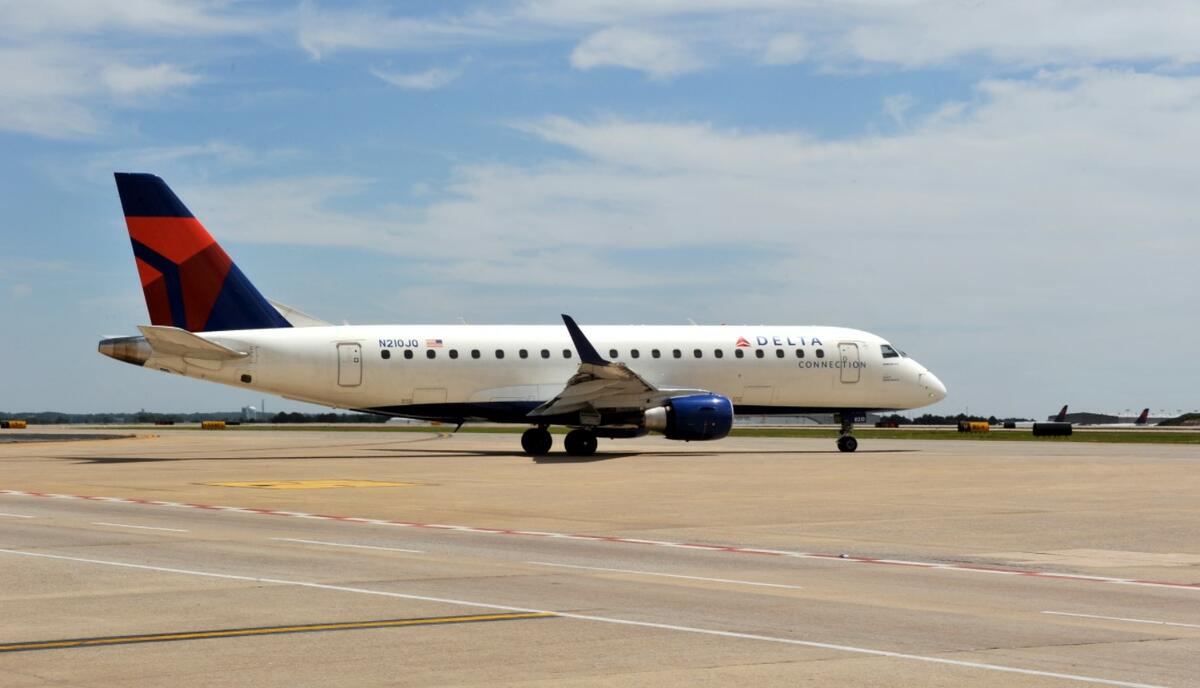
Delta flight 5423 took a delay of nearly 10 hours on Sunday. The flight from Charlottesville to Altanta, operated with a CRJ-700 regional jet by wholly-owned subsidiary Endeavor Air, had its first officer removed from the aircraft. Passengers reported that they “appeared” intoxicated and that law enforcement boarded the aircraft and took them off. However, I think it’s important to note that we don’t have breathalyzer results and there could have been medical issues at play.
The flight ultimately operated after midnight with new crew, departing at 12:27 a.m. Monday morning and arriving in Atlanta at 2:05 a.m. According to a Delta spokesperson,
We apologize to customers on Endeavor Air flight 5423, operating as Delta Connection, for the extended delay to their travel. With the safety of our customers and crew as our top priority, Endeavor Air is thoroughly investigating this situation.
I’ve heard reports of this incident, and one passenger onboard explains,
[T]he first officer, who appeared to be so intoxicated she couldn’t talk straight, was escorted off the plane by law enforcement with no explanation from Delta beyond “a safety issue.” Multiple passengers on the flight into Charlottesville complained about her evidently unstable behavior *during the flight*, and multiple passengers on our flight out of Charlottesville complained after we boarded, as soon as it became clear something was wrong.
Commercial airline pilots have to go at least 8 hours from their last drink prior to flying (“8 hours bottle-to-throttle”) in addition to being below the blood alcohol limit for the jurisdiction they’re in. One pilot once offered but it had been 9 hours since he drank! as an excuse, waving away being over the limit. Both rules matter.
Air travel can be a difficult career and drinking and other substance problems get hidden. Pilots with substance abuse problems are often wary of speaking up and seeking help, for fear of being sidelined, despite programs designed to encourage them to do so.
Pilots hide not just alcohol abuse but mental health conditions and that points to a fundamental conundrum: you want pilots to be open and seek help in order to promote safety, but once they’re open they’re a clearly identified risk and get removed from the cockpit. So the consequences of being open discourage that openness. Or at least that’s the fear many pilots have, not trusting the commitments that are in place to help rather than punish.
Delta’s statement is important because the Endeavor investigation will mean that the pilot isn’t flying in the meantime.
Regardless of what caused the intervention to keep this pilot out of the cockpit on this particular flight, it’s the sytem working and the 10-hour delay was well worth it. This doesn’t happen frequently relative to number of flights, but stories like this aren’t uncommon either, and important to factor when considering improvements in automated flying.



“That’s why you still fly an RJ…”
Gary.. you have no clue what you are talking about.
HIMS program keeps pilots flying. If a pilot admits they need help, they are supported (AND HIGHLY tested). they do not lose their jobs but they lose their ability to ever have a drink again.
Mental Health program updates last year allow pilots to get the help they need.
Gary’s job description : Mislead the general public.
Typical in this world to punish the people
This could be related to medical issues, alcohol issues, substance issues or other issues.
We do not know at this stage, but for the removal decision, the underlying issue is not relevant, only the impairment is relevant.
So she ALREADY operated the flight into CHO whilst hammered….and the CA ignored/covered it up? Oh but she could be having “medical issues”…..yeah right.
Must have gotten a bad ice cube.
“Police Removed Her” “Passengers reported that they “appeared” intoxicated..”… “and took them off..” Man (can I say that??), what a twist of pronouns! What was it.. he, she, it, they?? Then, the article says that there was no breathalyzer test and then goes on to say that it could have been a medical issues. So, Clickbait? Piloting an aircraft has very strict rules regarding alcohol and medication usage prior to flight. Those rules are the minimums for adherence to FAR Part 91.17. My flight instructor certificates are backed up with 17,000 hours of experience (mostly FAR Part 121) and I’m a bit confused with the wording of this article.
@GaryLovesPilots – many pilots do not trust these programs, and in some cases they have reason to be skeptical. It is still a challenge, not something that has been solved.
It was a premium drunk pilot.
and yet LOVES is correct. Help is available and many pilots do take advantage of it because if they don’t it does mean the end of their career. But when that help is requested makes a big difference in how the FAA handles a pilot’s request to maintain their job at some point in the future.
what is not known is if the captain initiated the call to their operations control center or to the police
this isn’t and won’t be the last alcohol related pilot issue even if alcohol is involved.
Driving Charlottesville – Atlanta is less than 8 hours
I would be questioning my life choices.
I was a Captain with a major carrier when I felt a bit “off” as I stumbled through the concourse at ORD between flights. Concerned and no idea what was happening, I called ops and requested removal from my next flight. All tests were clean (no illicit substances). Chief pilot “requested” a a full medical review and report. An MRI and two days later, I was diagnosed with a Stage IV Glioblastoma Multiforme (GBM) brain tumor with a life expectancy of ~ 2 years.
Obviously, my 30+ years’ flying career was over, but today, (28 years later) I have had a very rewarding early “retirement”,
I consider myself blessed and very fortunate to have seen my three young children grow, graduate college, marry, and hold my 2 grandsons in my arms. Despite the epilepsy, and various malignant tumors over the years, I consider myself a very rich man.
cockpit casual podcast Episode 7, Steve and Bob addressing mental health issues in the cockpit.
This really should move front and center with the airlines.
Just another reason to pay the Delta premium
Gary: Please stop with the “they” when it’s clear it’s a “he” or “she”.
@Michael Fitzgerald — Still worried about ‘pronouns’? It’s 2026, not 2023.
“it’s the sytem working and the 10-hour delay was well worth it.”
Actually, a 10-hour delay is inexcusable. Don’t punish passengers for lousy employee decisions. Bring in a standby pilot in a reasonable amount of time or put passengers on other flights.