
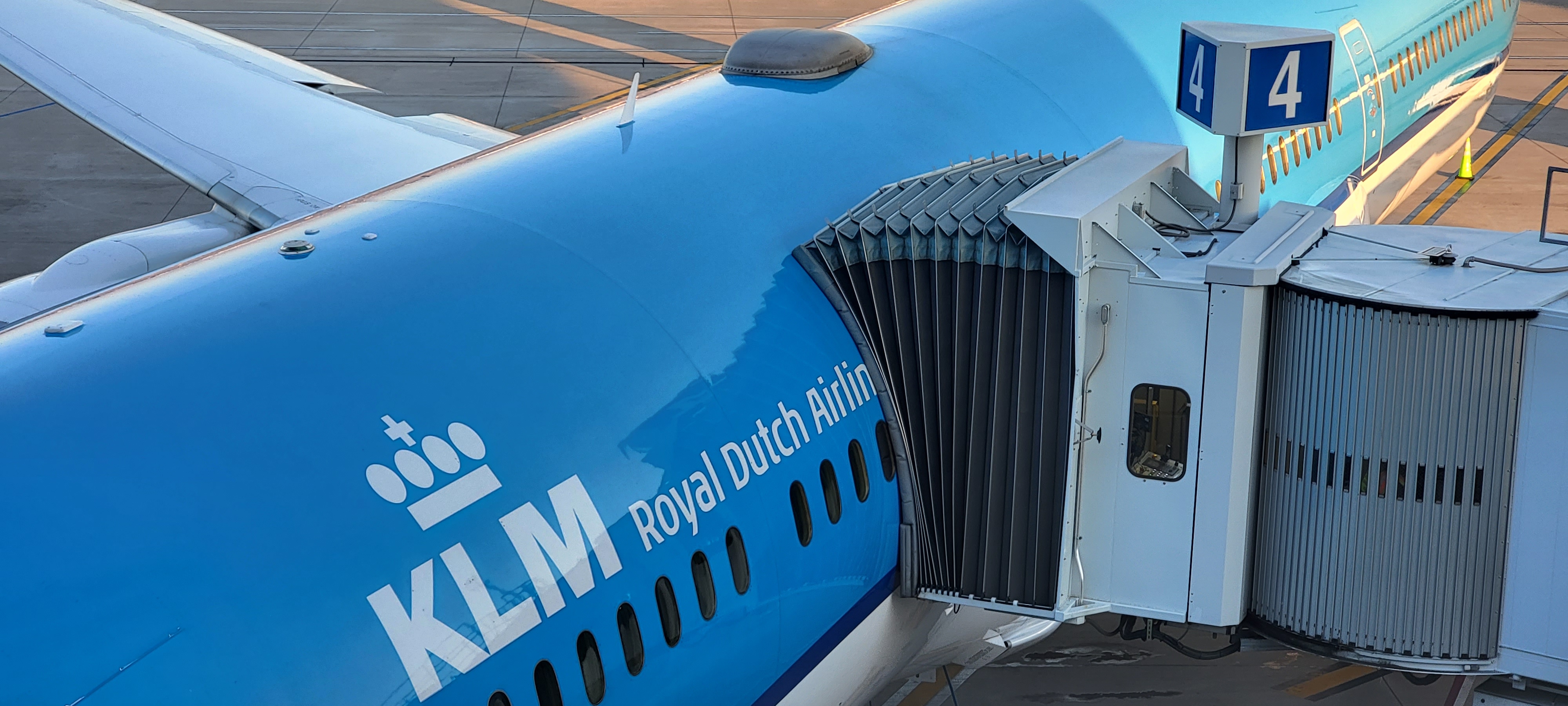
Alexander Nabavi-Noori, an appellate litigator at O’Melveny & Myers, took to twitter to vent frustation over his partner being charged a €500 fee (US$583) at Paris Charles de Gaulle airport by Air France because they thought he was a no show on his KLM New York JFK – Amsterdam outbound flight. The passenger says he was onboard, with photos to prove it.
Our flights: @KLM 646 from JFK→AMS on 5/18, then AF0006 CDG→JFK on 5/26. On 5/26 at CDG. @airfrance refused him boarding on the return unless he paid a €500 "out of sequence use" fee, claiming he hadn't flown the outbound—this despite the fact that he obviously did, with me.
— Xander Nabavi-Noori (@xandernn) May 28, 2026
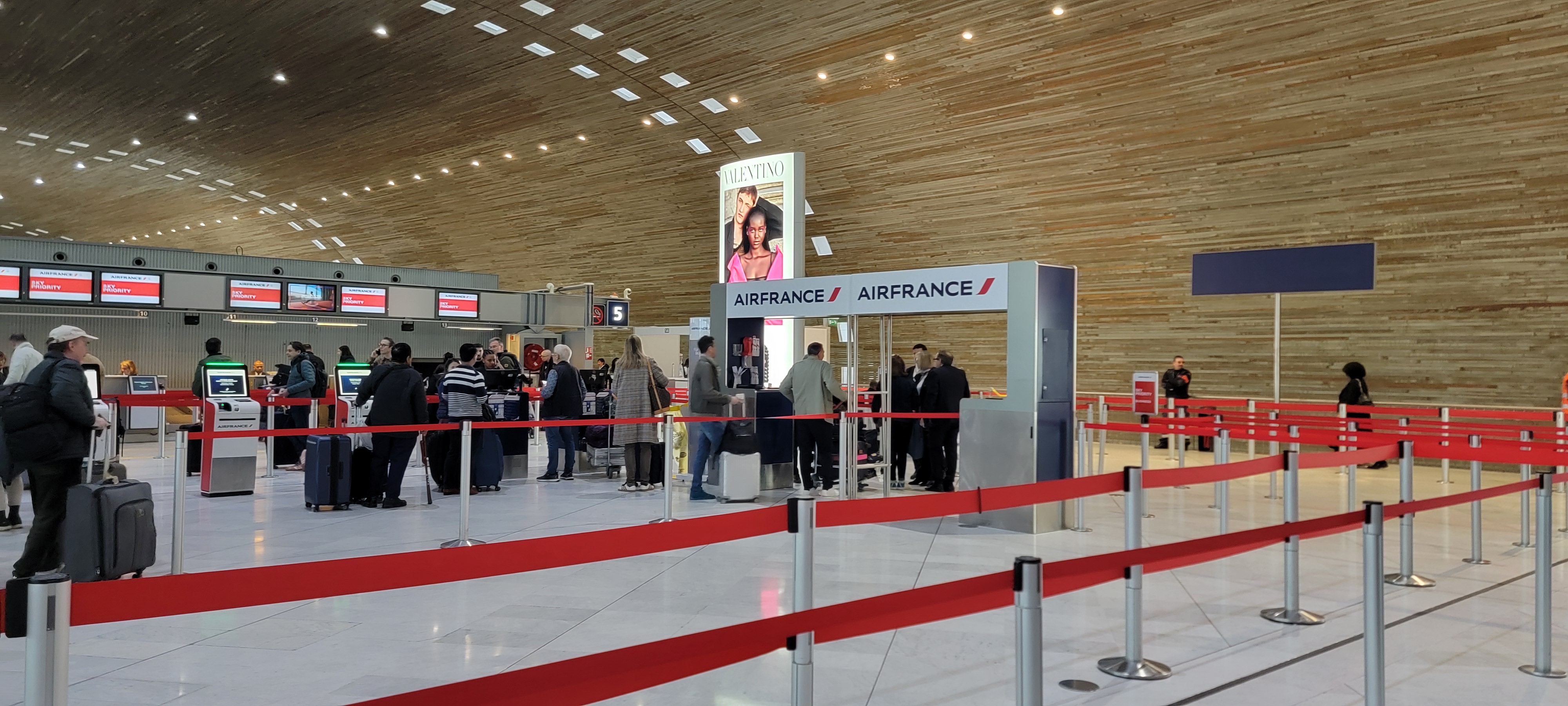
Rather than look at our evidence, the receipts we had from both JFK and Schipol, or accept the obvious point that he was at CDG on his way home to begin with, the agent made him pay the €500 fine under duress with the threat that he'd be stranded if he didn't @airfrance @KLM
— Xander Nabavi-Noori (@xandernn) May 28, 2026
They submitted evidence to Air France: photos from the aircraft, with selfies that included metadata, time, and location; receipts from purchases at JFK and Schiphol airports before and after the flight; the boarding pass; and even an email KLM sent to passengers on the flight apologizing for its delay.
I sent @AirFrance photos *from the plane* (incl. selfies w/ metadata/time/location), receipts from both JFK and Schipol before and after the flight, his boarding pass, and an email the day after from KLM to passengers he got apologizing for the delay on the flight. pic.twitter.com/ohLv9DONLW
— Xander Nabavi-Noori (@xandernn) May 28, 2026
They filed a formal claim with Air France seeking the €500 back. Air France denied it saying that their records show he didn’t take the flihgt. They then submitted a claim to KLM, because Air France staff told them they would need to contact KLM separately to get the record showing they were on KLM’s flight (even though Air France KLM is jointly owned). KLM denied that claim three minutes later.
The claim we submitted to @KLM was then denied 3 minutes later by the same agent, despite @airfrance telling us at CDG that we would have to contact @KLM separately to get the records of us on their flight
— Xander Nabavi-Noori (@xandernn) May 28, 2026
Many airlines will just cancel the rest of your itinerary if you skip a flight segment. Air France actually publishes an intercontinental “additional flat fare” of €500 for ‘non-conforming coupon use’ in coach and premium economy (i.e. using ticket coupons out of sequence or not as ticketed). That appears to be the fee that was imposed here.
Here’s what I’d do – generic claims aren’t cutting it. And Air France sees in their records he was a no show. The records need to get corrected. He has already filed a complaint with the Department of Transportation, but the airline will presumably just tell DOT that he wasn’t on the flight (it is possible someone with greater authority, free will, or just a pulse actually looks at the details and fixes this).
I would file a GDPR access and rectification request with Air France and KLM privacy teams. In other words, I’d go full Europe on their ass. The airline’s personal data about him is wrong
They recorded him as not having flown. That’s personal data and it is incorrect. Then they used that data to charge him money and to deny him reimbursement. Under GDPR rights, he can request access to personal data, seek rectification of inaccurate data, and restriction of processing while accuracy is contested.
- I would file with the Dutch regulator Under EU law, complaints go to the national enforcement body in the country where the incident took place. And the data in question is regarding KLM’s New York JFK – Amsterdam flight.
- I’d also file for consumer mediation with Médiateur Tourisme et Voyage. This is available after a written complaint and either an unsatisfactory response or no response for 60 days. The denial of refund without addressing the evidence is the unsatisfactory response.
I would specifically ask for an audit of the reservation history; ticket coupon status history (open / airport control / checked-in / lifted / flown / suspended / no-show); KLM DCS boarding record for flight 646; gate scanner logs and boarding sequence number; final boarded passenger list (closeout manifest); offload/no-show transactions entered after departure; any messaging between Air France and KLM regarding this status; and claim handling notes, including why the evidence was not addressed.
While situations like this are not common in percentage terms, they arecommon enough that a passenger flying but being treated as a no show this is a known issue. Most likely one system knew he boarded and another separate record treated him as not boarded, rather than not having him on the flight at all.
- The gate scan of the boarding pass might have failed to commit, beeping and accepting him for boarding but not writing correctly to the departure control system. Gate readers, barcode scanners, and airline host systems all exchange real-time data. It’s rare, but a hiccup can create a mismatch.
- Manual boarding override or a late closeout error, where a gate agent boards a passenger manually, but the final reconciliation marks them as a no show. They may even show as boarded in KLM’s system system, while an Air France-issued ticket coupon remains in open, no show, or not lifted status.
- Almost certainly officials knew he was on board. Since this was an international departure from the U.S., the airline would have had to transmit an APIS passenger departure manifest to Customs and Border Protection for everyone checked in for the flight and also after the aircraft is secured they have to report checked-in passengers who are not onboard. So he was going to be in APIS.
Whenever Air France KLM looks at this claim, they see in their records that the passenger is flagged as a no show and denies the request for a refund. They aren’t comparing the evidence against that record.
It shouldn’t be necessary to go through hoops to fix the airline’s error, and the passenger should be compensated for the inconvenience they’re being put through and the erroneous charge (so more than just a refund). But I’d start by getting the record that’s causing the refund denial fixed as the first step.
At the end of the day it’s a little bit weird to buy a seat for a flight, and then get charged extra for not sitting in it. That’s how airline rules work, because they might charge more for one-way tickets or for travel out of a different city. It’s how they make passengers fly the exact itinerary purchased, and keep them from circumventing the kind of pricing they’re trying to maintain.
To a normal person, it seems like you’ve purchased seats on a flight and should be able to do whatever you wish with them – fly in it or not! Being charged for the seat and charged extra for not using the seat is an anathema. Here, though, the passenger actually flew in the seat!



File a charge back with how credit card for $583
Would it have helped if he had showed the gate agent his boarding pass for the first flight?
I suspect that some of the airline replies may have been AI generated. Here are some items to include which may help to route the issue to a human reviewer:
“Your previous reply did not address my specific question.”
“This appears to be an automated response.”
“Please escalate to a human reviewer.”
“I am requesting a case-specific written explanation.”
“Please identify the policy, contract term, or evidence relied on.”
Never make threats, insults, or vague complaints. The strongest trigger is a clear contradiction: “Your reply says X, but my document/order/email says Y.”
@DaveSoCal, That’s a logical explanation, and Gary has explained why it could happen. If any human has considered the case at all, it was for a few seconds just to check the airline’s record, not the evidence. To you or me, this is the most important thing the airline will deal with today. To them, it’s one of 20,000.
Had an experience with AF where they denied my request for compensation and reimbursement, regardless of the documentation I provided. Instead of believing anything I was saying with actual screenshots, they just went with what their employee notated on the reservation, which was false.
It’s clear their CS team just goes with what their system shows and they won’t change their mind, regardless of how much information you provide them.
I used to fly frequently on AF to CDG, and on KLM to AMS, but since the horrors from the CVR from AF447 were published I have completely avoided both, but I guess I could encounter this issue with another airline, so thanks for the GDPR suggestion Gary. I have filed that in case I ever hit that issue.
The last thing he can do is filing a small claim to the court. We were able to get $12,000 back from LH back in 2024 through small claim in California. The incident was when LH Mexico city checking agent messed up our reservations (business class award tickets) and asked us to buy another 2 new ticket onsite. Not sure how they made 3 different reservations (redeemed from different airlines miles program) under one person’s name (3 people have same last name, but different first name) upon checking in. But, we not only got the money we paid back and also received the miles refund at the end. We did try to contact LH for the refund as well as filed case on DOT, but none of them had positive response.
@Sam – filing a chargeback is likely not a practical solution. First of all the airline would dispute it since their records show he didn’t fly so the charge is valid. I assume you know that credit card companies have to get agreement from the vendor since they are the ones covering the chargeback (except for fraud when the credit card company cover it and likely covered by their insurance).
However, even if you are successful you likely will be put on the “no fly” list. It is very common for airlines, hotel group and car rental companies to effectively “black list” anyone that files a chargeback. Their logic is there is no assurance they will be paid so the easiest course of action is simply to not do business with that person in the future.
I feel like they should contact the executives directly. Elliott lists them, for example https://www.elliott.org/company-contacts/air-france-customer-service-contacts-1/
Although it seems weird to email an executive, it actually can work to get this sent to a real person that is capable of reading and critical thinking.
That would probably be easier than the steps above. Although the GDPR request is pretty funny.
I think the airline needs a full audit of the check-in procedures as they allowed a passenger to board, but not checked in