
Airlines are such a bad business that the smartest startup strategy is probably not building the most beautiful premium carrier, but finding a way to lose less money than everyone else. If I had to start one anyway, I would skip the glamorous dream model and focus on underserved leisure routes, modest costs, and selling more of the trip than just the seat.
Last summer One Mile at a Time laid out the U.S. airline he’d start and it was basically a premium-focused carrier flying Airbus A321neos and A220-300s, operating on premium routes with a three-cabin configuration including true first class akin to long haul business class, and with strong points, upgrades and upsells.
He argued that while most startups obsess over cost, he’d try to win on revenue, differentiation, and premium merchandising. And I would love to fly this airline as a customer!
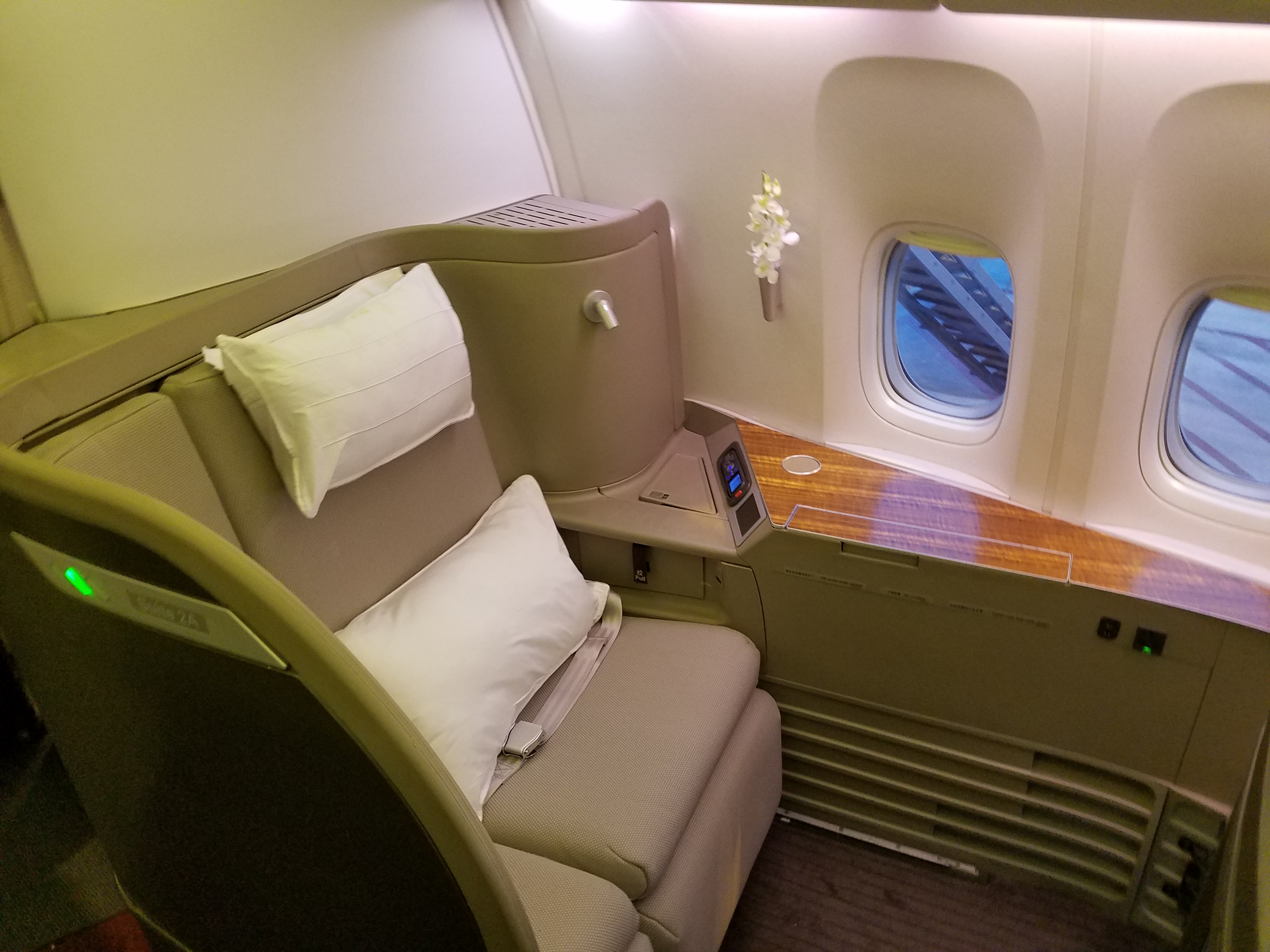
Mulling over what possibilities there are for the Spirit Airlines fleet if they liquidated, and assuming arguendo that those planes remained in the United States (the most valuable opportunities might not be here) it occurred to me that I’d go about things in the exact opposite direction from Ben.
Airlines Are A Terrible Business – And Startup Airlines Are Even Worse
Airlines are a huge capital investment, heavily regulated, and heavily unionized. And there’s very little moat. That’s why they’ve done so poorly over time. There’s little durable advantage that can be sustained.
They don’t earn high margins. It’s no surprise that airlines whose business is mostly flying do not make money, and most of the money in the industry today is made selling the idea of travel in partnership with bank issuers of credit cards.
And a startup airline is going to have a hard time generating that kind of revenue, because they’re small and cannot take customers all over the world and don’t have major airline partnerships to do this either. There’s little to inspire this irrational loyalty.
It’s been my view for decades, but the best pure expression of the idea might have been referencing the JetBlue-Spirit Airlines merger and asking why on earth they would do this? On July 29, 2022 I suggested that JetBlue shouldn’t buy Spirit Airlines – they should exit the airline business entirely instead.
JetBlue should consider pivoting away from the airline business if they can’t earn a good rate of return in the airline business. Surely they’d even do better for shareholders by giving the cash used in the Spirit deal to Jack Bogle.
- The acquisition of Spirit was set to cost about $3.8 billion.
- The S&P 500 is up about 75% since the day I wrote that.
- $3.8 billion then, invested as I suggested just in broad-based stocks, might be worth about $6.65 billion.
- JetBlue’s market cap at the time was $2.7 billion. After a recent run-up in share price (65% in a year, 23% year-to-date), JetBlue’s market cap has rebounded to $2.1 billion. That’s still 22% below where it was when I suggested giving up on the airline industry and that they should just invest elsewhere.
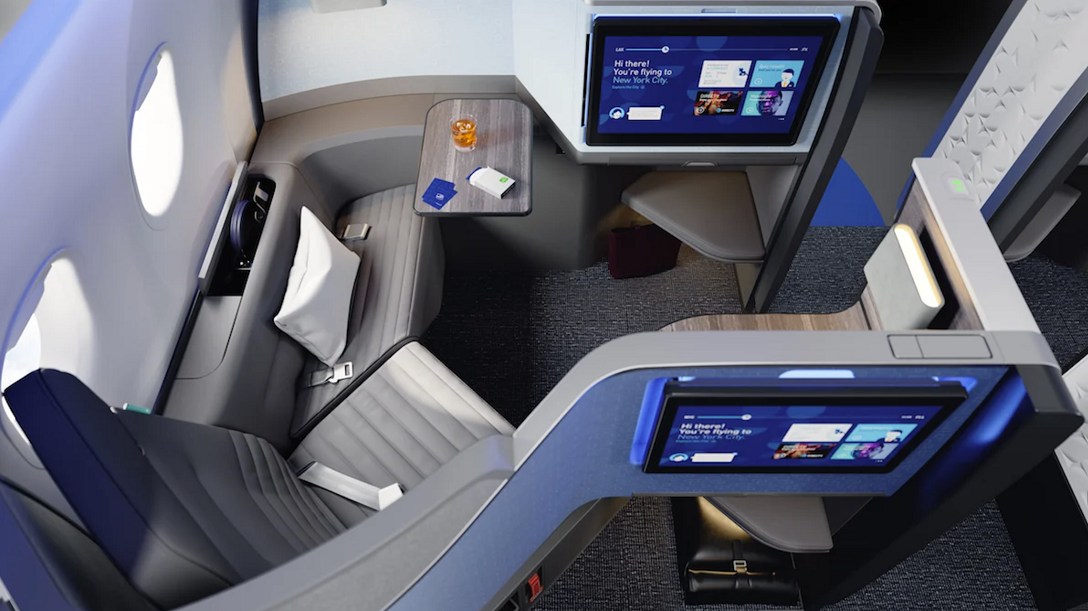
Maybe JetBlue should have leaned into Ben’s strategy! It already flies the A321neo. It has Mint. It has access to New York, Boston, South Florida, Los Angeles and the Caribbean. And they could have done real monetization of upgrades, loyalty, and premium bundled services.
Although I’d flag that Virgin America was closest to this in some ways (better than legacy front cabin, good food, modern and stylish with friendly crews), had a strong presence in San Francisco and access to congested airports, but didn’t really make money. They didn’t have a strong points program, of course.
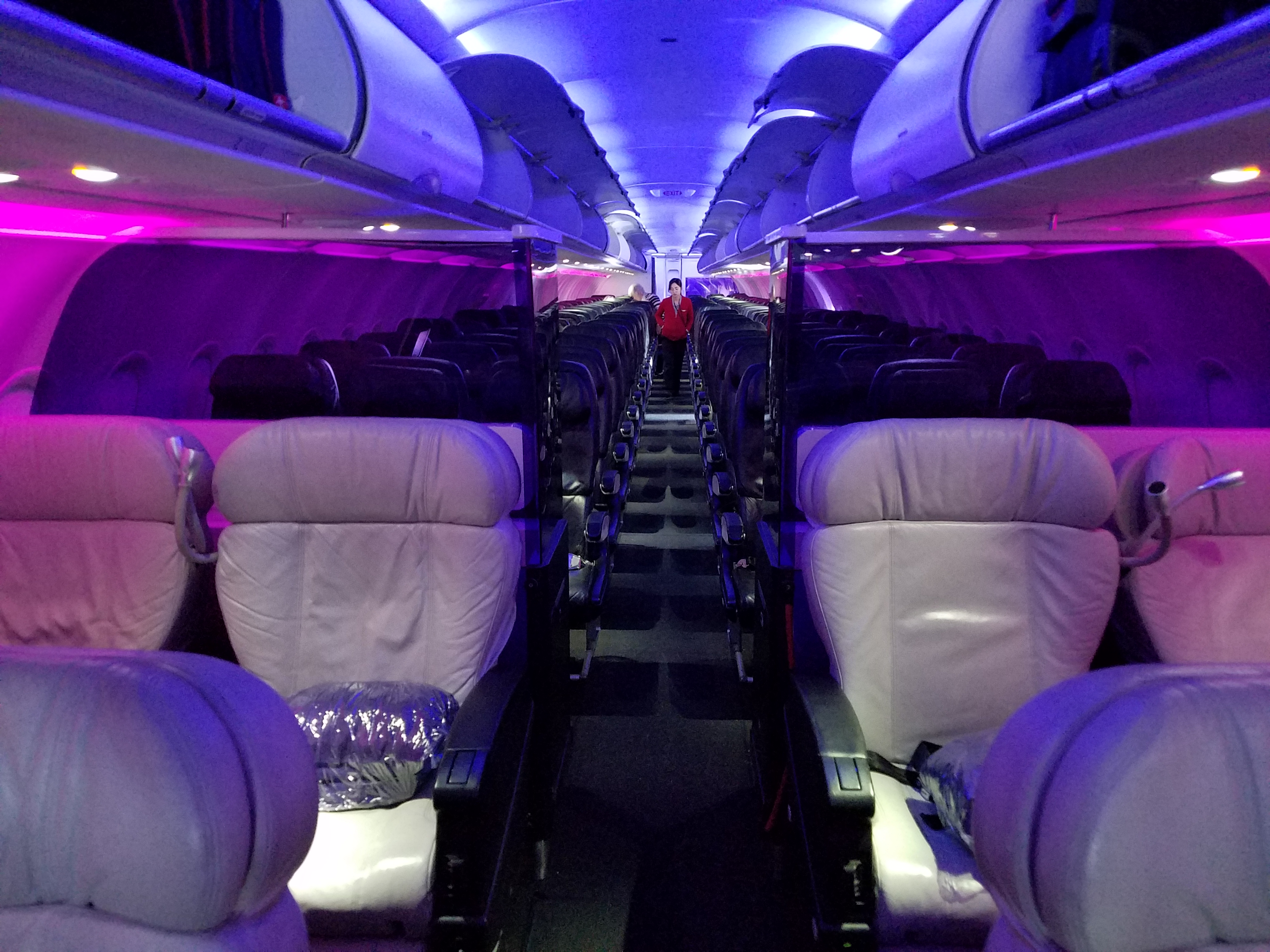
If I Had To Start A U.S. Airline Here’s What It Would Be
The truth is there’s money to be made serving the airline industry, such as in maintenance. A startup won’t make that money. There’s money to be made selling financial products around the industry. But you’re not going to do either one until reaching true scale. So maybe this is a pointless exercise.
If I were trying to actually make money flying airplanes, terrible business that it is, here’s what I would do: non-daily service from state capitals, that are home to educational institutions and either major companies or medical centers (a variant of ‘feds, eds, and meds’ which suggests stable moderate-to-higher income and generous vacation time), that currently lack non-stop service to major leisure destinations. Pickings are slim! But routes might look something like:
- Las Vegas: Baton Rouge, Tallahassee, Lansing, Albany, Madison
- Orlando: Boise, Baton Rouge, Tallahassee
- Fort Lauderdale: Baton Rouge, Lansing, Lincoln
- Tampa: Baton Rouge, Tallahassee, Lansing, Lincoln

Get Embraer to nicely finance E195-E2 aircraft, which offers good range but lower trip costs than an Airbus A220. I wouldn’t be looking for lowest-possible seat cost – I wouldn’t be looking for 150-seat demand (let alone 180+). But it requires more than a standard regional jet, and as close to mainline economics and customer appeal as possible.
One key would be making money on more than just flying. Allegiant thought it could make money in the hotel business, selling not just airline tickets but capturing the rest of trip from its customers. But there’s no reason to have expected that they would be good at the hotel business – as developers or as operators. It would have been far better to partner closely with someone that has a demonstrated ability to outperform the market there, rather than trying to build your own expertise from scratch and likely underperforming (which is what happened).
Still, it’s right to lean into the rest of the trip. It just seems like a better idea to partner closely with strong operators. Don’t just sell white label packages through Expedia, but actually do deep partnerships that let you merchandise more than just the room.
- By working with a handful of properties and experiences in each location, you’re steering real business.
- And you can integrate sales of upgrades, meals, shows, and theme park attractions
- Plus, give your own customers a better and more consistent experience – offering them VIP treatment with your partners.
This airline’s passengers would be “Las Vegas Downtown Elites” and “Gatorland and Fun Spot America VIPs.” Las Vegas is hungry for passengers to backfill the pulldown of Spirit Airlines capacity.
I’d offer a buy up ladder in the product, monetizing extra legroom seats and a Big Front Seat with snack trays but not hot meals. I’d work with airports like Baton Rouge, Lansing, Lincoln, and Tallahassee to develop on the ground perks for best customers and even develop unique benefits for an eventual cobrand.
I would lean into people selection, hiring bubbly, happy smart people with a track record of some kind of diligence or conscientiousness and success.
To be clear, I would not invest in this airline. And neither should you. I do not think it is actually a good way to deploy capital!
But if I were looking to lose less of my money in a U.S. airline startup, it would be my probable approach – underserved leisure markets, low-ish costs, good basic product and merchandising better experiences beyond the aircraft.
If you don’t think this is a good idea (it isn’t) that’s because in such a highly regulated, high cost environment and using current technology most of the better ones have already been tried – and largely failed. We’ll need to wait for STOL and eVTOL aircraft to open up new ideas.
Real opportunities could be coming, if we let them – but you need available disruptive technologies to make those work without the ability to light Riyadh Air-type capital on fire trying to get to scale (and without immediate scale you can’t get significant high margin cobrand revenue). Better ideas have to wait.
I’d rather fly Ben’s airline – unless I lived in a surprisingly decent city that lacked non-stop service to the best vacation destinations.



I think the first thing I would do is see if capital one is interested in having a captive US airline for its credit card program. If so, I’d run literally whatever airline they’d like to see. It would presumably be an airline linking capital one’s corporate offices… from Dulles to-
Richmond, Virginia
New York, New York
Plano, Texas
Wilmington, Delaware
Chicago, Illinois
San Francisco, California
London, United Kingdom
Toronto, Canada
Honestly not a bad route map! (Other than Wilmington, DE, although the Hotel Dupont is actually quite nice even if it is dated – no Dupont Circle Hotel though!)
Gary, I think you invented Breeze.
The airline you’ve sketched sounds similar to David Neeleman’s Breeze Airways. Including the non-daily service. (Similar, not identical, of course.)
Maybe there’s an opportunity in summer-only regional jet service from DCA to the Delaware beaches? Plenty of affluent consumers in the DMV who’d pay to skip beach traffic.
@Peter – I have stayed at the Hotel DuPont and it is fine…
@Gary – So what you’re talking about here is basically an Allegiant/Breeze hybrid. I think perhaps you are underestimating how hard “underserved leisure routes” are to defend. If Baton Rouge to Las Vegas, Lansing to Tampa, or Tallahassee to Orlando really works, Allegiant, Breeze, Avelo, Southwest, Frontier, or a legacy hub carrier can react. Non-daily service also creates poor aircraft utilization unless the network is extremely well stitched together.
But the bigger missing issue is capital timing. New airlines usually start when aircraft are cheap, labor is available, fuel is benign, and incumbents are distracted. Today’s environment is worse: aircraft delivery delays, engine problems, high labor costs, expensive capital, and volatile fuel. IATA’s 2026 outlook still projected only a 3.9% global net margin and ROIC below WACC, meaning even the improved industry is not earning its cost of capital.
So FWIW, I think your model here is operationally fragile, competitively exposed, hard to scale, and unlikely to create the loyalty economics that make the majors valuable. It would be a terrible equity investment. Interesting whiteboard airline nonetheless.
Ben is just too slow on the uptake to capitalize on an opportunity.
To illustrate, I sent him my calculations of the value of Bilt 2.0 (ignoring housing) and he didn’t even reply. It just never dawned on him, the way it dawned on you for example, how much value Bilt was relative to existing cards, and how innovative was the internal currrency.
He would never function as a startup spotter in a VC fund, and his airline idea appears to be based on nothing more than a romantic notion on how he’d like to fly. No costings. No budget. No competitor analysis.
A miles blog is his calling.
@Peter: ‘I think the first thing I would do is see if capital one is interested in having a captive US airline for its credit card program’
They aren’t. Obviously.
@Gary: You should consider a fund to short existing airline stocks. Buffett would back it.
@Mike Hunt – I think I’m clear that without innovations like STOL and eVTOL aircraft, there aren’t great investment opportunities for a startup airline, and a startup isn’t going to create the kind of loyalty scale you’d need for high margin cobrand revenue… at least without lighting tremendous amounts of capital on fire with deep pockets in a quest i wouldn’t recommend (think riyadh air – but they have reasons other than just airline profits to do it). so the exercise was, what can be modestly viable as a startup in this industry, given existing constraints, competitors, regulations, etc.? Small plays, not big swings.
@Gary: Your airline is in the wrong continent. The US is at capacity. Give the universal high positive correlation between airline growth and GDP growth examine the highest growth economies in the world and base it in one of those,
@ Gary – I think that’s a much more grounded way to look at it, and I agree the focus on realistic constraints is refreshing. The challenge, though, is that the “small play” approach can be tougher than it sounds in this industry. If you’re not building the kind of loyalty economics that carriers like DL or AA rely on, you’re left competing mostly on the flying itself, which is the lowest-margin piece. At the same time, smaller, thinner networks tend to struggle with density, which can mean higher costs, less flexibility, and more exposure when things go wrong. There are definitely niches that can work on an operational level, but “modestly viable” often ends up meaning close to breakeven with a lot of sensitivity to fuel, labor, and competitive responses. I suppose that’s a bit different from being an attractive long-term investment. I very much enjoy the thought experiment!
Yeah baby. Domestic basic good city pairs will make the growth happen in our next evolution
After 59 years in the airline business, here is an old joke.
How do you become a millionaire in the airline industry?
Start with a billion.
The real market opportunity isn’t starting a new airline, it’s starting up a different transportation market once the general public gets priced out of air travel again (class 4-5 passenger rail, improved bus service, etc.).
Demographics shift. This should be addressed periodically considered for a profitable airline
Did you guys see the news? Yikes.
Where’s @DesertGhost? You know, the guy who’s always asking Gary and others whether they’ve been CEO of an airline (as if no one can have an opinion on anything unless they have). Gatekeeper, come back!
The US cannot develop an successful ULCC, but they exists nearly everywhere, I blame Trump, Obama, and Biden, all worthless pieces of sh! t,
@1990: ‘Did you guys see the news? Yikes.’ Agreed. And everyone came together against the shooter, that each represented one part of the democratic and constitutional fabric of the country and this gunman did not.
Also, kudos to the security forces.
The key part is “hiring bubbly, happy smart people”. In other words, non-union. Suddenly your ground and flight crew are service differentiators…and at a lower price than the grumpy old legacy FAs.
There’s also some room to innovate in the airline space, for instance in boarding process, how overhead bins are monetized, and in the ground experience. My airline, let’s call it “Mantis Air”, is from a previous article comment, basically:
– Reserved overhead bin space. Free for elites and F, paid for everyone else. Bins in the back are at a discount. This solves three problems: optimal monetization of bin space, removes the need for passengers to board early just to get bin space, and makes boarding more efficient (no hunting for space).
– Reinvent the boarding process, for both better customer experience and also shorter turns allowing better asset utilization. Likely some variation of first window, then middle, then aisle, but possibly also rear to front. Since F/elites have no need to board early for overhead bin space, don’t need to allow them to board first, which is inefficient.
– The gate area is the lounge. Controlled access to Mantis Air gate area, then once inside, basically a big lounge with comfortable seating and complimentary basic snacks and drinks, upsell to alcohol and better food. Maybe even bring in outside concessionaires, another revenue source, since once inside passengers won’t want to go back out into main terminal.
– And of course, no union FAs or ground crew. You cannot let the your companies front line service people be hostile to your company.
I don’t think you’re gonna win just on cherry picking flights. It’s not a sustainable competitive advantage. But executing on better service and a more efficient operation is a sustainable competitive advantage.
@L3 — And then… the President immediately went racial… referring to the suspect as a ‘thug’ (apparently, the guy is a person of color) *facepalm* (
For real, glad everyone’s alright.
@retard
Don’t you mean “the t word”? You just committed a racism. Say three hail Obamas and donate $100 to SPLC, and your sins will be forgiven.
@Mantis — Almost forgot about Epstein, all the corruption, the new forever war, rising gas prices, global shortages, inflation, layoffs, etc. What a gift this incident was to the failing President! Let’s all rally around the flag!
Isn’t this what Avelo and Breeze are attempting to do? Find underserved niche routes? The issue is that it’s tough to do these routes 7x and anything less and you’re already cutting out potential flyers. If you have to be back to work for vacation you’re going to take an airline that gets you back on the day you need to/want to be back. Particularly if you’re on the lower end of the income scale where a call out means no pay and possible firing.
Moreover, other than Southwest have a variety of planes that can be deployed to efficiently capture demand.
@retard
The Epstein files were released by the trump admin. Did your news sources not report on that? Weird. Biden admin did not because it was mainly democrats implicated. The only forever war is the one Biden started to cover up his Ukraine corruption. The Iran war is almost over, sorry that two successful US military efforts makes you so butt hurt. Crude oil prices are still lower than peak prices under Biden and Obama, you didn’t mind then, and they will come down quickly soon. Maybe if you leftist would take a break brainwashing people to be violent assassins you’d know all this. So as usual you are dishonest and disingenuous…and very much a retard.
@George Nathan Romey — “where a call out means no pay and possible firing.” No pay makes sense (because not working), but getting terminated because an airline can’t keep schedule is some pretty wild ‘red state’ nonsense. At-will. Psh. Jokers.
@Mantis
The Iran war is almost over? Sure, talk about brainwashed. Didn’t your great leader say it was over a year ago.
And brainwashed wingnuts of the current administration (the most corrupt in history) talk about others as being corrupt, sure ..
As for Epstein, weird you ignored your great leader being implicated in the files. Or maybe not so weird.,
@erg — When you realize that @Mantis is based in Asia these days… the right-wing troll thing sorta makes sense. Not sure if he actually believes any of his own propaganda, but… it is fun to tease him.
Dulles to Richmond, Wilmington DE, New York?
By the time you add in airport time (security and to-and-from), Amtrak is cheaper and faster, as well as environmentally more responsible.
@carletonm – guess it’s time to cancel the ~60 daily flights between NY and DC then. They too shall all go the way of the Trump Shuttle.
By the way, the secret to that commute is to take the morning flight (less delays) and the evening train (no need to sit in rush hour traffic to get to the airport, and flight delays compound throughout the day).
Interesting that you often decry airlines’ selling of upgrades rather than awarding them to frequent customers but, when it will be your airline, it is, “I’d offer a buy up ladder in the product, monetizing extra legroom seats and a Big Front Seat….”
@Peter — 100%. Cancel NY-DC-BOS and everything in-between (those shuttle flights are far too frequently delayed, canceled, de-prioritized). Acela, NER gets it done; choo-choo-choose the train!