
American Airlines is rolling out performance metrics for flight attendants. As aviation watchdog JonNYC reports, it’s based on previous 12 months of data looking at:
- customer experience (survey data about the flight)
- their role in the operation and reliability
- Teams usage, CERS report completion times, electronic flight bag compliance, and a monthly overall score.
AA rolling out me@work scores for flight attendants.
Based on the last 12 months data, things like:
-customer experience (based on Anonymized NPS surveys sent out to pax after the flight + other input.)
-operational contribution
-FA coded delays
other
Strikes me as a problem that…— JonNYC (@xJonNYC) April 21, 2026
While Jon is correct that it’s problematic for individual flight attendants to “get dinged for actions/faults of other [flight attendants] on their crew potentially” the effort strikes me as directionally right but not as strong yet as it needs to be.
These give crewmembers insight into how they’re doing, but at this point doesn’t really affect pay or work assignments.
- American needs a better way to reward top flight attendants, and identify places where re-training is needed (and even where someone is no longer a good fit).
- And this needs to be backed up by real rewards and performance processes.
This benefits employees – there’s little worse for a flight attendant than consistently working with underperforming colleagues. It’s demoralizing when a crewmember puts their all in a job, the people they’re working with do not. And those people receive the same pay, benefits and recognition – while the dedicated colleague has to pick up the slack.
And it’s good for customers, who receive better service when the right people are in the right role and they’re recognized and rewarded for their efforts. It gets the incentives right. That ultimately benefits shareholders, too, because a key thing American has lacked is an experience customers will pay more for. It’s something that former CEO Doug Parker identified at the airline’s 2017 Investor Day as the key opportunity for differentiation, “making culture a competitive advantage.”
From what’s known so far about how these scores are being calculated, they seem imperfect. That doesn’t make it not a good start, though.
- Customer experience / anonymized surveys. Likelihood to recommend scores and service-specific questions are exactly soemthing the airline should be measuring and looking at in the aggregate. Flight attendants are the primary customer-facing employees passengers are interacting with on the flight. Individual experiences will be affected by more than the flight attendant (delay, food, cleanliness, non-working wifi).
- Operational contribution. Timely sign-in, door-close support, predeparture tasks, use of company communication channels, report completion, having their required materials in compliance all matter. Measuring controllable behavior is important. Keeping electronic flight bags current is non-negotiable. Blending in non-controllable items into a score is both unfair and leads to bad ratings and wrong business intelligence and evaluations.
- Flight attendant-coded delays. Airlines use delay codes to classify causes, and those include crew availability and late boarding. Internal delay codes are toxic when used to assign blame. United moved away from internal delay codes in 2021 because they created employee-vs-employee blame games. (They still reported DOT-required categories, which differ from internal codes used to determine whose fault a delay was.)
A late report, emergency equipment checks not completed until door-close time, and other responsibilities are meaningful to track. Misassigned blame when the issue is late catering late, gate snafus, wheelchair issues, cleaning, security, or customer servicing issues (passenger conflict) is a problem when attributed to cabin crew.
- Door close metrics. Exact on-time departure matters, every minute of delay can compound, but it’s been used at the airline poorly – American historically didn’t invest in the systems that really supported getting flights out on time with everything ready to go. They’d skimp on cleaning, go out without catering, and try to turn planes too quickly. Judging flight attendants on doors close creates an incentive not to solve onboard problem.
And passengers seemed like an annoyance that got in the way of an efficient operation. The focus on exact on-time departures (not arrivals) didn’t even get them operational reliability.
Most importantly, flight attendants are only a small piece of getting to door close on time. Gate agents, passengers, bags, cleaners, tech ops, pilots, wheelchairs all matter.
- CERS report completion times. Filing reports lets the airline track operational issues both for specific incidents and aggregate metrics. Safety and service reports are more useful when filed promptly. But making report timing or volume becomes part of an individual’s score, it can discourage reporting in the first place.
- Electronic flight bag compliance. Flight attendants use an electronic flight bag, and it requires a current iOS and version to be up to date when reporting for flights. Flight attendants have to sync Comply365 before the start of each trip sequence.
Reportedly by the way credit card approvals are score “accelerators” in this new system.
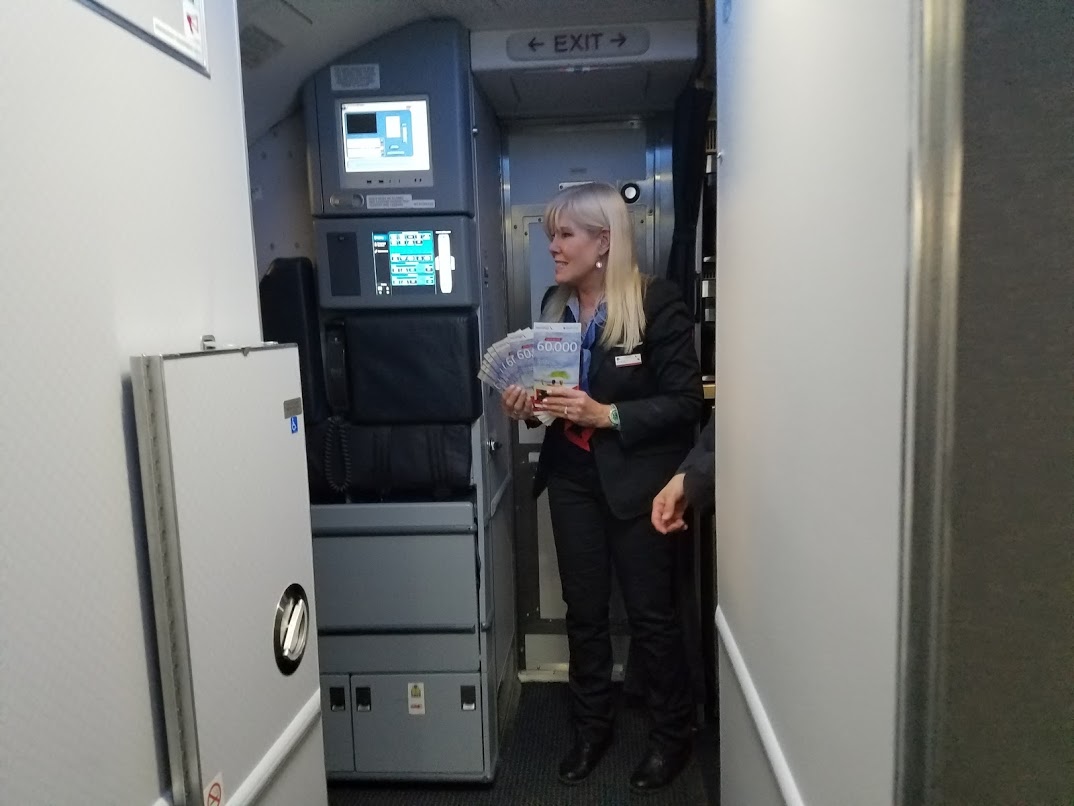
United has used passenger feedback heavily looking at service satisfaction, whether passengers were thanked, whether cabin crew were visible, and whether they were friendly.
Delta’s Endeavor regional subsidiary says flight attendants need high scores on the Flight Attendant Interaction question of the Delta customer satisfaction survey. They’re provided monthly average survey scores by email.
This isn’t new. But it isn’t likely to get American close to where it needs to be. They need a process for moving out underperformers, and they need to reward real performance. I wrote at the time that the current flight attendant contract was being negotiated that historic raises were an opportunity to introduce accountability. They could have gotten ghost riders as part of the deal, evaluating individual flight attendant performance and providing real coaching opportunities. Instead they paid more for labor peace, didn’t really get labor peace (the union is calling for the CEO’s head) and didn’t get service improvement either.



Good – I’m a little surprised their union allows this since most unions protect poor performers and stifle top employees (since they are all basically treated the same). Agree a step in right direction. I’m always in favor of merit based ranking so you can reward the top ones and weed out the dead weight (while I realize this doesn’t allow them to take job actions hopefully it positions for that down the road)
Well that’s easy…
F across the board.
How about providing incentives to the entire crew based upon surveys? In that way there’s “peer pressure” to perform because one lazy flight attendant threatens incentive pay of the other flight attendants onboard.
I have had some really good ones, and I have also flown with professional Candy Crush players. I wish they could get rid of the ones that do the absolute minimum or below that, but of course that will never happen with union protection.
I’m with ANAL. But not in that way.
Unions promote mediocrity while enriching the union leadership. When you prioritize seniority over job performance, you are automatically diminishing customer service levels to the people that pay everyone’s salary.
Seems like performative nonsense.
To the haters, no, unions are not the problem; bad corporate management…
@Mantis — You sure? *wink*
Anything is worth a try to bring American up to the standards it once was before the arrival of Parker from USAIR.
Unfortunately there are more and more “humans” that no matter what someone does they will still bitch and complain over EVERYTHING. For those people let them ‘walk a mile” in shoes of a flight attendant.
A meaningful reward would be using these scores as part of the trip bidding system, so high-scoring crews could have more seniority points for bidding, possibly one which could be saved up over several months to allow a bid on an international trip, or getting a holiday off. Not a large input. But, this would require union negotiations, and the union would want something in exchange.
Good! We get “graded” at our jobs and why shouldn’t they. Personally the UScareways “witches” are a major cause of the decline at AA. I hope that not only the airline holds them responsibile but fellow FA start to call them out too. 95% of my AA flights have amazing crews, but the 5% that suck, suck bad and they need to get pushed out. Maybe “pay for performance” (carrot verses stick) might be a way to go about it too.
While your at it. . .the gate agents REALLY need to be scored.
How about they, I don’t know, value what their customers think. Make the “$1 coupons” that EP/PPro folks can hand out actually mean something in this type of system. And make those slips of paper, I don’t know, digital. That may actually cause AA FAs to recognize and engage with status members if status members can recognize someone in the app – because no one remembers those slips of paper. It may become like an uber driver asking for 5*’s after leaving the cab, but i’ll take that over the complete lack of trying any day. Likewise take concerns seriously when status members bother to write in about crew concerns.
Shocking ideas, I know.
I’ve gotten multiple phone calls from American practically begging me to stay at Executive Platinum level and pay ‘modest upcharge’ of $2K. Hell no! I’ve been Exec Plat for 25 years and the only way to get their attention is to walk away from flying with them. 3 trips to Europe and Asia already booked over next 12 months flying out of DFW, all the flights going to their competitors. Loss of revenue (4 people in family) to AA of nearly $60K. Let’s do the math here. American got $60 from Joe Sixpack for first class upgrade (Joe only flies 1 or 2 times a year), and they lost out on $60K in international flights through lack of loyalty to longtime Executive Platinum customer. Conclusion? American Airlines is really, really bad at math.
And where is the flight attendants grading system for managers and upper management? Don’t see that posted. How they go on the cheap for passengers and crews and amenities and snacks, food provided and sold. But pad their own pockets with bonuses at everyone else’s expense! Uncomfortable seats, crammed together. Bathrooms so small a average person can barely fit. Oh, let’s not forget the toilets now in the back galley with a jump set attached to the door. How sanitary. Get rid of this harassment management and them putting the blame on overworked and understaffed crews. Give them a “F”!
@Peter — I am shocked. SHOCKED, I tells ya. Wait, are those “RECOGNIZING OUTSTANDING SERVICE” certificates really just worth a dollar? If so, that’s truly pathetic.
@gary… When will you learn that you continue to use the WRONG STOCK PHOTOS for AA employees.
If you can’t get such a trivial thing right, how are we to trust anything you say?
@1990 – I could be wrong but I thought it was reported that FAs get about $1 credit from the company store or whatever for them. No idea what if any other benefit there is to having them recorded on their record.
@Peter — Oof. Sheesh.
@Strange But True. But maybe AA figures it this way. First, they can now sell the seats you didn’t buy. So, if you are replaced at the same price, why would they care? On the margin, your move does hurt. But what if the other carriers are doing the same thing? Ralph has a similar reaction to his treatment on “TWA” and does what you did. So, AA and TWA both gain and loss a $60K/year customer. All the while, they save money by giving the elite pax less. In a world where everybody treats their elites poorly, we just have people move allegiances around. They are the net winners. There may be method to what you see as madness.
TLDR You can reward loyalty less when your competitors reward less. People can change allegiances, but they’re just switching amonst the same players.
@This Comes To Mind That logic only holds true if we are talking about airlines offering a similar customer experience (most U.S. airlines). But if the choice is JAL vs AA. No comparison. Singapore vs United. No comparison. It’s true I tolerated AA for too long. But now they will very likely pay the price, especially for international travel, as more passengers like me become free agents and defect to foreign flagship carriers. And that is where the profit margin is, not on a one way ticket to Milwaukee.
I mean if this leads them to finally smile on occasion I’m all for it.
Meanwhile bloody Tuesday down in Atlanta at Ed Express. Bunch of new layoffs that they’ll never report because business is so great.
Well said.
Management is paid to manage the airline. If FAs has way too many lazy FAs is not the union’s fault, but management’s fault for negotiating a terrible agreement with the union.
But the tactic to give away the store to the union worked for Parker’s wallet: he made over $150m personally and left the carcass behind for another management team to be burdened by it.
I have noticed (this year) that AA FAs thank me for being EXP. That has been standard with my 1K on United for years. Now, if that came with a pre-takeoff beverage….