
Delta Air Lines confirms that they are looking at the Thompson Aero VantageSOLO seat as a replacement for Safran Vue, which they had planned to use on premium cross-country routes in business class on Airbus A321neo aircraft. I reported this a week ago. Aviation watchdog JonNYC was first with the scoop, and Bloomberg cites him as well.
Chief Marketing and Product Officer Ranjan Goswami said in an interview on Monday. Delta expects certification by mid-2028 instead and will proceed with whichever supplier secures approval first, he said.
Delta had originally selected Safran, whose product was slated to debut two years ago but remains stuck in the Federal Aviation Administration’s certification process. The airline is therefore considering Thompson Aero, produced by the AVIC-owned manufacturer, for aircraft serving business demand-heavy US east to west coast routes.
Since the current seat isn’t certified, and isn’t expected to be for at least two years (maybe more!) they’ll switch to Thompson Aero if that seat can be certified more quickly. That’s another way of saying they’re moving to the VantageSOLO seat because it is already flying. JetBlue uses VantageSOLO on its Airbus A321LRs (so the FAA has certified it before) and Iberia uses it on their Airbus A321XLR.
So it isn’t a new, unproven seat, and just needs certification for Delta’s specific use:
- Their passenger layout on the A321neo
- With their inflgiht entertainment, power, charging, doors, restraints and trim
- Using their emergency egress analysis, seat track loads, and delivery configuration.
Thompson is the supplier of existing Delta business class seats, and is Chinese-owned. The Aviation Industry Corporation of China acquired them in 2016.
Delta has been trying to create a premium Airbus A321neo fleet for high value domestic routes, like New York – Los Angeles. Their current product has been failing and customers are unhappy with it. The fleet of planes they use today for these routes – by far the most important in Delta’s network – are aging and unreliable. They need a new product.
However, the aircraft they ordered were supposed to be outfitted with new business class flat bed suites however the planned seat – Safran VUE – hasn’t gotten certified for use. The delay is bad enough that Delta temporarily put in domestic first class seats onto the planes so that they could at least fly on routes from Atlanta to Los Angeles, San Francisco, Seattle, and San Diego rather than leaving the aircraft parked.
The first aircraft meant for the premium layout was delivered in 2024 but couldn’t enter service because of the seat certification problems.
The Safran Vue seat that Delta was going to use was going to offer a real advantage over competitor lie flat products for domestic narrowbody aircraft (similar to a seat that some others like ITA Airways has used): it was actually going to face passengers toward the window, instead of their backs to the window:
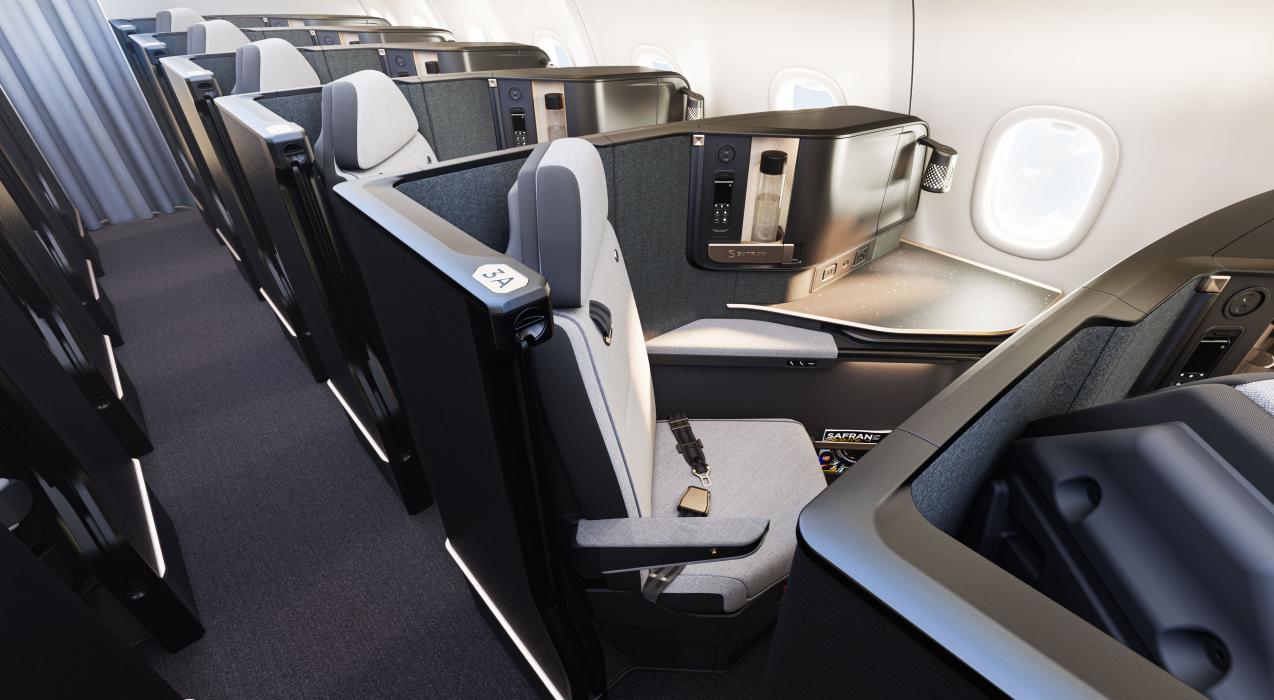
Credit: Safran
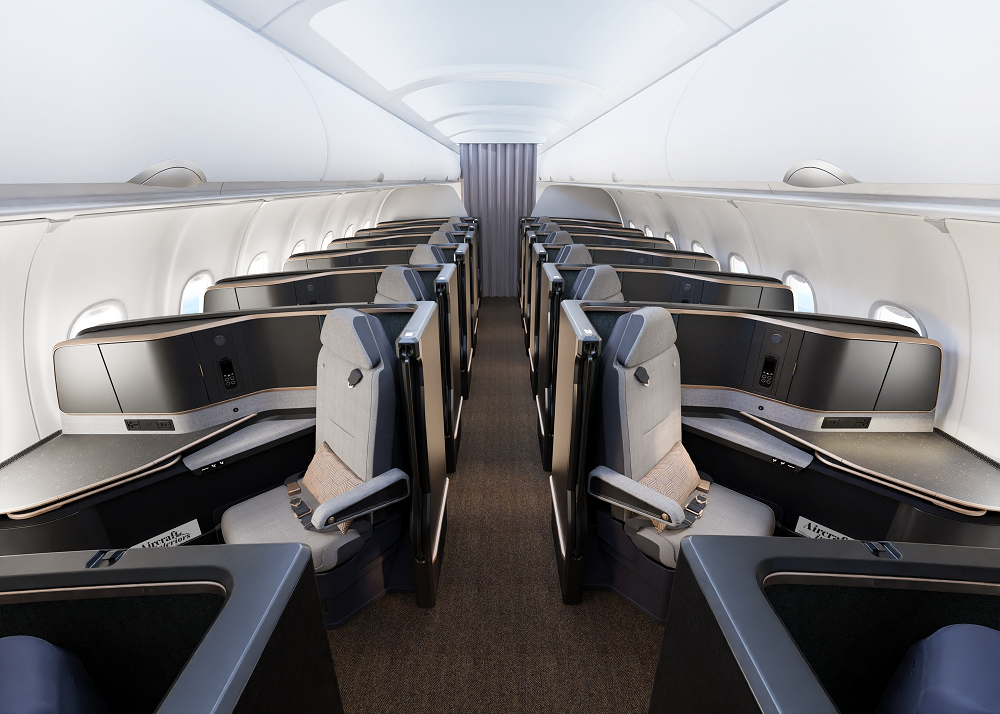
Credit: Safran
Delta put in a whopping 44 standard first class seats into the space where lie flat seats were supposed to go on these planes, as a temporary measure.
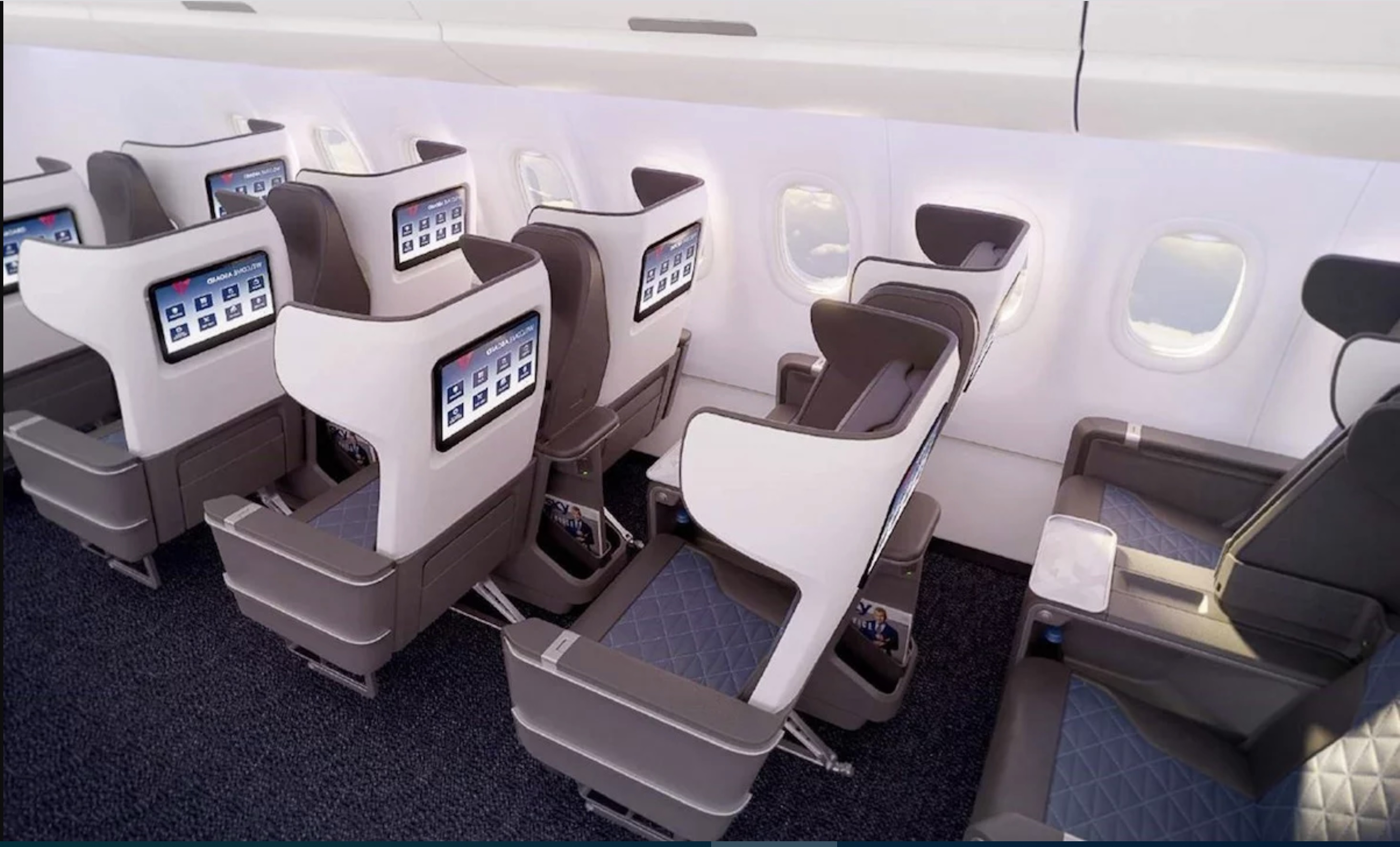
First look at Delta Air Lines new high-density Airbus A321neo.
The narrowbody aircraft features a staggering 44 domestic First Class recliner seats. pic.twitter.com/3lKUCKWpvz
— Turbine Traveller (@Turbinetraveler) May 8, 2026
Ultimately, a move to the VantageSOLO seat (1) won’t differentiate Delta’s product, and (2) won’t even be installed in planes for some time – it’ll take at least a couple of years. In the meantime, Delta is stuck with its current domestic seats on these planes, and more of them than they’ll sell.
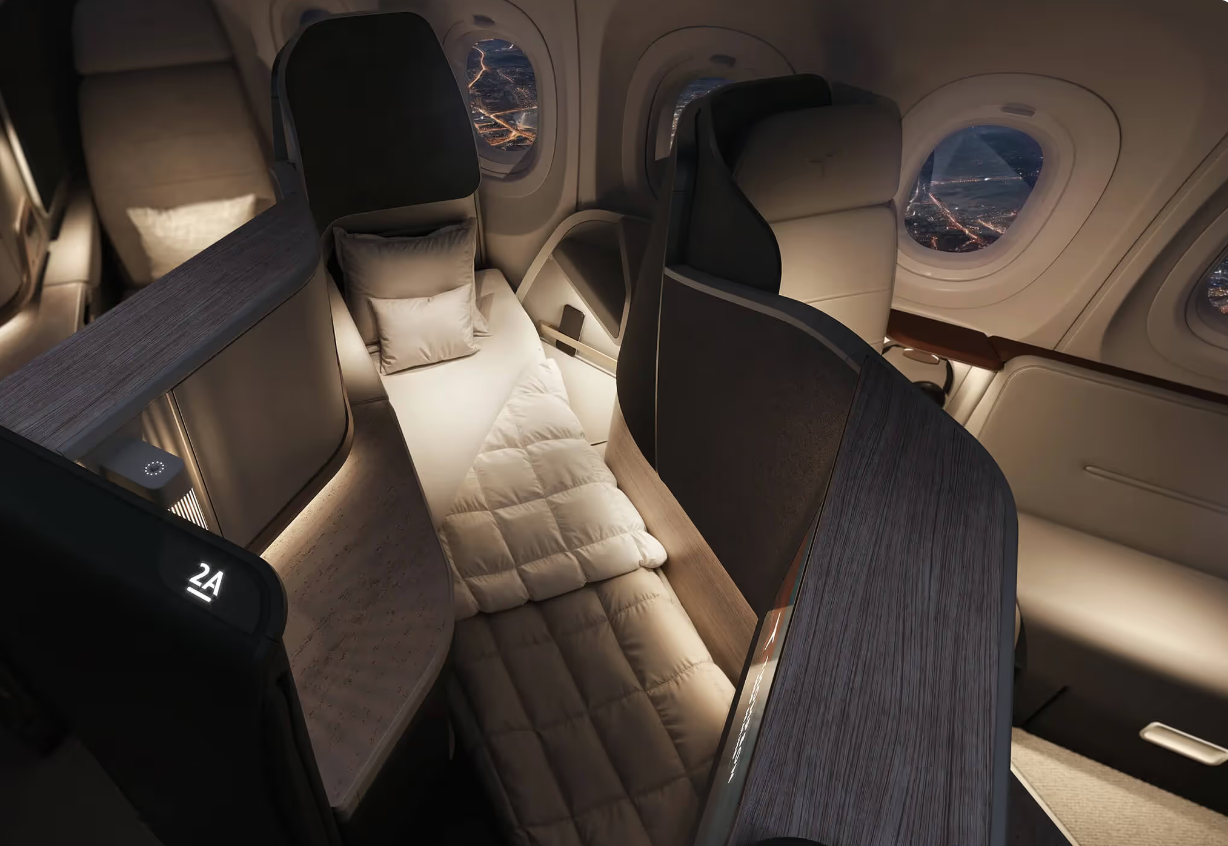
It is similar, for instance, to what American Airlines has today (versus Delta a couple of years from now), in their new Airbus A321XLRs.
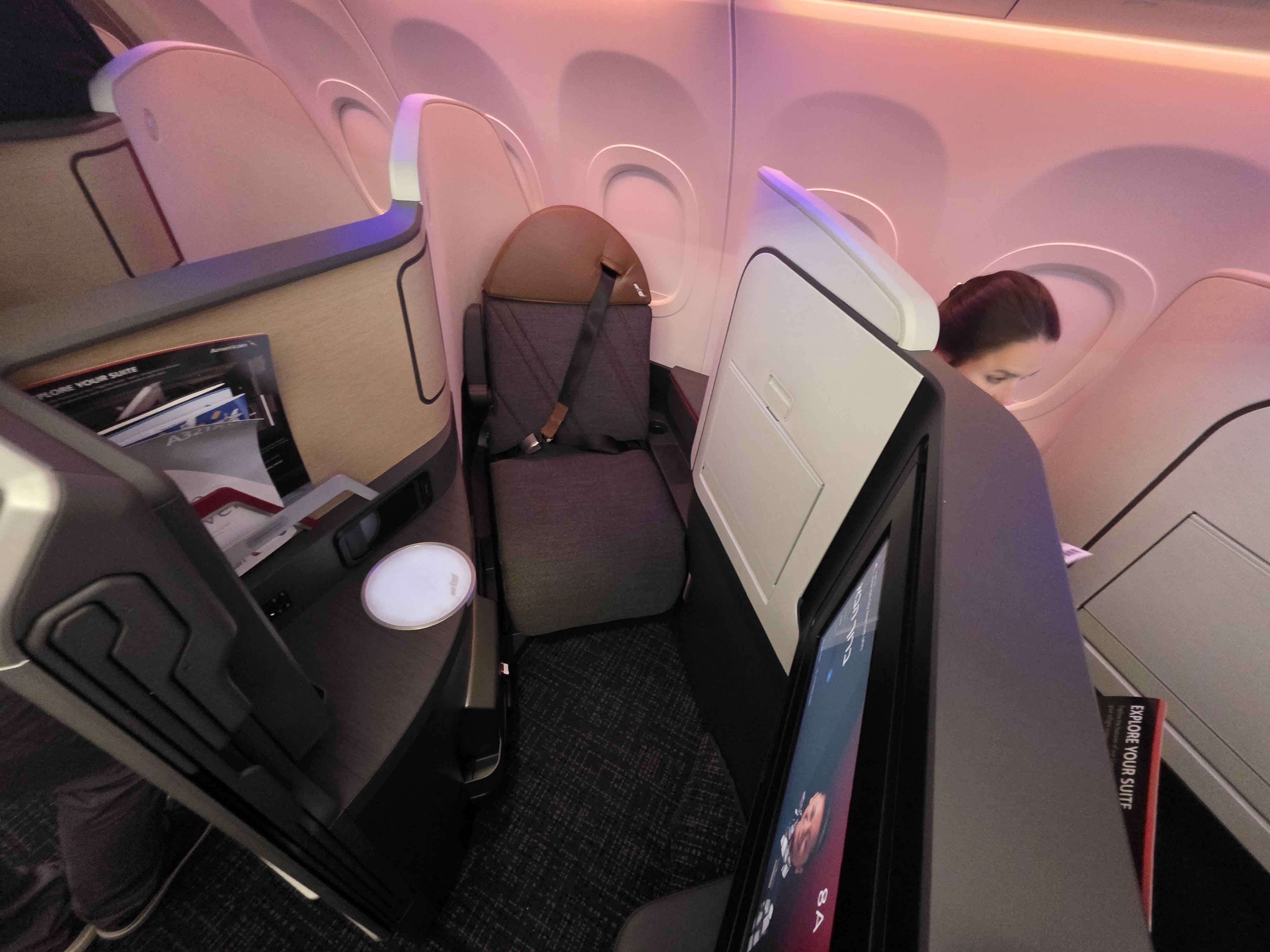
Aircraft seats have to satisfy crashworthiness rules, restraint performance, and evacuation tests as well as structural requirements, meeting injury criteria such as head, spine, belt, femur, and load limits. Business class suites are harder to certify because you have shells, doors, large screens, angled sleeping positions, more complex restraints, footwells, and passenger egress issues.
Delta took a big swing with a good concept of a seat, but that wasn’t certified yet, and that has had problems. That swing didn’t work out, and they’re being left behind because of it.



Good of Delta to adapt, instead of wait for false promises, while providing an inferior work-around (recliners), when premium passengers want and expect actual lie-flat for 5+ hour flights, redeyes, especially when they’re paying extra for those transcon services.
DL and Safran undoubtedly have a contract clause regarding certification of products.
DL’s preference is undoubtedly still the Vue but Safran has probably agreed that, if they cannot get the seat certified, DL is likely free to shop elsewhere. and DL has probably said they could go with the Solo seat because they have a time-locked option for which they are undoubtedly paying something.
Narrowbody premium aircraft will still be inferior to widebodies in many ways, and unlike AA and UA, DL doesn’t intend to operate them on TATL flights. DL’s order for premium 321NEOs is smaller than AA or UA’s as a result.
UA doesn’t even have any in service and AA has a couple that are getting poor reviews. DL won’t lose anything by a couple year delay.
@Tim Dunn — “Narrowbody premium aircraft will still be inferior to widebodies…” How very ‘back in my day,’ of you, sir. Lie-flat on narrowbodies is the past, present, and future; it’s just that Delta messed up on this seat, and is paying the price (through 2028 it seems). Oof. Take the L, dawg.
Another Premium FAILURE by Delta