The new United Airlines flight attendant contract will finally pay cabin crew significantly more. The union’s promotional site does a good job of breaking it down, but I read the actual 425-page agreement to find out everything that’s in it, and everything that they do not highlight.
Directly comparing contracts across airlines is difficult in a way that reduces to simple terms and is meaningful to flight attendants in different situations. This is a 425-page document, and goes well beyond pay rates into specifying how layover hotels are selected, the terms under which they’ll be paid for time spent boarding (something non-union Delta created four years ago), and how long they must be given rest after a redeye flight.
Nonetheless in simple terms, United’s base wage rate will be the highest in the industry under this new agreement. This certainly represents all the money that was possibly on the table – the union told flight attendants that was true with the first contract that was voted down last July, they’d misjudged the priorities of their members, 71% of whom voted against it over disappointing language in areas like hotel stays.
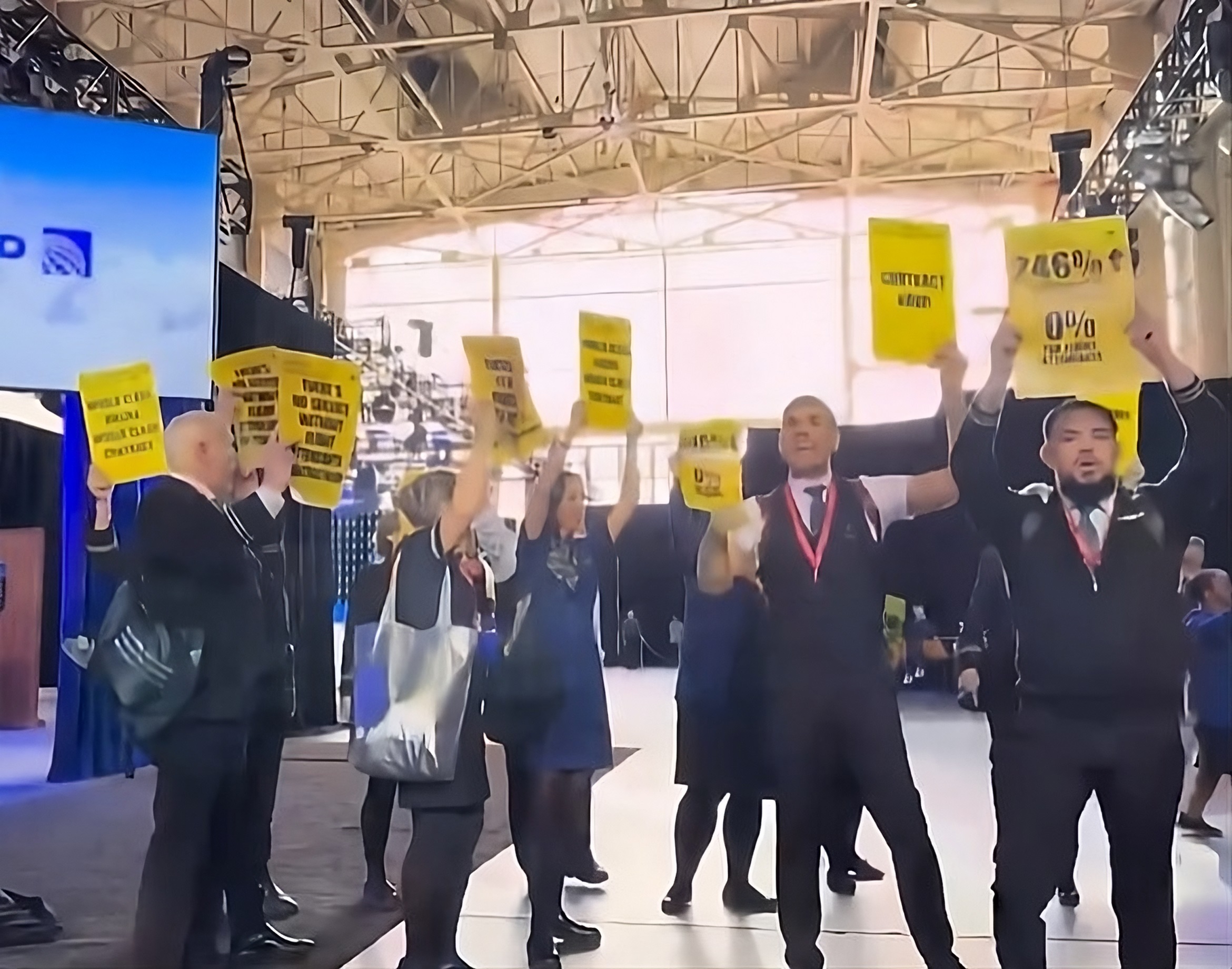
But it’s not more generous in every area. The United profit sharing formula will be lower than Delta’s and American’s. And they had to give up ‘scope’ to get it, allowing United to own a regional airline without staffing it with mainline flight attendants.
It was an intentional strategy on the part of United’s flight attendant union to wait until American’s negotiation was complete before pushing in earnest to get a deal done initially, even lending their lead negotiator to American’s rival union for its effort. Whether it was worth delaying so long, with flight attendants waiting nearly six years without a new contract or a raise, to get this deal is an open question.
Assuming this contract passes it will mean significantly more money, making up for all of the erosion in the value of their pay due to inflation and then a bit more. It’s a huge standard of living increase overnight for work starting in June if this passes.
What Will Flight Attendants Be Paid?
Under this agreement, base pay goes up about 30%. And on top of that there’s boarding pay – half pay for time spent boarding the aircraft, so no longer just block time – and $740 million as a signing bonus (which amounts to retro pay for the long period in which flight attendants went without any raise).
Delta began offering boarding pay in 2022 and that pressed the issue at airlines with union flight attendants. Unions had traded boarding pay for higher wage rates, which benefited more senior flight attendants (who tend to work fewer, longer flihgts) at the expense of junior ones (who spend more time overall boarding, with more short flights).
United’s flight attendants union promotes a ‘$145 million dollar increase’ in retro pay but that’s not really a contractual improvement, cabin crew are going nearly an extra year without a contract so this is just United not pocketing this as savings. But it’s not ‘full retro pay’.
The retro pay formula doesn’t actually treat this new deal retroactive to the last one’s amendable date. And it doesn’t cover inflation erosion of wages during the pandemic. Instead it pays out a flat 4% from September 2021 through 2024 (not 4% increases per year) followed by 22% for 2025 and 2025 for the first 5 months of 2026.
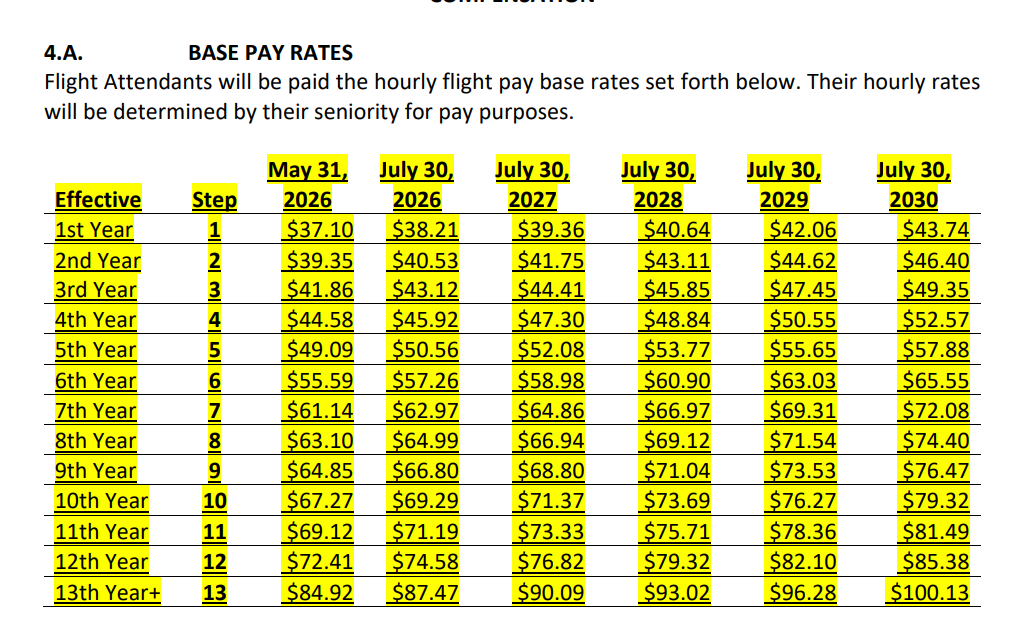
Here are the new pay rates. They’re about 1% higher than American’s.
Flight Attendants Will Get Less Profit Sharing Than Delta
Profit sharing is less generous than at American and Delta. This is actually going to be key for Delta, which still makes more money than United. United’s flight attendant union, AFA-CWA, is trying to organize at Delta, but they won’t be able to say that the crew they represent earn more than Delta’s non-union crew do.
- It took 5.5 years to get a raise, while Delta’s flight attendants get one every year
- Delta earns more, and will pay out profit sharing more generously. In 2026 Delta’s flight attendants earned about an extra month’s pay.
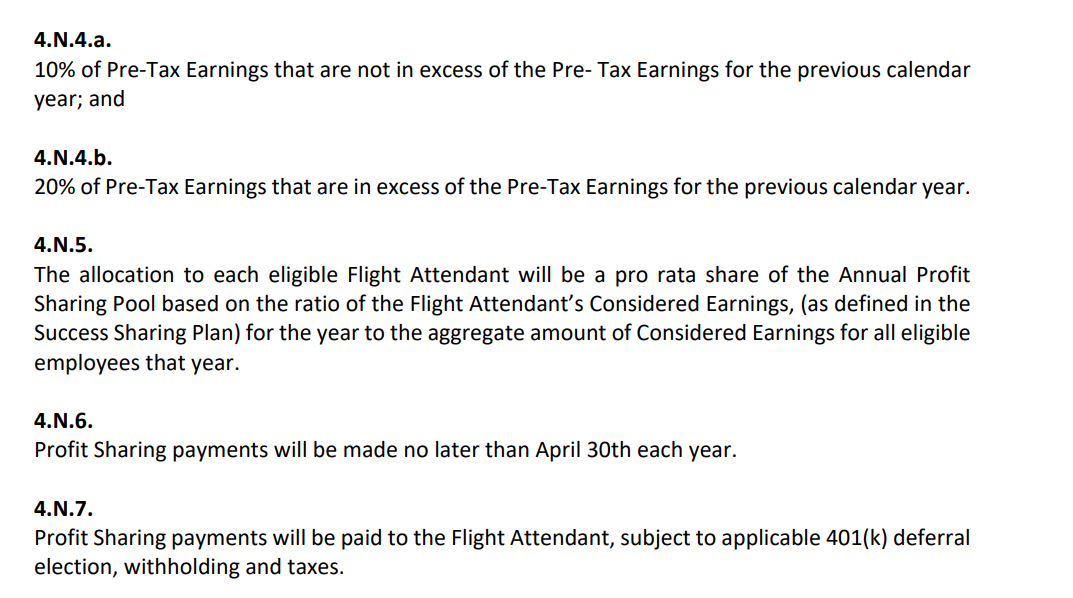
American Airlines flight attendants won the Delta formula for profit-sharing in their 2024 contract. The profit sharing pool gets 10% of the first $2.5 billion in profit and 20% after that.
United’s formula will use 10% and 20% also, but it’s 10% of the previous year’s proft and 20% above that. So by earning over $2.5 billion, United’s formula is less generous. Delta paid out a whopping $1.3 billion in profit-sharing which is nearly twice as much as United’s profit sharing pool.
You’ll see that flight attendants did not get an improvement here compared to the last agreement from 10 years ago:
No Algorithm Scheduling
There’s no PBS algorithm scheduling (‘Preferential Bidding System’) in this contract, though United had been publicly pushing for it, and it’s industry standard. United’s pilots have been using it for 20 years and it’s used for flight attendants at competitors.
With PBS, flight attendants bid ‘what they want’ (pairings, days off, layovers, start times, aircraft, etc.) and the system awards trips to match preferences as much as possible. It does not create pairings – pairing construction stays the same. It does not eliminate trading, pickup, and drops. Instead, it replaces the line build process.
- Current scheduling: Management builds pre-packaged monthly lines (complete schedules). Flight attendants bid on those lines by seniority. If you win a line, you basically know what your month looks like, then you trade, pick up, and drop around it.
- PBS scheduling: Instead of bidding on a prebuilt line, you bid your preferences (e.g., “avoid early reports,” “want 3–4 day trips,” “prefer Europe layovers,” “want weekends off”). The algorithm awards pairings and days off in a way that tries to satisfy as many preferences as possible subject to rules, staffing needs, and seniority.
Airlines like it because they can match staffing to demand better; refine schedules more before bid close; reduce last-minute manual schedule changes; and eliminate the need for a vacation relief bids – giving them a more predictable operation and fewer disruptions and re-assignments.
Some flight attendants prefer it because they get more influence when preferences don’t fit neatly into pre-built lines and they can bid what matters instead of accepting a line with tradeoffs they don’t like. However many flight attendants strongly dislike it:
- It feels complex and can be intimidating
- It can feel less predictable than line bidding because crew aren’t choosing a fixed package of flights, and because results can vary month to month
- When flight attendants don’t get what they wanted, it feels like the system “chose against them” even if it’s just rules and seniority, versus getting a known specific bundle of flights. PBS can feel like bidding into a fog, especially for mid-seniority flight attendants who get different mixes of trips each month.
- optimal bidding can become a game, with more time in the system, more strategy, and more tinkering.
- people who’ve built childcare and commuting routines around a stable line can see reduced predictability.
My own view, articulated here several times, was that United’s repeated messaging to flight attendants about PBS scheduling was something of a head fake. They wanted it, sure, but the union couldn’t actually agree to it, it was too toxic.
So by putting it on the table, they could take it off the table and hand the union a win without actually giving anything up compared to the previous tentative agreement, smoothing the way to passage.
United Can Finally Own A Regional Airline
In order to get higher pay, the union gave up scope. United Airlines can finally own a regional airline, without having to staff it with mainline flight attendants. Flight attendants now revert to the more standard industry practice of relying on pilot scope restrictions – if the airline has to staff with mainline pilots, they need to staff with mainline flight attendants.
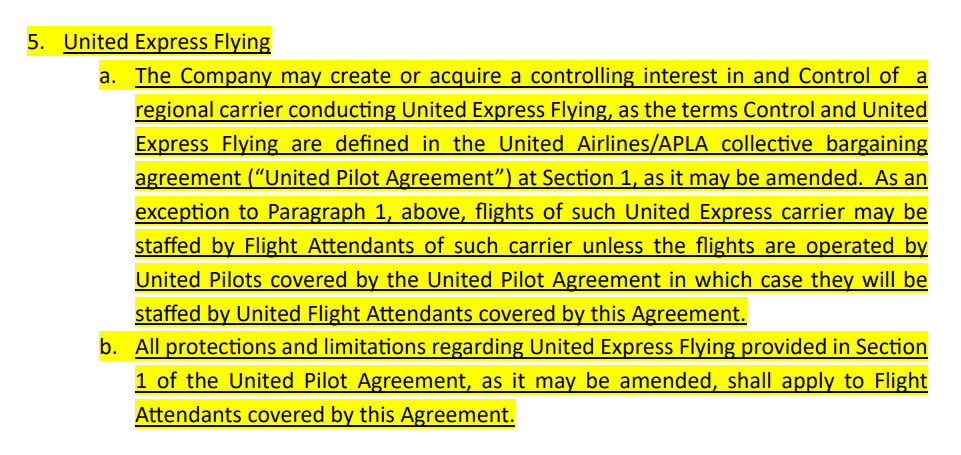
This makes sense from a job protection standpoint. I don’t think they really needed the rule that hamstrung the business in terms of owning a regional carrier, and it’s fairly industry standard (Delta owns Endeavor, Alaska owns Horizon, American owns Envoy, PSA, Piedmont).
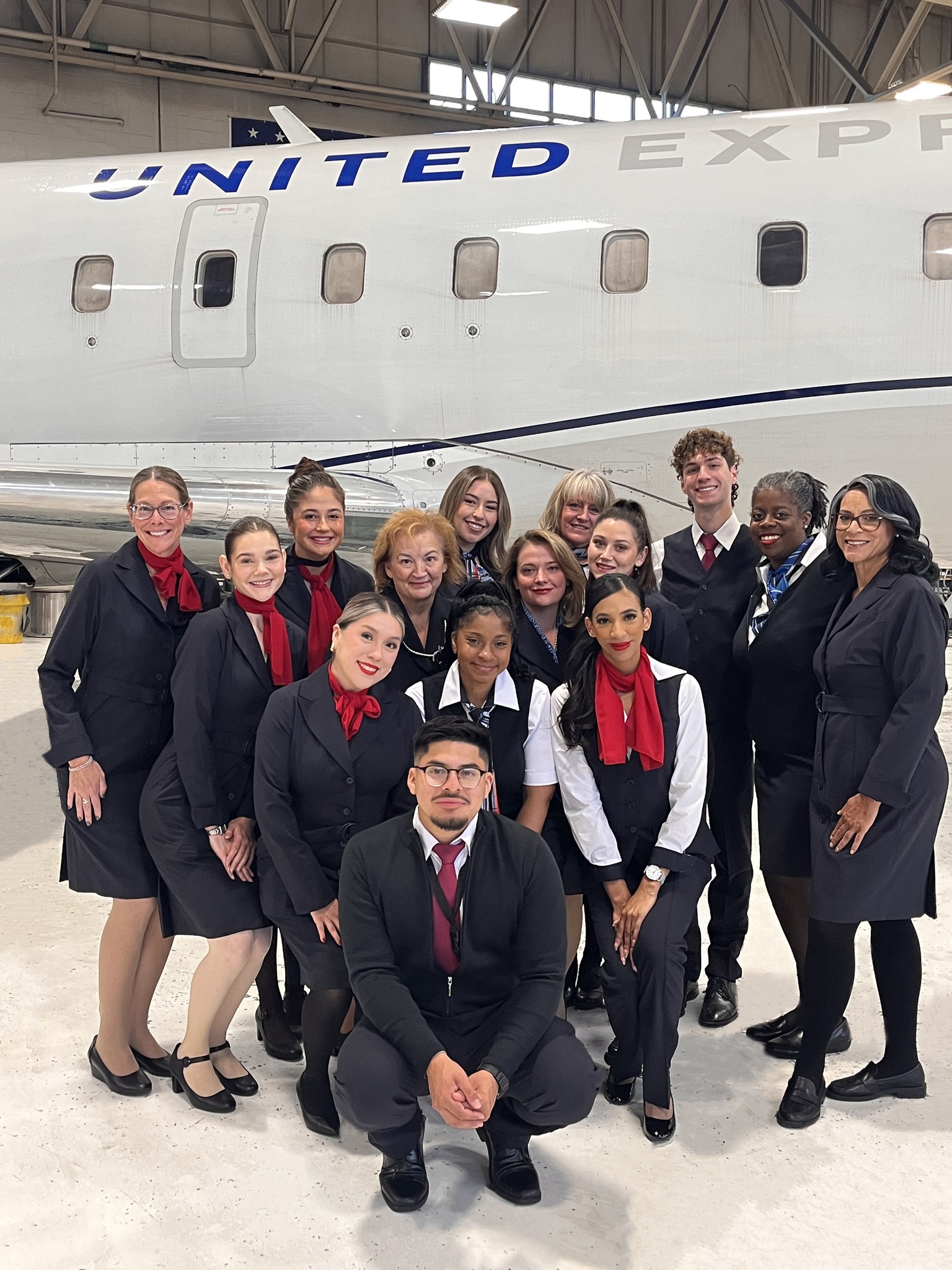
SkyWest-operated United Express
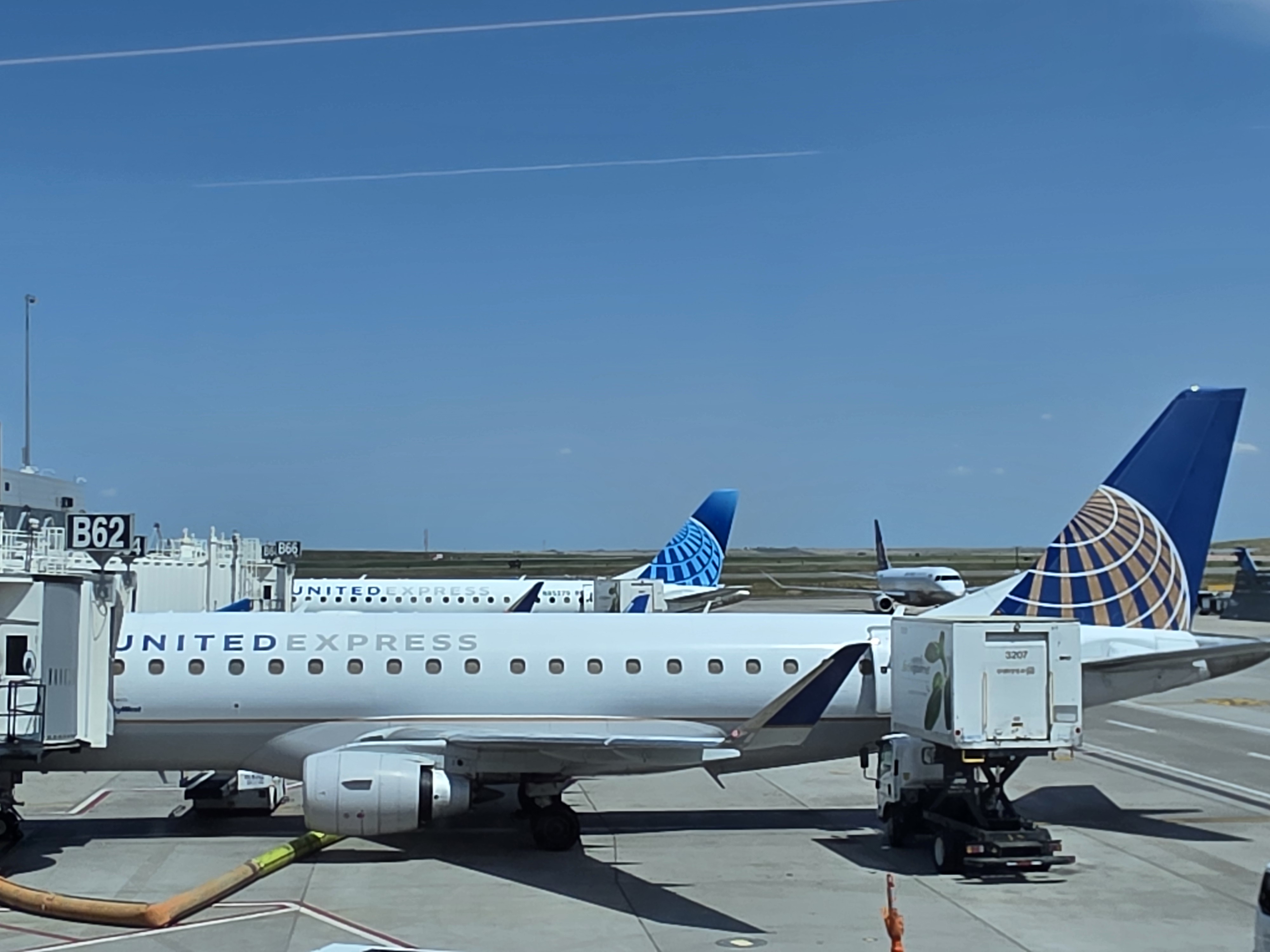
Nonetheless, it’s always a union concern that an airline might shift flying away from mainline to lower-cost regionals, meaning fewer of the union’s jobs. But how much regional flying they can do gets contractually limited – actually owning the regional usually does not.
This Is A Good Deal, Regardless Of The Hype
This contract puts real money on the table. There are tradeoffs, like a 480-hour threshold for employer-subsidized health coverage. They didn’t get union-promised full ground pay. And the union relaxed scope restrictions on the airline owning a regional carrier.
But top base pay goes to ~ $85 an hour on May 31 and to more than $100 in the last year. Flight attendants get 50% boarding pay, and sit pay of one minute for every two minutes scheduled above 2.5 hours. Their 401(k) match rises to 4%. And the layover agreement specifies safe, clean, quiet and secure and not just habitable hotels and hotels on longer layovers need to be downtown and not merely downtown-like.
United’s tentative flight attendant agreement is a huge improvement over their current contract, and seems to do a better job aligning with flight attendant priorities than the one cabin crew rejected last summer. It should pass. And flight attendants who voted no because they were going to vote no on the first agreement no matter what got a second bite at the apple.
Ultimately it took too long to get them a raise, and it wasn’t more overall money than they probably could have gotten two years ago. So it’s great to see this finally happening.



Another reason why they have to tighten the screws and extract every nickle they can from their customers.
It’s a NO VOTE for me!
DL FAs (and other DL employees) have received 4 months plus worth of pay in profit sharing over the past five years. UA FAs will never receive retro on that.
Other unionized FAs will likely have a new contract and higher pay rates by the end of this proposed UA contract – not to speak of the likelihood that DL will raise their FA’s salaries over the course of this contract.
UA FAs will never recover the time value of the money they did not have in their paychecks during the highest inflation the US has seen in 40 years while they waited for a new contract.
UA FAs probably will not get industry leading pay when you add in the union dues which DL FAs do not pay to DL FA salaries.
and UA is having to settle this contract with real cash – not an accounting writeoff – just as fuel prices soar (it was near $5/gal for the US on average on Thursday) and even higher on the west coast and in E. Asia – as well as UA takes delivery of nearly $10 billion in new airplanes this year as capacity has to be cut. No other US airline faces as many factors coming together in a negative way as UA does.
It will all be moot anyway. The FAs will vote the offer down …again.
Then they’ll be right back to the drawing board with the union threatening strike.
Gary, it’s never going to be perfect, but the progress for these workers is good. Well-deserved. Congrats to them.
To the haters, bash all you want. And, be sure to tell your flight attendants how you wish they were getting paid less, ideally before meal service. Eat up!
@Tim Dunn DL FAs lack all the other benefits that UA has had for the past 4 years. Stop neglecting the fact that DL gets the worst end of the stick when it comes to work life balance compared to any competitor. Money isnt everything.
Okay so now please do Delta work rules and job protections vs United. Love that purple juice, don’t we?
tell us how, in practice, DL lags, Ryan.
actual facts only
This afa needs to be fired and get a better union. Very disappointed in them.
I’m happy with TA2 and will vote yes. I’m topped out at over 25 years, but I’ve been earning over $100,000 a year under our current contract, and I’ve been very satisfied with that. I’m not concerned if Delta FAs make $110,000 or $120,000 with their extra profit sharing… my $100K salary has been serving me well. Not having to do “A-days” or shared reserve, and having flown exclusively international flights for the past 20+ years under a bid packet system, has been worth the slightly lower pay to me. This new contract would increase my pay even further, and it’ll be wonderful to finally avoid staying in Woking, Bad Homburg, or The Hague. Just because Delta looks better on paper doesn’t mean everyone wants to be Delta, especially from a flight attendant’s point of view. I never would have been able to fly the international routes I do if I had worked for Delta, and those flights mean a lot to me
You can be 30, earn $75/ hour (though not in a traditional 40 hours a week way), get good benefits, and be immune from AI replacement. Most people with no special skills or training would be happy with that.
Decertifying the union would be a major step while the union uses the dues it keeps collecting to stop the decertification. I doubt it would succeed. I have seen such a decertification (actually against an association instead of a true union) actually succeed when backed by a strong union.
I think Gary has given an over simplistic summary of PBS. Without going into any details about the bidding process, PBS will NEVER give the employee preference over the company’s (a prime example is monthly bid line, vacation and training overlaps). It was sold to management as a productivity tool not a flight crew “quality of life” tool.
Where was @XJONNYC’s source when he “leaked” the pay scale? What numbers did they originally offer? Insulting that he led people on like that.
Mr. Leff, you forgot to mention that Some of the so called improvements won’t go into effect till next year or until 2031
There is precedent within United for the company owning a subsidiary that is both unionized and lower paid.
United owns United Ground Express which staffs smaller station, which are generally served by United Express. The employees there are IAM members, as they are at the larger stations staffed by United Airlines employees, but get paid less.
The airline in question that UA would buy is Commuteair, whose flight attendants are already unionized in the IAM, so that could get interesting.
Commuteair has no future beyond 2028 when its contract with UA expires so no doubt the owners of 60% of the airline would be delighted to sell out to UA.