
I’ve redeemed an N number of billion miles in my time with frequent flyer points, mostly for others. I began redeeming premium cabin award tickets around the world more than a quarter of a century ago.
When I began doing award booking as a service in 2009, it quickly became a six figure side business. Some of the particulars of how each program works have changed, but the basic principles of how to get the awards you want have remained constant.
There are 7 basic rules for finding the award flights you want and getting the most out of your miles. All other advice is downstream of these principles.
- The single most important thing is flexibility. The more flexible you are, the greater the likelihood you’ll be able to use your miles. And that’s flexibility along all dimension.
I’ve had people reach out to me for help with their points, “here’s my travel dates, here’s where we’re going, and we’ll only take the (one) non-stop flight.” Well, that’s either available at a reasonable price or it isn’t and there’s often not a lot I can do to help, although occasionally if it’s available at the lowest price then booking through a partner airline program can get it for even fewer points.
Airlines will be much more likely to make saver or reasonably priced awards available on flights they don’t expect to sell out. And that can mean traveling off-peak, off-season, or at off times or just lucking out on a set of dates. The more flexible you are, the greater your chances.
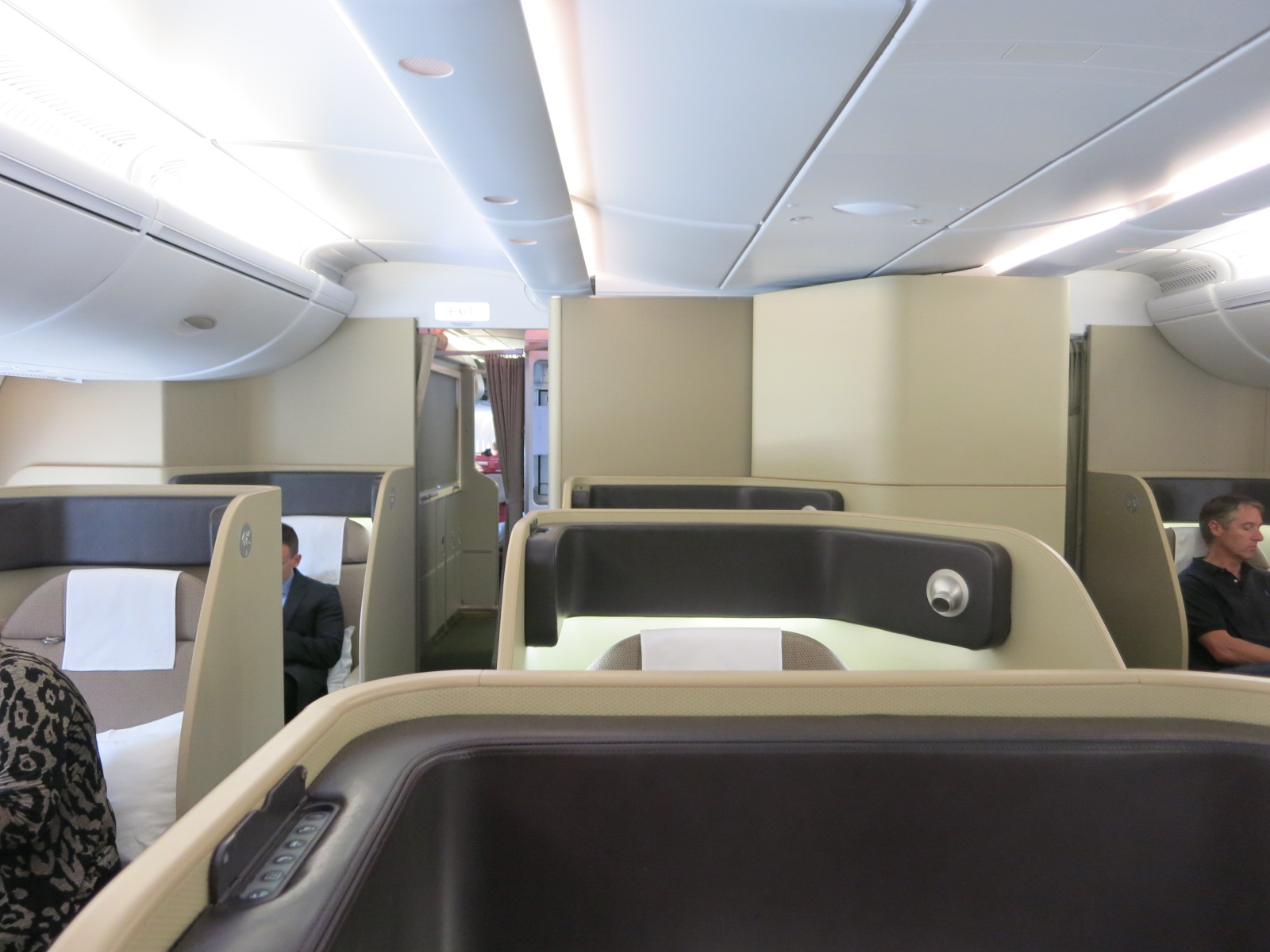
Sure, when I went to my cousin’s wedding in Sydney the ideal dates had first class seats available on Qantas Dallas – Sydney – Dallas. But it isn’t like it once was. Back during the Great Recession I remember a family contacting me for help, wanting 9 award seats between Mexico City and Frankfurt, and I emailed back “how about non-stop all on the same Lufthansa flight, in first class?” Detroit – Frankfurt was usually available in first at quantity, too. Many premium cabins were flying empty back then!
Now, if I want my family of four to fly business class to Europe I can pretty much always do it, but it means for our flights in and out of Austin,
- Maybe we’re flying Air France
- And buying tickets to and from the cities Air France flies to/from
- So I’m looking for availability from between Paris and Houston, Dallas, Chicago, Atlanta and even Florida and New York and DC in a pinch. Or I’m looking at KLM between their North American gateways and Amsterdam (sure I’ve lucked out with the Austin – Amsterdam non-stop but it’s not daily service)
- And connecting in and out of Paris/Amsterdam
- Plus, with some flexibility of a day or two on either end.
Often the difficult seats are the domestic ones anyway so if I’m willing to buy those a ton of options open up. So search for seats from a variety of gateways, not just your home airport. And search both to your final destination as well as to European hubs.
And if you’re booking two separate sets of tickets, one award ticket for long haul and one for domestic positioning flights make sure you have plenty of room for problems with those domestic flights because you do not want to miss your award trip! Assume that your flight is delayed a couple of hours, will you make it? Assume your flight even cancels, is there a likely backup? (And consider even booking a backup with miles from another points program that you can cancel later when you don’t need it, just to be sure there’s space and you have it. Sometimes fly the day before!)

- Maybe we’re flying Air France
- When you search matters.
Often the best availability is right when schedules are first loaded for a set of dates, which varies by airline (e.g. 331 days in advance, 355 days in advance). That’s not universally true. I often hear from people saying they were up at midnight right when schedules opened, they didn’t get award seats, and ‘someone must have beaten them to it’).
Some programs load award seats right away, others shortly after schedule load, and others you won’t see it until they have a better sense of how a flight will sell which comes later.
British Airways is a classic example of an airline that has award seats right when the schedules load, and those seats may only be available to members spending points in an Avios program. They also make those seats available earlier than many partners like American Airlines AAdvantage allow for bookings.
In general I find the best availability right away (nearly a year out), around six months out, and super close to departure when an airline knows they aren’t going to sell what’s left. Not every airline follows this pattern but if I’m looking across airlines I know that these are usually the best times and that 3 months out is often tough (those early seats are gone, the last minute ones haven’t been released yet).
- What points you’re spending matters.
It used to be that with most airlines, award seats were award seats. You could claim them with an airline’s miles, or an airline’s partner’s miles. It didn’t matter if you were spending Qantas points or American Airlines miles, you’d have access to the same award space.
There have been long-term exceptions to this, like Lufthansa Miles & More making more space available to their own members (and especially well-known is that you needed to spend Lufthansa’s own miles if you wanted to book first class awards in advance).
Since the pandemic this trend has really accelerated. Airlines like Qantas, Cathay Pacific, British Airways, Finnair, Etihad and Qatar favor their own members using their own points over partner programs. So does Japan Airlines.
If you’re spending EVA Air Infinity MileageLands points, you can almost always go business class to Asia – if you’re willing to fly out of Seattle, and if you’re connecting beyond Taipei (connecting itineraries get more space than journeys originating or ending in Taiwan).
That’s one of the reasons why transferrable points currencies like Chase Ultimate Rewards, American Express Membership Rewards, Capital One miles, Citi ThankYou Rewards and Bilt Rewards are so valuable. You can move your points to whatever program has space. And you can utilize the points in many foreign programs that give seats to their own members but not to their U.S. partners like American or United.

- Be willing to spend more points.
Along with making more lowest-cost award space available to an airline’s own frequent flyer members, many airlines have moved to offering more award availability at higher prices.
You might not be able to get a saver award from American AAdvantage to Europe but maybe they’re charging 80,000 miles. Maybe Air France doesn’t have the lowest-cost award available but for one-third more there’s copious seats across a myriad of dates. At a higher award price point you can get Japan Airlines business class to Tokyo far more often.
Some programs are just having you ‘buy’ whatever seats are available at a low value per point. We see this often from Etihad, for instance. And Delta SkyMIles remains a dumpster fire.
However, paying more points then the lowest possible can be a great value, especially if you are looking for several seats (two is harder than one, three is harder than two, etc.) or don’t have a lot of flexibility in routing or dates of travel.
- Spend points getting to Europe, and buy a ticket home.
This is something of an edge case but also a good reminder to check the prices of the tickets you’re buying with points, especially when the award comes with hefty taxes and surcharges. Is it a better deal with cash?
You’re more likely to see good fare sales originating in Europe than the United States. Airlines are great at price discrimination, charging different prices to different people. They know that they can pick up business with lower fares from Europeans but don’t want to undercut the higher American willingness to pay (Europe is comparatively poor) so itineraries that start in Europe are often cheaper. They don’t always require booking roundtrip.
It can make sense to book an award for the expensive part of getting to Europe, if there’s a good sale, buying the return ticket back to the States (or for frequent Europe visitors, book a one-way ticket to Europe on points and then all of your roundtrips originate in Europe).
- Book your worst case scenario to lock in the trip, and keep trying to improve the award.
This is where I almost always start. I book what’s available now. That’s the itinerary I can live with if I have to. It’s the one that locks in the trip. Now I know it’s going to happen. But with most programs awards are flexible enough (no or less fees to cancel and redeposit points) that this is just the opening bid. I will keep looking for availability to improve the award over time as travel approaches.

- Use tools to find the space and set alerts for space to open up.
Twenty years ago all I had online was ANA’s website for searching Star Alliance award availability, one route and day at a time. It was a brilliant hack, to call United knowing exactly what was already available. Today there are myriad tools out there. For the broadest possible audience, there’s point.me which helps you find the space and walks you through how to transfer points (if needed) and make the booking. But there are plenty of free tools out there, too.
This goes along with making a worst-case scenario reservation and then waiting until the space you want opens up. Putting all of this together for my family in Australia, what I’ve often done for one of my cousins when he wants to come to the States is just set an award availability email alert (in this case, using Expert Flyer) for every one of the Qantas flights between the U.S. and Australia for his possible dates of travel. Something is going to open up in business class.
And if it means the difference between traveling coach or business class across the Pacific he doesn’t really care whether he originates in Brisbane, Sydney, or Melbourne or arrives in Los Angeles, San Francisco, Dallas, etc.



Your point #5 was right on point. We booked USA-LHR on points and bought mixed economy/ PE BGO-LAS $2000 apiece on KLM, Business $4500 apiece. Kept checking flight on KLM site, up came upgrade to full business, 20k points apiece worth $2500 apiece. I would add to recheck booked flight often to book and look.
Your point #6 is also excellent. I will grab what award flights I can and try to do better over time, which for me has been around 75% successful. One example–PHL-BUD in PE started at 55K miles then over time dropped to 47K. It’later went to 100K+ before being sold out for my flight.