
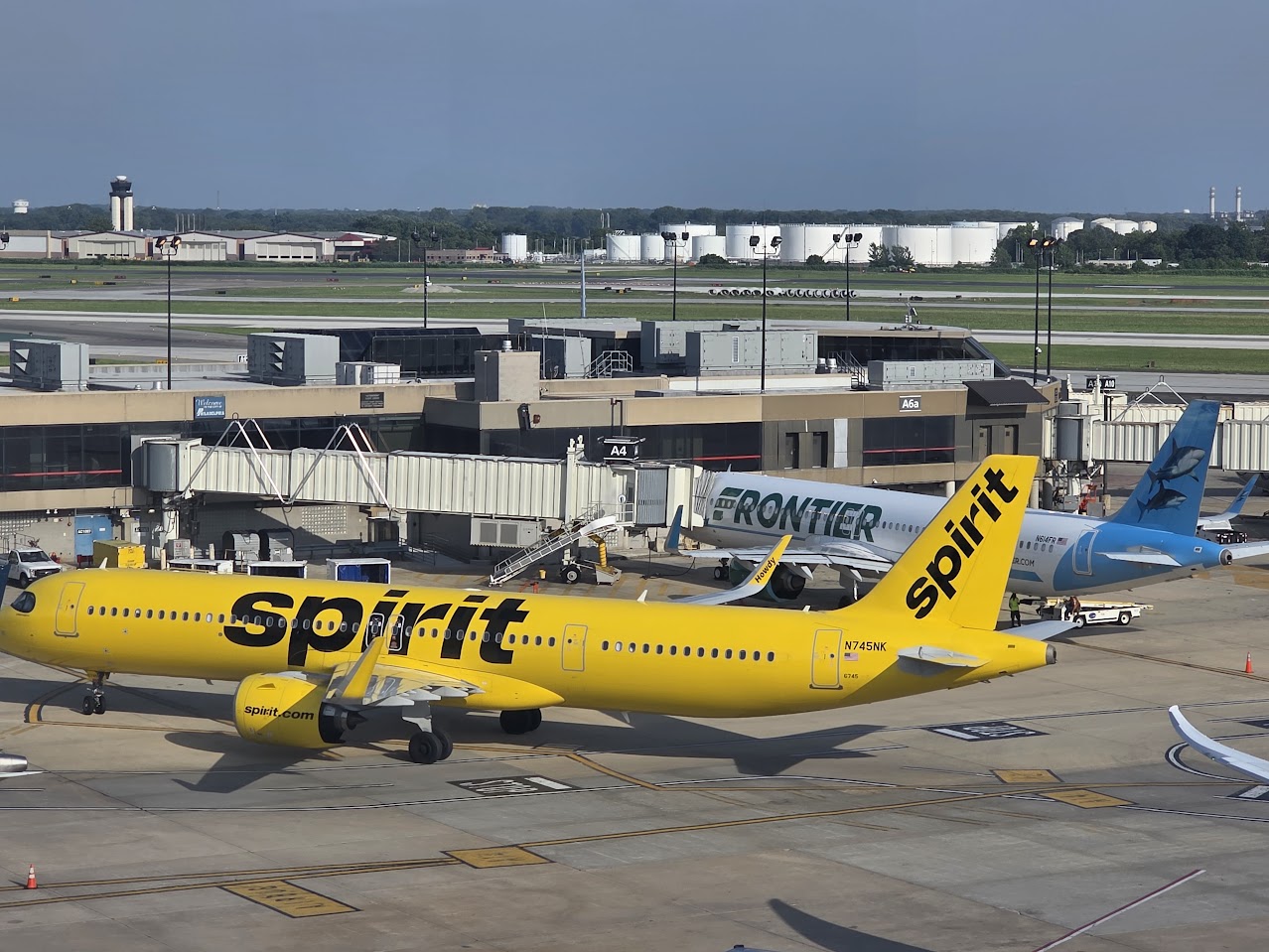
Breeze CEO and JetBlue founder Dave Neeleman predicted at the Skift aviation forum that Spirit Airlines and Frontier will merge in 2026. Frontier tried to buy Spirit before they were outbid by JetBlue in a deal that was ultimately scuttled by the Department of Justice, and had discussions again about a deal before Spirit entered bankruptcy.
His argument was:
- “I think Spirit and Frontier need each other…[Frontier CEO] Barry Biffle may not say that, but they do.”
- “Spirit’s restructuring is meaningful” referring to flight attendant and pilot cost reductions as well as cash raised.
- Spirit and Frontier “need the synergies” because “there’s room for a ULCC in the U.S. but probably not two.”
Neeleman attributes the difference in success between U.S. and European ultra-low cost carriers as resulting from European carriers like Ryanair sticking to their core strategies, which included flying to secondary and tertiary airports, rather than competing directly with major carriers – and he notes that U.S. legacies have found success with basic economy fares.
This allows the U.S. airlines to match prices of the ultra-low cost carriers, while restricting benefits enough that they don’t undercut the fares they want to charge to their existing customers.
His articulation of this is instructive for thinking about how his current airline, Breeze, grows – most of their routes do not compete directly with anyone else. He clearly isn’t looking to fly against United, Delta and American to a significant degree.
The JetBlue and Breeze Airways founder is also handicapping which major European airline buys TAP Air Portugal, where there’s a re-privatization in process. He thinks TAP Air Portugal makes the most strategic sense for Lufthansa, and says that he had nearly sold TAP to Lufthansa at one point.
He doesn’t think it makes sense for British Airways parent IAG to buy TAP Air Portugal, because TAP’s Lisbon hub is too close to Iberia’s Madrid hub, and IAG also owns Iberia. So he predicts either Lufthansa or Air France prevails.
Neeleman led the privatization of TAP Air Portugal in 2016. Neeleman’s group took 45% of the airline, with employees holding 5% and the government keeping half. Reportedly Neeleman’s group had about 90% of the economic rights at the airline. However, the government re-nationalized TAP during the pandemic and it reportedly included a payoff to Neeleman of €55 million.



A combined ULCC has an opening at OAK, where Southwest has lost traffic to SFO by gouging OAK customers. From https://www.sfgate.com/travel/article/bay-area-most-convenient-airport-21197530.php
“the 10.8 million passengers OAK recorded last year is almost 20% below the number that passed through in 2019. Through the end of September this year, OAK has seen 7 million passengers, a 16% drop from the same period last year — and a 31% decline from the first 9 months of 2019. Those numbers are challenging. SFO, meanwhile, reached 94% of its 2019 passenger levels for January through September by the end of September this year — a nearly full recovery.”
It’s time for reasonable prices to return to OAK.
I think he’s right that this could happen, but at this point, it may actually be a better deal for F9 to wait for a fire sale in Chapter 7 instead of buying NK.
The funny thing is that the arguments that the last DOJ made against the B6/NK merger apply even more to a F9/NK merger. The DOJ argued that B6 and NK had too much route overlap, but F9 and NK have even more route overlap. Describing yourself as a ULCC or LCC doesn’t matter in the antitrust analysis.
At the end of the day, I do think that SCOTUS decided Philadelphia National Bank incorrectly. That basically said that if a merger is pro competition in 99 markets but anticompetitive in a single market, the merger violates the Clayton Act. There was an opportunity for JetBlue to get Philadelphia National Bank overturned if they appealed to SCOTUS, but I think Spirit’s price tag became too big once the P&W issues became more widespread.
I’d rather see both Spirit and Frontier go out of business. If other airlines think any of the assets have value, they can buy them on the open market.
‘Town ain’t big ‘nuff for tha both of us…’ *each of them shoot themselves*
No. Neither Spirit nor Frontier will merge with anybody. It would simply be the marriage of the flying dead.
100% of Frontier’s fleet is leased so they have no meaningful assets and $4 billion in debt.
God only knows what Spirit’s condition is at any given moment, but they just used bankruptcy to reject the leases on 11 more planes because they can’t afford the lease payments.
A combined NK-F9 is still only about half as large as WN…making them a distant fifth or sixth, neck and neck with AS.
If the business model of commercial aviation is pivoting such that airline profitability is dependent on revenue generated from their loyalty programs and credit card deals (legacy carriers) or selling bundled travel (Allegiant), how do a merged NK-F9, B6, AS or the also-flowns survive without commanding far more market share than all of them combined?
When the four largest carriers control 75% of the seats, there really isn’t much room for anyone else. The industry needs to consolidate down further.
@Parker — “If the business model of commercial aviation is pivoting such that airline profitability is dependent on revenue generated from their loyalty programs and credit card deals…”
If? No longer an ‘if,’ friend. We’re here.
First and foremost looking at Frontier’s eroding financials I have no idea of how that airline isn’t going to ultimately suffer the same fate. The job market/real economy (not the asset economy) is getting weaker and weaker, despite what Trump says. It would be like two drunks trying to make one sober person.
Secondly, why wouldn’t Frontier just buy whatever assets in a bankruptcy liquidation sale. But again, Frontier is trying to rationalize it’s route structure into profitability. Why would it need more planes and more routes?
Wait, Gary, do you mean, “Mormon David Neeleman…”
https://viewfromthewing.com/from-flydubai-to-breeze-airways-the-boeing-boeing-pilot-juggling-marriages-on-two-continents-returns-to-the-skies/
The only way a merger could possibly work is if Frontier went bankrupt and wiped out its debt. Nobody’s going to invest in the merged company with Frontier’s debt hanging over it.