
Southwest Airlines won a very strange lawsuit. The opinion from the U.S. Court of Appeals for the Fifth Circuity begins,
In this class-action lawsuit, Plaintiffs sue Southwest Airlines Company (Southwest) on behalf of themselves and everyone who bought a Southwest plane ticket between August 2017 and March 2019.
Two Southwest flights crashed during that period, but Plaintiffs were not ticketed to fly on those flights.
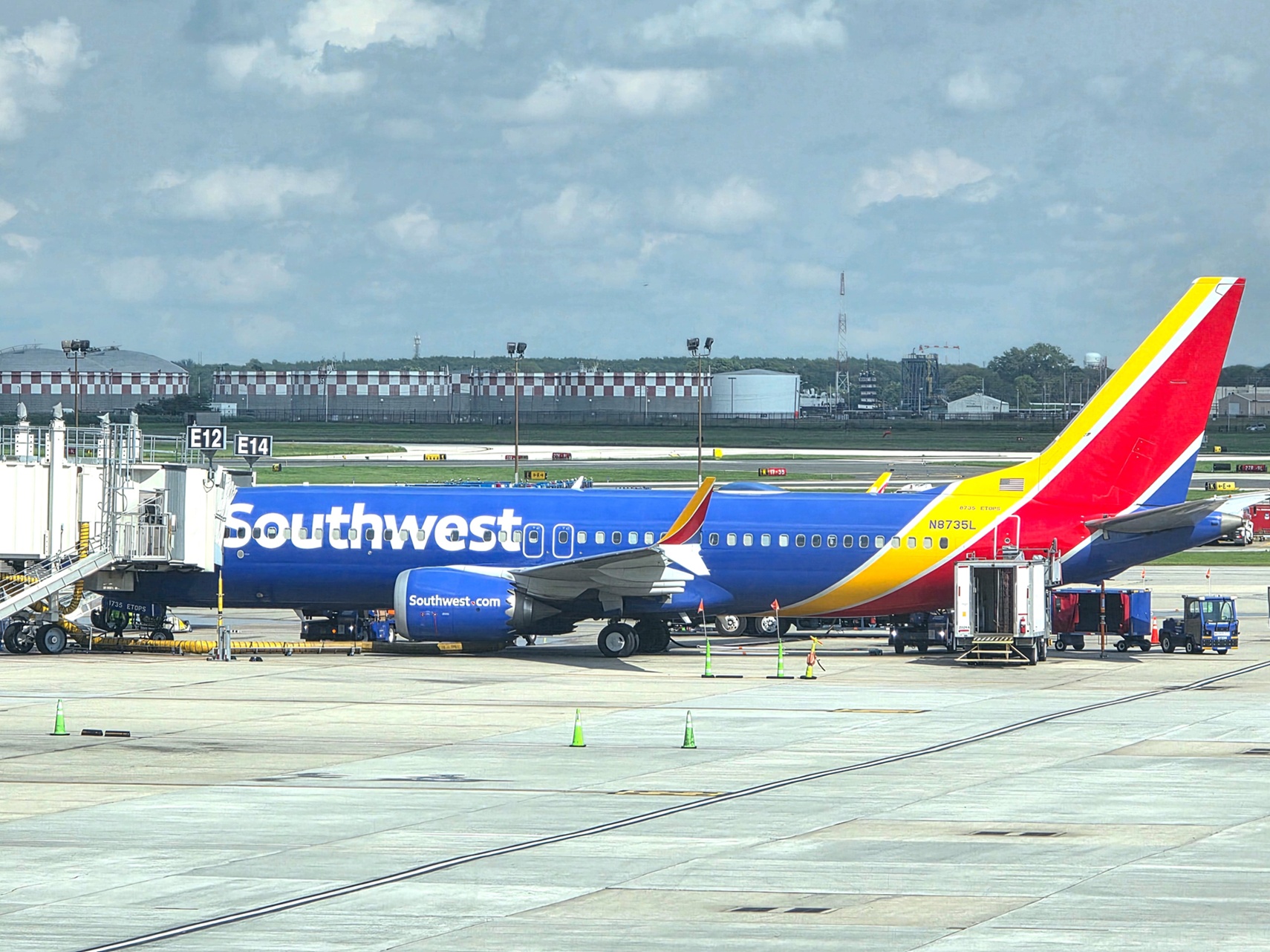
This is a Boeing 737 MAX case. No Southwest Airlines 737 MAX – or any Southwest Airlines plane – crashed during that period.
In Monahan et al. v. Southwest Airlines Company (No. 6:21-cv-00887-ADA-JCM), Southwest Airlines passengers sought to bring a class action against the carrier for breach of contract. Southwest promised safe transportation, but they flew 737 MAXs. They sold tickets ‘at full price’ but did not deliver the promised safe flights on safe aircraft with properly trained pilots and regulatory compliance.
- The theory was that anyone who bought tickets on Southwest Airlines was defrauded, even if they did not fly on a Boeing 737 MAX, because Southwest can and does substitute aircraft. No one actually knows at the time of purchase what plane they’ll get.
- Southwest’s Customer Service Commitment promises that safety is Southwest’s first priority, that it would not compromise on safety, and that all Southwest pilots, flight attendants, and mechanics were trained and familiar with every airplane in the fleet.
- But Southwest broke those promises by operating the “unsafe,” “non-airworthy,” and “defective” 737 MAX, by not sufficiently training pilots on the MAX and the MCAS-related differences from earlier 737s, and by making misleading statements about the aircraft’s safety.
The lawsuit alleged that Southwest helped push the FAA to approve the MAX without simulator training, including by keeping MCAS out of the flight manual. And that’s part of the story of the Lion Air flight 610 and Ethiopian Airlines flight 302 crashes.
No one suing was harmed in a crash. Everyone got the transportation that was promised. But the suit argued that Southwest didn’t fully deliver the promised product, since everyone rolled the dice on whether they’d get a MAX and whether that was actually safe. As a result, the ticket they bought was worth less than what they purchased.
That was never going to work, and it certainly wasn’t going to work in the 5th Circuit. And it definitely wasn’t going to work in the 5th Circuit against hometown Southwest Airlines.
- Named plaintiffs never even flew the MAX, had no physical or emotional injuries, and got transportation as purchased. Any overcharge theory was entirely speculative, and there was no standing to sue without injury.
- The contract of carriage saying that transportation is provided in accordance with “applicable laws” doesn’t make all FAA requirements private contract terms. And the boilerplate language Southwest uses to market its safety commitment isn’t concrete enough to be an enforceable promise.
- The case is about airline prices and services, so federal law preempts state claims under the Airline Deregulation Act. They can still be sued for violating their own contract terms, but the plaintiffs wanted to look at federal aviation law not the contract itself, which they argued was incorporated by reference.
- Plaintiffs bought tickets at Southwest.com which includes a class action waiver.
All the district court needed to get to was lack of standing. The Fifth Circuit doesn’t countenance lawsuits over risk of injury that never happened, and the plaintiffs never even flew a plane that had the alleged risks. The Fifth Circuit said the case wouldn’t have had standing if they’d flown the aircraft.



That is an odd one; would’ve opened the floodgates to many more lawsuits on the same attenuated reasoning. At least the attorneys will get paid… yay… for the lawyers… *facepalm*
However, Boeing really should have been criminally punished, as they were expected to be after years of cases and investigations on the Max; and, yet, this administration let them off the hook. That is the real tragedy here. The lack of accountability will likely lead to more preventative deaths. *sigh*
Plaintiffs’ lawyers took a long-shot stab at the class action pot-o-gold. If it had worked, they would have taken half of the award plus expenses, with the parties getting a few pennies each. Now all the lawyers get are tax write-offs.
It will never happen but legislators should pass a “loser pays” law. If the plaintiff sues and fails to prove the case, the plaintiff then pays the defendant’s court costs and attorney fees. This should eliminate many of these types of “lemme see what I can get or what the defendant will settle for” types of litigation. It might also stifle “ambulance chasing” attorneys. This particular suit seems to warrant this theory.
Ron: In a contingency case it’s more typically 25% if settled before discovery; 33% if settled after discover or if it goes to trial and you win the case; and 40% if the case is appealed and you win the appeal.
Win: “Loser pays” is how it works in England.
Oddly, the opinion states that at the beginning that two SOUTHWEST that flights crashed, but it wasn’t their flights that crashed. Southwest did NOT have any flights crash.
The real significance of this ruling is jurisdictional. Once plaintiffs ask a court to decide that an airline ticket should have cost “X dollars less” because of an undisclosed safety concern, they are no longer litigating a conventional contract injury, they are inviting a court to retroactively regulate airline pricing through tort-style valuation. That is precisely where Article III standing doctrine and the Airline Deregulation Act become mutually reinforcing barriers. The better plaintiffs’ theory, if one exists at all, would have to be tied to a concrete itinerary-specific economic loss or a materially false representation that induced a transaction in a legally measurable way, not a generalized attempt to monetize hypothetical safety risk across an undifferentiated ticket pool. In other words, this is less a vindication of airline conduct than a reminder that aviation safety disputes and airline pricing disputes occupy very different legal lanes, and clever pleading cannot collapse them into one.
I’m surprised the careless/clueless mainstream media hasn’t picked up on these “two SWA crashes” and run with it. This should be all over the news next to the AA-UAL merger.
These lawyers should be disbarred for this type of nonsense that clogs up the legal system and wastes everyone’s money.
In their 50+ years in business, Southwest Airlines has had exactly 2 fatalities related to aircraft, neither of which was a Max 8 Aircraft. Why is this person trying to file a lawsuit related to accidents which took place on Foreign soil and operated by Foreign Airlines whose training is unknown. And, to add to this, why did the Attorney’s who actually took on this case not do their due diligence to confirm the before going before the Court?
@1990, as I posted in an earlier thread on the MAX some weeks ago, most of the, “this administration let them off the hook,” stuff occurred under the Biden Administration. For example, the original “settlement” between Boeing and the crash victims’ families was clearly against settled law, but the appellate judge had no way of overturning it. That occurred under the Biden DOJ. Please look here: https://apnews.com/article/boeing-737-crashes-history-19bf214d36323786b8035e9b3002248a
I realize its now the norm to blame Trump for literally everything, but in this case the vast bulk of the governmental covering up and letting Boeing escape punishment occurred under his predecessor.
@Win Whitmire – Not just “loser pays” but permanently disbar any attorney who loses three “loser pays” cases. Makes ’em a lot pickier as to cases they’ll take.
The plaintiffs bar upholds justice and is the only way the little guys (that’s you) ever stand a chance against the clients I represent.
Ambulance chasers got checked by the reality of the court.
@Bob Moran — No, you’re doing TDS, as in ‘devotion’ to your guy on here. The proor administration consistently sought to hold Boeing accountable (2021-2024); whereas, the current administration (since 2025) gave Boeing a sweat heart deal, no guilty plea. The families of the victims just recently filed a new petition on April 14, 2026 to seek criminal accountability. So, are you gonna just defend your guy and corporate malfeasance, or actually seek accountability here? I think the victims deserve better.
SW (WN) has NO crashes between the above mentioned dates of 2017 August-2019 March. End of story.
Desperate ambulance chasers should be made to pay; causing companies money and more importantly blocking up the courts from hearing legitimate cases.
SW (WN) has NO crashes between the above mentioned dates of 2017 August-2019 March. End of story.
Desperate ambulance chasers should be made to pay; causing companies money and more importantly blocking up the courts from hearing legitimate cases.
@1990, again, the original plea deal versus Boeing and the families occurred under the Biden DOJ. Please actually look at the timeline published by the Associated Press. I didn’t invent that timeline. And no, I wasn’t in favor of the most recent plea deal. For the record, I’m not a Trump voter, I’m an independent. I’ve voted for both parties. Heck, I voted for Feinstein twice. I just can’t stand the hypocrisy of blaming him for literally everything. Similar things happened when Obama was in office, culminating in the, “Thanks, Obama,” skit on SNL where he was blamed for the smallest things. Anyway, I’m going to walk away from this thread after this post. Just remember, not everything is The Orange Man’s fault. Dementia Joe was in office for four years. Did nothing happen during those four years?????