
There’s a lot of talk about airline mergers. JetBlue tried to buy Spirit and the Biden administration blocked it. Now Spirit is in its second bankruptcy and its viability as a standalone entity is in question. That lone makes the Trump administration likely open to further airline consolidation.
United’s Scott Kirby has openly salivated over JetBlue’s New York JFK slots, and would value a Florida hub given the airline’s lack of presence in the Southeast. However, he’s also said that this is dependent on price, he has a JetBlue partnership already (although without antitrust immunity), and has flagged integration as a huge distraction. He was part of the team that merged America West and US Airways and US Airways and American Airlines.
JetBlue itself is reportedly looking at the antitrust implications of selling itself potentially to United, Alaska, or Southwest.

Now Secretary of Transportation Sean Duffy says he’s open to airline mergers, “President Trump loves to see big deals happen.”
Is there room for some mergers in the aviation industry? Yeah, I think there is.
…I’m going to wait and see is there a deal that’s brought to the table? How does it look, what impact does it have on competition, what is it going to do for the consumer and the pricing of the consumer? What does it do for us to be competitive globally, to make sure that we in America have the biggest and the best airlines competing around the world.
CNBC: There's growing chatter that one of the big four airlines could get even bigger and buy one of the smaller ones. Would you like to see that?
SEAN DUFFY: President Trump loves to see big deals happen. He'd have to review it. But I think there's room for some mergers in the… pic.twitter.com/LnpI4CUqDz
— Aaron Rupar (@atrupar) April 7, 2026
He talked about mergers of large airlines peeling off assets, and expressed concerns about competition, but said he’s look at it and the President would look at it.
While the Department of Transportation has the legal authority over international airline alliances and joint ventures seeking antitrust immunity, the Department of Justice has statutory authority to review domestic airline mergers. (The authority to exempt airline joint ventures from antitrust comes from the Airline Deregulatoin Act, which conferred the authority to sign off on price-fixing international tickets by the industry in much the same way that the Civil Aeronautics Board used to set domestic fares.)
- The Civil Aeronautics Board used to approve airline mergers
- This was sunset by the Airline Deregulation Act, and DOT inherited that authority.
- However merger review was moved to DOJ effective January 1, 1989.
- This transfer treated airlines closer to other industrys post-deregulation, and DOT had approved deals that DOJ opposed – in particular TWA/Ozark and Northwest/Republic both in 1986. (Congress saw DOT as too permissive.)
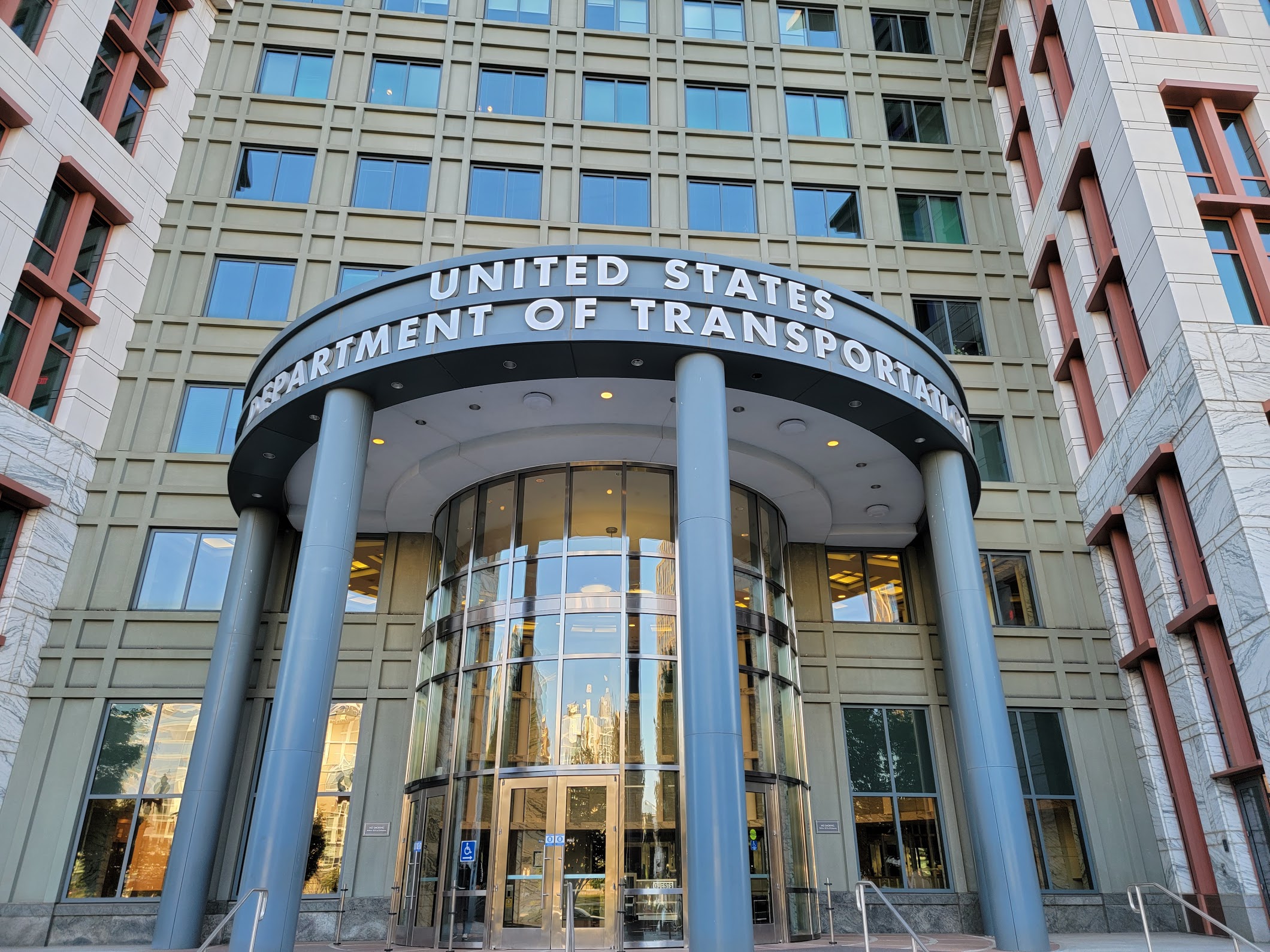
Secretary Duffy doesn’t have legal authority here, but would be included in conversations around any airline merger. However ‘legal authority’ also isn’t necessarily how decisions get made. Duffy was careful to frame this as President Trump’s decision. United Airlines CEO Scott Kirby has worked to pivot from ‘woke’ during the Biden administration to MAGA under Trump for this very obvious reason.
Meanwhile, the administrations Assistant Attorney General for Antitrust was ousted in February. That division currently has an acting head, Omeed Assefi.
It is with great sadness and abiding hope that I leave my role as AAG for Antitrust today. It was indeed the honor of a lifetime to serve in this role. Huge thanks to all who supported me this past year, most especially the men and women of @justiceatr
— Gail Slater (@gailaslater) February 12, 2026
Any decision on a major airline merger is likely to be made at the White House in any case.



And to screw over workers and consumers while rewarding the super-rich, so long as they bend the knee. What an awful timeline. 2nd Gilded Age sucks. Time for a new progressive era. Gimme Teddy 2.0. Let’s go bust some trusts!
I don’t see any antitrust concerns for the authorities in this day and age.
@IsaacM — Great time to be an M&A attorney. Speaking of, wasn’t @Un, @Unintimidated, @Penile, etc. (whatever he was going by) pretending to be one. Hope that guy’s doin’ alright. Wonder what fun aliases he’s conjured up these days…
From an industry standpoint, the U.S. airline sector is already consolidated to a degree that materially limits competitive pressure. Further mergers would likely exacerbate both pricing power and service degradation. The post-2008 consolidation cycle reduced the field from eight network competitors to essentially four, which today control roughly ~85% of domestic capacity, a structure that has enabled disciplined capacity management and rationalized competition, but at a clear cost to consumers. The DOJ has consistently argued that additional consolidation would lead to higher fares and reduced choice, and the industry’s own operating patterns support that concern, particularly through the persistence of hub premiums and reduced frequency in markets where a single carrier dominates. While consolidation has improved margins and operational stability, it has also coincided with a steady erosion in the customer experience, including tighter seating configurations, increased ancillary fees, and reduced schedule resilience. At this stage, incremental mergers would not unlock meaningful efficiencies that are not already being captured; instead, they would further entrench pricing power and reduce the already limited incentives to compete on product, reliability, and overall service quality. In other words, things would only go from bad to worse for U.S. airline consumers under more consolidation.
Which LLM wrote that for you, Mike?
@OtherSteve (‘sat you Retard?) – Oh, I get it, anything that sounds coherent must be AI, right? No, that one came from years of actually following the airline industry, reading filings, and understanding how consolidation plays out in the real world. But if it helps you engage with the substance instead of deflecting, feel free to imagine whatever model you’d like.
@Mike Hunt — I don’t know who needs to hear this, but I stick to one alias on here. Honestly. @OtherSteve apparently has similar taste in pithy retorts as I do some times.
As to the subject matter, I actually agree with you, especially “additional consolidation would lead to higher fares and reduced choice.” I do not want to see things go from bad to worse. I want healthy competition.
@Mike Hunt
‘Oh, I get it, anything that sounds coherent must be AI, right?’
Actually that didn’t sound particularly coherent, it sounded like the sort of slop an LLM would generate if one asked it to use highfalutin language to impress the rubes and come up with a justification for one’s POV
@Jon F – What part of what I wrote was incoherent, exactly? While I don’t wish to doxx myself on this forum, I happen to have a strong legal background and congruent bona fides. I am perfectly capable of both puerile banter and comments of academic quality. But by all means, explain to me what you didn’t understand so that I can clear things up for you.
Is the Southwest Brand synonymous with Texas
as Alaska Brand is synonymous with the Pacific Northwest
as Hawaiian Brand is synonymous with the Hawaiian Isles.
Or does the Southwest Brand have extreme value outside of Texas say in Florida as well? Seems like there may be a 4th option to Concept M as the legacies seek revenge.
@Mike
Perhaps incoherent is not the correct term. But very much the sort of stuff that tries to impress others with vocabulary rather than content.
@Jon F – My apologies for my literacy. Shall I re-write it at the 8th grade level so that it better appeals to your intellect?
while y’all argue about AI, I’ll say here that DL could very well end up w/ a much larger share of the Texas market out of all of this – and it won’t be by building a hub in AUS.
and I’ll put my money on Mike Hunt’s intellect over the rest of the bunch combined that criticize him
and, 1990, you do realize that US airline employees are very well paid – well above the average for American workers?
If airlines didn’t pay their employees so well, stockholders would be making a whole lot more than they do.
Remember that hedge funds don’t make money running an airline, they make money selling an airline for more than they paid for it.
I still think we may yet see an American/Southwest team-up as a newly formed “Texas Airlines.”
@Mike Hunt — “both puerile banter and comments of academic quality” … that’s why I like reading your stuff, even if I disagree sometimes. Bah!
@Tim Dunn — The accounting tricks need to stop. Airlines pretending they have ‘no more money’ for things like profit sharing while siloing excess in separate quasi-entities like frequent flier points programs, which are basically the cash cow these days. The industry should want to pay people more than the average, retain top talent, and continue to grow and improve, after all.
1990
you and your socialist rhetoric is completely detached from reality.
US airline employees are compensated well above average even at airlines that lose money.
DL’s labor expenses went up 11% in the first quarter (they just reported their financials) even though fuel went up 14%. Profit sharing went up 33% in part because DL’s MRO revenue is up significantly.
Yes, mileage programs make money but employees benefit far more than stockholders do for the industry as a whole- but DL delivers better gains for its employees than any other US airline.
Isn’t it amazing we’ve had all these mergers and yet airlines still lose money on coach fares. Fact. We could go back to the days of the CBA and I assure you no one will be flying from New York to Orlando for $200 round trip.
Right now there are three airlines struggling to stay alive. If you throw in Avelo and possibly Breeze that’s five airlines. If they could raise fares to solve their financial problems why haven’t they? Surely those airlines just need to order hundreds of A321s or B738-9s and with all those passengers the negative would somehow turn into a positive? At least that’s the lore here.
When we hear Scott Kirby talk about reducing flights to protect margins, it tends to support Hunt’s thesis.
The airline industry appears consolidated to me. Many markets (including the miles segment) appear to price in a classic oligopoly fashion. One airline raises prices and then the other airlines follow in lockstep.
Duffy’s comment seems non-serious, almost like a joke. Sort of like “Mergers, yo bro, why not, my boss told me to go big. Booyah!” If he is asked about a specific merger proposed by an airline, his reaction would likely be more circumspect.
@Tim Dunn — Would calling you fascistic help? No. So, let’s get back to reality. There are real issues with regulatory capture, a lack of worker and consumer protections in this industry, and some serious infrastructure and staffing issues on the public side (namely, FAA equipment, training, ATC, etc., as Gary and others have repeatedly reported on for years and years.) We are likely to see an economic downturn in future cycles; regardless of mergers or acquisitions, when those that remain come begging, we need to actually solve some of these issues, instead of just kicking the can down the road, again and again, until things really break-down all-at-once. We do not want to be post-Soviet Russia’s Aeroflot over here.
1990
you can call me whatever you want but you cannot – based on facts – say that US airline workers are underpaid.
As has been noted, the US airline industry has chased economy class passengers at low fares for almost the entire 50 years the domestic industry has been deregulated. There is too much capacity and every airline realizes that.
mergers and acquisitions will take out economy cabin capacity – it has to in order to make them work.
The real breakthrough is that the DOT Secy is basically saying the US will be happy to see airlines carved up in order to satisfy antitrust concerns. All of a sudden, no combination is off the table.
Georgia Klan Air lost over 200$millionUSD last quarter. Ouch…
Let’s hear Spectrum Boy’s spin on the loss.
@Tim Dunn — So, you’re back to the ‘my opinions are fact, your opinion is wrong’ trope? Oof.
Is there really too much capacity? There’s still ample demand, but, not at any price. And, I know you love your RASM/CASM analyses, but, profitability isn’t everything. If that means, less carriers and/or more monopolization or collusion on routes/prices, sure, that’ll be great for executives and majority shareholders, but not really anyone else. More K-shaped economics, which isn’t the real economy. America is greatest when our middle class thrives. What you’re advocating for only helps the top.
nowhere have I ever said that my opinions are right and others are wrong but I do inject facts into my opinions which others do not.
and specific to consolidation, DL’s CEO just said on their earnings call that they expect consolidation to take place in the industry and noted that DL led the last round with its acquisition of NW.
As I have noted, DL pays its people what it does because it can generate the profits to support that level of pay. Other airlines simply cannot.
DL did post a loss on a GAAP basis but the refinery contributed very little in the 1st quarter – just 6 cents/gallon but will benefit much more in the 2nd quarter and as long as fuel remains elevated but in line with what DL said a couple weeks ago.
If DL swings to a loss in the 1st quarter when fuel costs were not fully baked in, I can assure you that other carriers including AA, AS and B6 will be much more in a world of hurt in the 2nd quarter and beyond.
UA’s profits will be reduced even further.
@Tim Dunn — Unless someone is skimming off the top (corruption), you must know the end-goal here is efficiency, which through that, we get people and goods where they need and want to go, enabling high-quality careers along the way, and profitability follows for investors as well. There can and should still be win-wins here. I resist the urge to dunk on any particular player here, because these macro issues affect them all, even if some are marginally better prepared.
(Hey, Tim, you know what would be efficient? Less wars. Less closure of airspace. Less restrictions on the flow of energy and goods and people. Just some thoughts. Some… thots.)
I don’t disagree in macro but the history of the universe has always had periods of “investment” in a different future than the status quo.
Whether that turns out to be the case in the Middle East or Russia-Ukraine remains to be seen
It’s messier than I’d prefer, but yes, there’s still hope.
I love the debating here. Thanks, Tim and 1990.
@WileyDog — You got it, dawg!
@Mike Hunt
Not sure why anyone would say what you wrote is incoherent or lacking any meaning.
If anything, my criticism would be that you’re just stating the obvious. But that’s just agreeing with you.