
Former American Airlines Chief Commercial Officer is spending the next six months at United running the ‘Kinective Media’ program there.
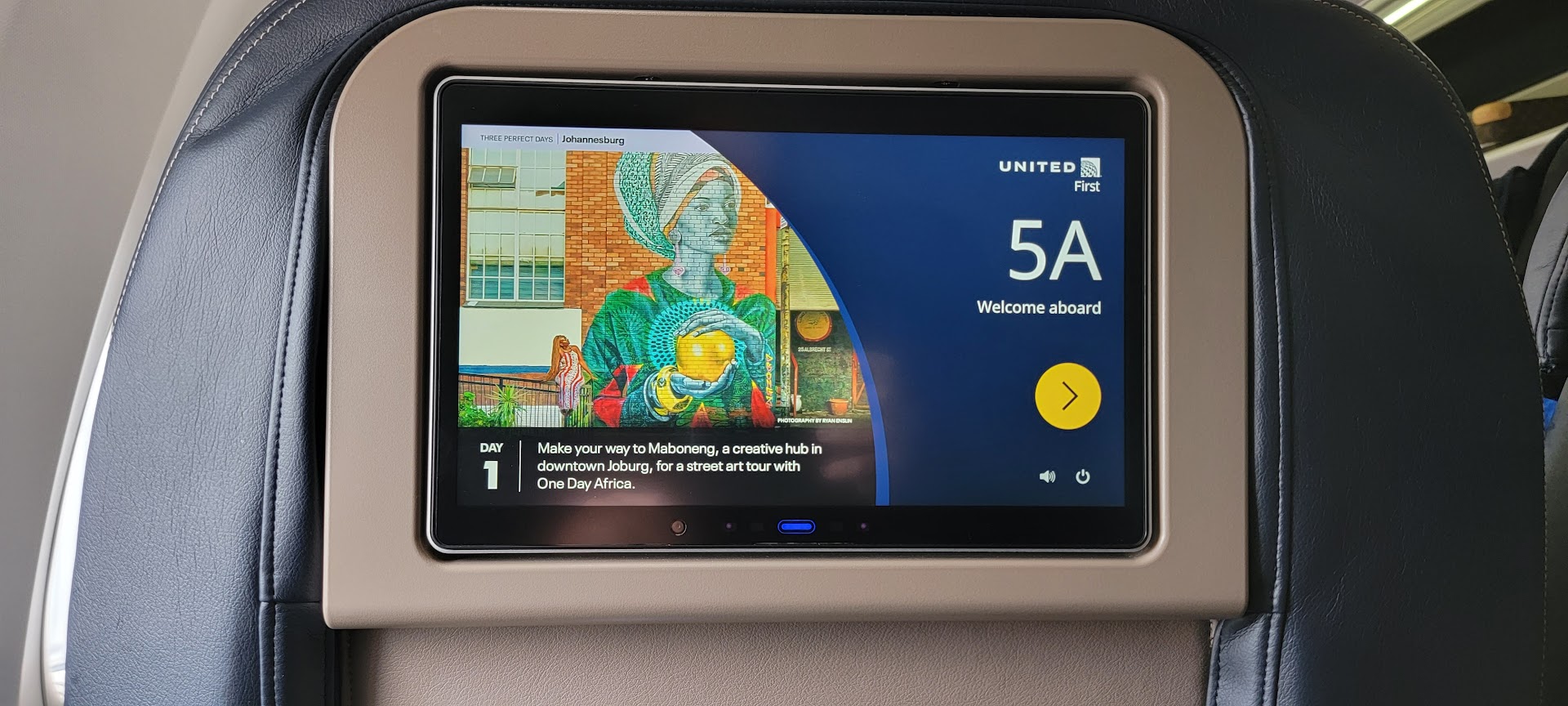
The head of United’s efforts to monetize eyeballs in the cabin through targeted advertising is out. United’s plan for seat back screens and high speed wifi wasn’t just about a premium customer experience, it was about driving revenue by bringing the right ads to the right high-end customers whose attention is at least partially captive for long periods of time.
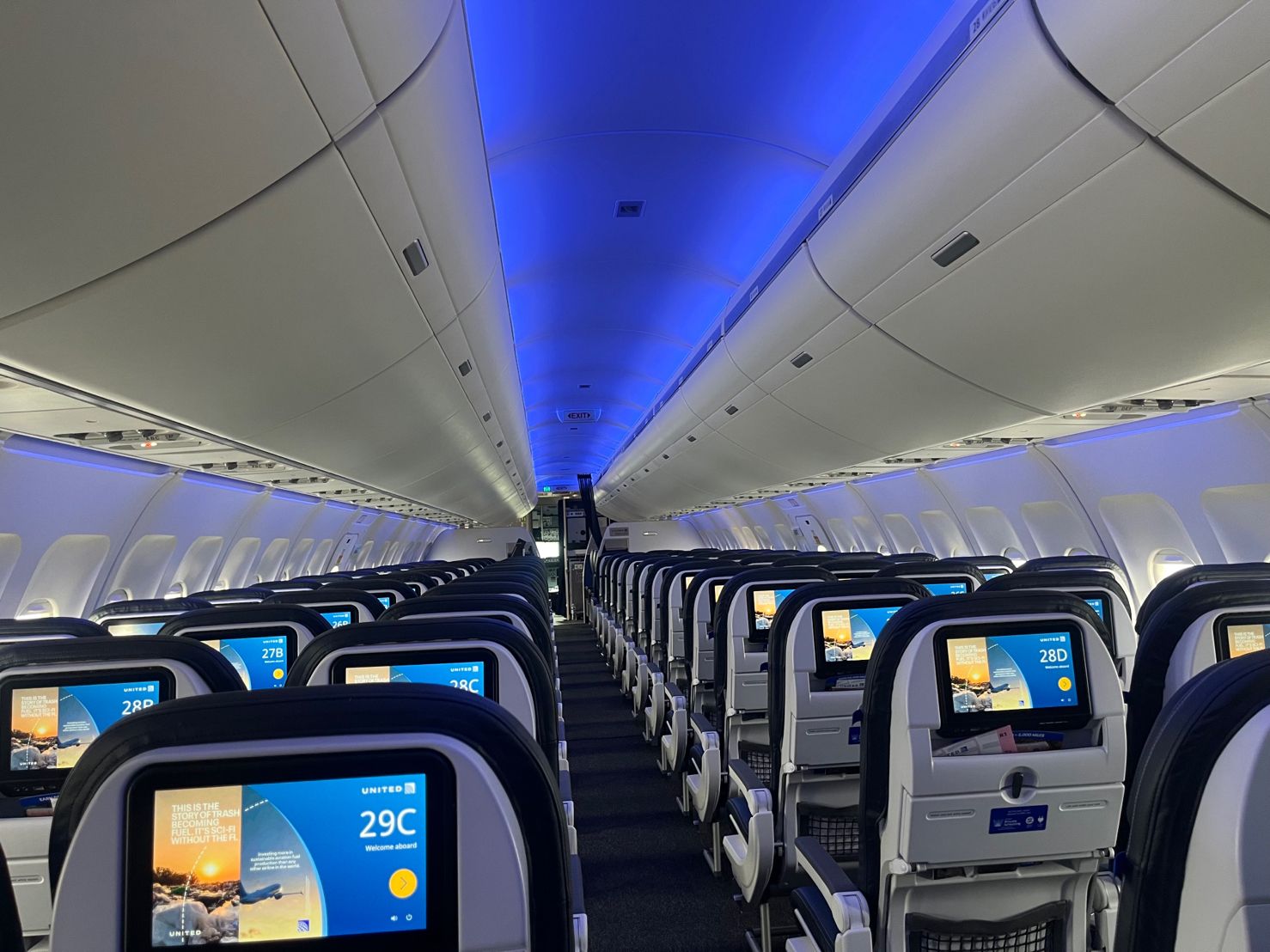
This was supposed to be among the most effective, highest yield ad plays possible given the demographics of passengers and extreme amounts of information the airline has about its customers from MileagePlus and credit card transaction data. But it hasn’t worked out yet.
Raja has been out of the airline industry for more than a year and a half, so it’s natural to harken back to the controversial end of his tenure at American now that he’s publicly back working with an airline. But I have to take issue with this claim by One Mile at a Time,
Raja was fired from American, and was the architect of the strategy that… well, put American into the mess that it’s in right now.
Vasu Raja was the face of a distribution strategy that tried to move customers into direct booking, and tried to get agencies to use modern retailing technology that allowed sales of more than just tickets. It also backed away from high cost, high touch, discount deals with companies where the airline thought it would sell the same seats for more money elsewhere. But they used sticks more than carrots, and chased away business. I criticized it at the time.
This was top to bottom the Americn Airlines strategy, the strategy of the CEO and Board, but Raja was the one that fell on his sword as American’s financial returns continued to lag the industry. It’s also, though, very much not the reason American finds itself struggling relative to competitors.
American reversed its changes in distribution and it didn’t increase revenue. The airline has declared victory and moved on, saying that managed travel is back. They’re spending a lot on commissions and travel agency servicing now but they aren’t making more money.
When they cut off agencies that didn’t shift to direct sales from the lowest fares, that didn’t hurt managed business travel – it hurt American getting points redemptions through the Amex and Chase travel portals. Those are two of the biggest agency platforms in the world. That was a mistake that did cost them passengers.
The airline does need to move agencies to ‘new distribution capability’ – just selling tickets (low margin) and not selling ancillaries like seat assignments (high margin) isn’t a great business for American or something they want to be spending more on. And having the agency intermediate their relationship with customers, where they don’t even have passenger contact information, means they can’t take care of customers well when schedules change (angering their customers) and they can’t sell to those customers, sign them up for AAdvantage, or get them to apply for credit cards.
The overall drive to push to direct sales channels wasn’t wrong. But the timing pressure didn’t work, the technology was at times still too clunky, and they made strategic errors like cutting off bank points redemption channels that filled planes.
Raja was the face of the strategy but it’s bizarre that the CEO could throw him overboard and not take responsibility for it himself. It’s probably true that either Isom or Raja had to go! And it’s not surprising that Isom didn’t want it to be him.
In fact, what’s actually wrong with American Airlines dates back far longer than the distribution stratgy Raja led.
- American levered up the balance sheet to fund $12 billion in stock buy backs. That put them in a financial hole and increased their costs.
- They walked away from big markets like New York and Los Angeles – they didn’t have a competitive product, and these were competitive markets, but it meant they didn’t have relevance where customers spend the most money and charge volume on their credit card went from number one in the industry down to number three.
- They retired too many planes, deferred widebodies, and were left without aircraft to fully utilize gates in Chicago or to take advantage of the boom in European travel that was benefiting Delta and United. And they pulled premium seats out of planes, so they had high costs and not a ladder that could encourage customers to buy up and spend more money.
- CEO Robert Isom’s vision spent too many years explicitly focused on chasing Spirit and Frontier, getting the direction of the industry completely wrong.
Within that there’s a lot more that went wrong in the culture and with the product, but at a top level there was a long-term failure that gave them the wrong planes, the wrong hard and soft product, and bad relations with employees. They’ve finally realized that they need to be in the premium business because that’s what customers want and because with their high costs a downmarket strategy can’t be successful.
Reining in distribution costs wasn’t a bad idea, but fundamentally the shift that American tried – and went too far, too fast with considering the state of technology – was about direct merchandising to customers in order to increase revenue. They weren’t anti-travel agent as much as wanting to turn the agency channel into a higher revenue one – not just a high touch, high cost, low margin business.
The efforts did not work, but that’s only one of a small number of failures under American over the past dozen years. I often found myself disagreeing with Raja in his moves at American, from It became a scapegoat, but with Raja gone from American now for nearly two years it is no longer possible to pretend that the distribution strategy was the core of the airline’s problems. They reversed the strategy and failed to grow revenue.
The funny thing is that American’s JetBlue partnership (and Alaska partnership) was Raja. If the Biden administration hadn’t killed the JetBlue deal, American would be more competitive in New York and driving more lucrative card revenue. So things could have worked out very differently at American for both him and for the airline. It’ll be interesting to see what progress he can drive on efforts to monetize customer attention at United.



Excellent analysis, Gary. Raja’s NDC push was too much, too fast, and his timing on NEA was off. It’ll be interesting to see whether he can redeem himself at United.
Um. Why do I see UA passengers being accosted by endless inflight hawking of junk.
you seem really naive, Gary.
When you are a senior exec at any company, you do decide strategy even if it takes selling it to your peers on the exec team.
Raja was part of the exec team when some of the stuff you mention that harmed AA even though he wasn’t the primary architect but he most certainly has to own what went wrong.
the bigger question is what led UA execs to can their current execs in pursuit of a strategy that they think can be achieved from rejects from other companies.
Gary, you got a lot wrong here. Too much to disagree with!
The airline industry likes to recycle these guys. Next you’ll be telling me that Smisek (worst) or Parker (second worst) is returning to the industry in a leading role. Yuck.
@Tim Dunn — The question: Does this move help Delta Air Lines?
@Gene — Give us a taste!
@George Nathan Romey — LOL.
What cool aide have you been sipping? AA Senior leadership has been a total failure and train wreck from the day they took over. Raji was allowed to run amuck with his “vision” while the others sat back and rubberstamped his actions. The results speak for themselves. The whole lot should have been fired with him. As noted previously, another in a never-ending recycling of failed airline executives.
Why am I reminded that those who do not learn the lessons of history are destined to repeat them?
I got an ad for Bilt in my UNITED app yesterday
The issue here is that distribution through NDC and selling ancilliary products is viable through distribution partner…Sabre does lot of heavy lifting and airlines need it..idea that airlines alone can sell is naive…it is complex,that is why sabre exists
One thing Gary got right was too much stick, and not enough carrot. It’s expensive to upgrade a booking system. If AA didn’t set a deadline, but revenue shared 50% of the ancillary revenue for the first year after enabling the upgrade, I think it would have been more successful. Maybe share 25% for years 2-5, and 10% after that. If they could collect existing loyalty membership, an extra 5%, and if they got a new membership, 25%, and perhaps a 25% reduction in cost of the ancillary purchase for the customer, depending on the expected value of that membership. But, airlines have to show results every quarter, which makes long-term plans difficult to measure,
Everybody wins. AA gets more ancillary revenue, ideally identifies the passenger, the travel agency gets more revenue long term for a one-time investment, and the passenger gets a service he didn’t know he wanted/needed at the time of purchase, perhaps with points.
I guess airlines execs are complete failures. Executives at other companies have to sign a no compete clause. If airline execs had to do that, they are such losers they would never work again.
@Greg — While listening to yesterday’s The Weekly Show podcast, Jon read one during an ad break. Was, like, oof… they got to him, too! All that VC money is gonna be pumping ads at us for a while.
Agree that perhaps Raja was tasked to implement certain since failed initiatives that originated elsewhere within the organization.
In other words: even executioners have bosses.
Disagree on the level of credit warranted for the airline partnership initiatives. AA-AS seemed a progression of a years-long marketing relationship that evolved in response to competitive reasons.
AA-B6 would’ve been unique considering the history of domestic alignment. But if you recall 2012, there were rumors of standalone AMR buying B6 in a post-BK move. Barger addressed that at that time.
Raja would’ve been well positioned to have been privy to such machinations. I think he merely dusted off that playbook while “reading the room” (the probability & costs of merging).
Raja was a foul mouthed loser.
I…wait for it…agree with @Tim Dunn.
Raja was a member of a c-suite that tanked a once-great airline, reducing it to an industry disgrace and shell of what it once was by nearly every metric. He was hostile toward consumers…seeing them as nothing more than a bottomless ATM that can be treated like sh!t by AA employees.
Everyone is entitled to a second chance, so I guess we’ll see how this plays out.
@Parker — I guess we’ll soon find out… was Raja the mastermind, or the scapegoat?
@1999 yes, yes we will.
As someone with the testicular fortitude to not be scapegoated, I must admit it’s a behavior I don’t understand from the POV of the person who is willing to have their professional brand destroyed to protect someone who isn’t even loyal to them.
@aaway – AA had basically killed the AS partnership in 2019. Then AA lost LATAM to Delta, Raja got put in charge of partnerships.
Parker,
we usually agree about airline stuff; it is politics on which we differ
Well you can’t say that the American Board Of Directors isn’t incredibly forgiving. They’ve let idiots run the airline ever since the merger.
“AA had basically killed the AS partnership in 2019. Then AA lost LATAM to Delta, Raja got put in charge of partnerships.”
AA primarily eliminated the earn/burn and other AAdvantage benefits that had been accorded to AS metal flyers.
It was Joe Mohan, as VP of Alliances & Partnerships, that lost LATAM.
Please don’t blame Raja. It took the entire C-suite team to screw up American Airlines and upset both the shareholders and passengers.
@Ken A — All this talk about Raja reminds me of a beautiful coral reef in Eastern Indonesia called Raja Ampat? Ever heard of it. Worth a lookup.
@Other Just Saying :
Parker was the wrost…by a mile!
And what does Raja know about media and Adtech that makes him qualified to babysit a new media business that United built that I hear is doing v well. Maybe he’ll screw that up as well?