
The new Bilt Card doesn’t work like a normal Chase or Amex product where one bank issues, services, funds, and owns the economics end-to-end. Bilt Card 2.0 is a split stack: Column is the bank and lender of record, Cardless runs servicing and the tech layer, Fidem (and its capital partners) fund receivables, and Bilt provides the rewards program—on Mastercard rails. Once you see the roles, the money flows (interchange, interest, and who gets paid for what) make a lot more sense.
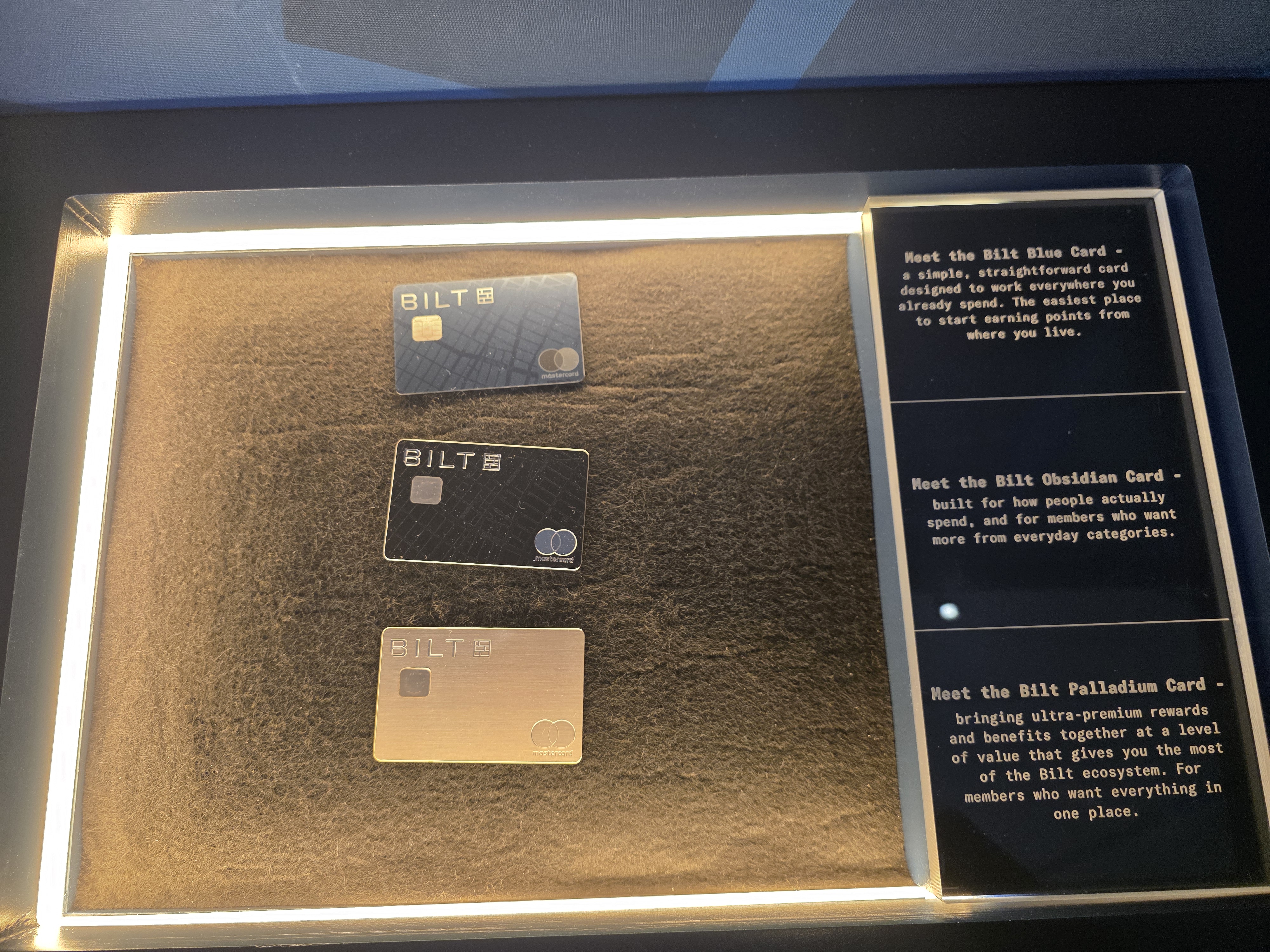
Several readers have asked me about the mechanics of the new Bilt credit card, essentially the plumbing behind the scenes. I haven’t spoken with Bilt or Cardless about this, but I’ve read the press releases and disclosures and things work a little bit differently than they do when you get a new card from Chase or American Express.
If you have a Chase Sapphire, then one entity (Chase) is card issuer, lender, card servicer, capital provider, and rewards program owner. Then the card operates on a payment network, in most cases Visa.
With a Chase United MileagePlus card, Chase is issuer, lender, capital and operations. United owns the rewards currency.
With Bilt’s Wells Fargo card, Wells played the Chase role and Bilt was United.
Bilt Card 2.0 is a split stack, designed with four parties plus the payment network (Mastercard).
- Card issuer. The lender of record – the bank – is Column N.A. and that’s whom the cardholder agreement is with.
Column also operates a community bank as Northern California National Bank (NorCal). They partner with a number of Fintechs including Brex and Ramp.
- Card servicer. Cardless is the servicer of the Bilt cards. That means they provide things like activation, autopay, transaction management, dispute resolution, and account management.
- Capital provider. Fidem Financial (and its capital partners) fund the receivables. Fidem has acquired over $15 billion in credit card receivables. They partner with Transformco (formerly Seats Holdings) on card origination and servicing for cobrands.
- Rewards program. That’s what Bilt provides.
Normally, here’s how payment works. Money coms in from merchant interchange (card swipe fees), as well as card interest and fees (APR, late fees, etc). Then that would route to the issuer of the program (Column is issuer of record). It gets split contractually across all of the parties.
Cardless gets paid for running the card servicing and tech stack. Fidem and its capital partners get paid a financing return for providing the capital behind the receivables. Bilt gets paid for earned rewards. The commercial settlement (issuer buys points vs revenue-share vs some hybrid) isn’t spelled out publicly. keeps whatever remains after paying for ops (Cardless), capital (Fidem), and rewards (Bilt), plus any bank-level economics (again, exact splits aren’t public).
Ultimately, Column is the card issuer, Cardless provides operations, Fidem provides funding, Bilt provides the loyalty program and Mastercard is the payment network.



Four players? I wonder how much of a cut each is getting and how the math adds up (or is supposed to add up) in the end…
Lots of points of failure. Works fine now but given the fact a number of fintech companies have failed I wouldn’t bet on this process working well long term. Just one more reason to be very skeptical of Bilt.
Column, Cardless, Fidem, Bilt, Mastercard… I only trust one of those five to not screw me. @Retired Gambler gets it.
Hard Pass
Risk risk risk risk. Column is the 762nd largest bank in the country as of 9/30/25 with ~1.1bb of consolidated assets. Does that mean it’s a bad bank to do business with? Of course not, size doesn’t necessarily impute quality. But obviously there is a heightened element of risk here, which is compounded by the fact that there are 4 parties to this program. 4 party agreements are hard.
One wonders whose idea it was to embrace the Trump 10% interest rate as an intro APR and what scrambling and friction that caused behind the scenes in the days leading up to launch. I also wonder if that, in part, led to the sloppy roll out. It’s entirely plausible that parts of Bilt’s program had to be tweaked to allow for the lower intro rate, and the 4 amigos may be betting that the 10% rate is more compelling to many than whatever the “Bilt Rewards Program” may offer.
As OMAAT pointed out this morning, for Amex, the top 3 ways to redeem points last year were gift cards, paying with points at check-out, and statement credits, all with a less than 1cpp value. Not sure what that means in terms of Bilt, although I do think that “using Bilt Cash in the Bilt Neighborhood” is more appealing to the masses than many in this community are willing to entertain. This is part of the reason why I’m focused on one what might value Bilt Cash at, because it’s a measure of whether this program is actually going to survive past 2026. Forget about rent/mortgage points, a $10 Lyft, $10 Walgreens and $25 dining credit a month is $540 a year of Bilt Cash which one can earn by running $13.5k through your Bilt Card. I’ll bet there are a lot of folks who have to pay their rent through Bilt anyway, get the $0 card, enjoy the 10% interest rate, and use the 4% Bilt Cash on Lyft/Walgreens/dining without a care in the world for the 18k points that the $540 in B$ could have bought.
This community needs that part of the card to be successful so we can reap the benefits of the points part of the card. While I perhaps have not been the most positive in the comments, I do hope the Bilt team made the right bets, and I hope they come up with a more streamlined marketing message for February. Competition is a good thing, and if Bilt can find a bit of a footing and survive, great for all of us.
More complicated the system, a Major bank bailing (WF) and having to go to Cardless, and terrible roll-out = Bilt closes up shop in 1.5 years when premium card holders don’t renew and VC funding is gone.
Brex was able to survive after a few years (and is doing better) after blowing through their VC money with ridiculous SUBs b/c they wiped the unprofitable individuals with fake business and more importantly business expense integration focus. Bilt has no fallback. Note I also said a year ago here and on FM that WF would get out of its deal with Bilt when the loss details leaked. Destroyed chance of an exit (and valuation is too high for a PE to buy and do an IPO. LOL @ at possibility of Bilt even thinking they can do an IPO). If I was an early investor, I would have asked to sell out via a secondary to the dumb money in last year’s Series round…
Gary,
So with this 4 player setup, if they were running Bilt 1.0, the only looser would be Column Bank ?
this is still very confusing. Perhaps Ankur could get his pal Paris Hilton to explain it all to us.
@Tim Mackin – You’re joking but it’s not a half bad idea, along the lines of celebrities doing short bits, breaking the fourth wall, in The Big Short to explain concepts the audience might not be familiar with, e.g. Selena Gomez and Richard Thaler explaining CDOs. https://www.youtube.com/watch?v=Pxr_FzpPM2Q
Gary,
If Paris could explain this to me I would buy her a bologna sandwich. That would be HOT.
Tim
Too many cooks…
Well, this is just a clusterf**k disaster waiting to happen. Just one of these dodgy companies (nobody has ever heard of) going under will bring the whole operation crashing down. I’ll be avoiding this one.
Before Wells Fargo, Bilt partnered with Evolve. If Wells Fargo was Bilt 1.0 what was Evolve? 0.1? Three partners in a half decade seems like a lot.
@Stefan Krasowski – Evolve was always going to be temporary, they were negotiating with Wells even when the Evolve card came out
Everyone here in the comments seems to be thinking that more players == more risk. I offer an opposing view: if any of the four companies participating in this stack were to run into trouble/out of business, could they not be replaced by another provider in just that area? This would pose lower risk than owning the entire operation, and allows the overall stack to continue on, albeit with some possible changes. Whereas, when one bank operates everything, it’s all or nothing.
That said, there’s probably a good reason why this isn’t a model you see often, or anywhere else, for that matter. The wise Bilt user would probably avoid hoarding their rewards.