Andrew Ross Sorkin asked The Points Guy founder Brian Kelly on MSNBC’s Squawk Box about throwaway ticketing (commonly referred to as ‘skiplagging’) as a money-saving tactic – saying he had just done it successfully himself.
Final question, and if you’re an airline CEO close your ears, close your ears right now. What about what they call ghost legs? … I just did this, by the way, I shouldn’t admit it. I was trying to find a cheaper flight and I got put on the wildest, so I went on some website. I won’t even say where I was going. I was supposed to go to one place. It had me go to four more places after that, even though you were never really going to the four other places. You see what’s happening here?
Sorkin says his throwaway ticket was $1,500 less. “Am I supposed to cancel the flight after?” He ends noting that “it wasn’t me, it was actually a travel agent that did this on my behalf, oddly enough.”
Revenue management guru and former American Airlines Vice President of Sales and Distribution Strategy Cory Garner had criticism of this on LinkedIn.
It’s a devious way to game hashtag#airline pricing. Most airlines prohibit this activity in their conditions of carriage ***and*** their travel agency agreements.
You can be absolutely certain that some RM analyst somewhere is searching Andrew’s PNR history, finding the one with no-show legs, identifying the offending travel agency, and getting the debit memo ready, if not worse.
As for Andrew, I’m sure he’ll just get a polite note this time. He might even be asked to revisit the story and provide some sage advice against doing the same for any travelers that may be considering it.
Garner goes on to argue that this is stealing from the airlines.
Imagine you walk into a candy shop and pay the attendant $5 in advance for 2 pounds of candy. When you go to the candy bin, you take 4 pounds and walk out of the store.
A few nasty things happened there:
1. You knowingly lied about what you were going to take.
2. You paid $5 less than you should have for the value you received.
3. You deprived the candy shop owner from selling the other 2 lbs of inventory.
Folks, skiplagging is a fraud perpetrated on an airline by a customer. You might not like how that sounds, but you can’t walk out with $10 worth of value after paying only $5 simply because the shop owner trusted you to do the right thing.
The late Supreme Court Justice Antonin Scalia engaged in throwaway ticketing on US Airways. The New York Times ‘ethicist’ endorsed throwaway ticketing. (If you’re skeptical of the Times, then I’d note that Donald Trump’s PAC did it.)
There is a core disconnect between how airlines think about the practice and how consumers do.
- To an airline, flying tickets to fly AAA-BBB-CCC connecting in BBB is a different product (travel from AAA-CCC) than flying AAA-BBB-CCC and throwing away BBB-CCC (it is travel from AAA-BBB).
- To a consumer they are buying travel on both flights AAA-BBB and BBB-CCC and they are choosing what to do with their purchase.
- Contracts of Carriage aside, which nobody reads, it is just a different way of looking at the same thing and neither side understands the other.
People think about the moral choice here differently than airlines do. A document that they never read let alone negotiated doesn’t ‘feel’ like something a person has to abide by. ‘But it’s against the rules’ is not persuasive here. No one feels like they are doing something morally wrong.
I’m not saying ‘you should do it’ or ‘airlines should not be able to price products as they wish’. It is a revenue maximization strategy and not an issue of common sense morality. In my view,
- Airlines can price as they wish.
- Consumers can do what they wish with what they buy.
- And airlines can choose not to work with a customer if they want as well (they have the right to ban the passenger, close their mileage account).
Agencies doing this are a totally different issue. They knowingly agree to the airline’s ticketing policies, and can face real commercial consequences for violating them.
I tell most people they should not do this.
- It doesn’t work so well with checked bags. Your bags go to your ticketed destination in most cases, not to where you’re actually ending the journey.
- It doesn’t work well if you aren’t among the first passengers to board, and the airline forces you to gate check your bag.
- If your flight is cancelled, the airline may want to re-route you via a different city!
- You need to only throw away the last flights in your itinerary. If you book a roundtrip and try to skip one of the segments on your outbound, the airline will cancel the return (so to ‘skiplag’ on the outbound, book two one-ways).

But throwaway ticketing has been a common practice for many many decades. A non-stop flight to an airline’s hub may be expensive, but booking that flight with a connection to a competitive, less expensive market can save you a lot of money sometimes.
My point though is that this is less a moral issue than a commercial one. I don’t think consumers are behaving immorally by doing this, even though it’s not something I would recommend to most people or even to a handful of people to do often.



Garner’s example (“Imagine you walk into a candy shop and pay the attendant $5 in advance for 2 pounds of candy…”) is inept and inferior, imho.
A better comparison would be: I buy one liter sized bottle of Coca Cola (which costs less than 1 quart), drink half of it, and throw the rest away…but Garner insists I have to drink the rest of it.
The candy analogy is actually backwards. Throwaway ticketing is actually like prepaying $10 for 4 pounds of candy and walking out with only 2 pounds. That leaves the store owner 2 pounds that can resold to somebody else, increasing the store owner’s revenue. An airline can only resell an used and uncancelled ticket if there is a waitlist for seats during boarding, but they lose nothing by having the seat empty and paid for.
I don’t do it, because I don’t want to lose my points/status, but, if I had no points or status, sure, why not, because Gary’s right, “I don’t think consumers are behaving immorally by doing this.”
How sad that TPG is an ‘authority’ on anything; they sold out to the banks over a decade ago, and gave up on comments years ago; corporate shills.
Interesting article, thanks for explaining it. Sounds fine to me. You bought the advertised tickets and used them the way you want. The airlines will fill the un-used seat when filling the plane during the loading.
It’s not immoral or illegal, but it’s fattening. To your wallet.
I’ve only done this once, back when Southwest explicitly permitted hidden city ticketing. Savings need to be substantial to justify the risk of something going wrong.
@Michael Mainello — Wow, a rare, ‘sane,’ non-propaganda ‘hot take’ from Mr. Mainello. Huh.
A restaurant sells a steak for $49 but also offers a steak dinner for $45. The steak dinner includes salad and a broccoli side.
If I order the steak dinner for $45 but I don’t eat the broccoli should the restaurant owner lock the front door and refuse to let me leave until I finish all the broccoli on my plate?
Not an issue.
I’ve only ever skip-lagged once
but with miles… I guess it’s the same “moral” issue but…
it was something like
VCE-ATL in J was 150k miles
but VCE-ATL-CHA was 100k in J
“you walk into a candy shop and pay the attendant $5 in advance for 2 pounds of candy. When you go to the candy bin, you take 4 pounds and walk out of the store.”
THAT IS A POOR ANALOGY. WHEN YOU FAIL TO BOARD YOUR CONNEXION FLIGHT, YOU ARE USING LESS THAN WHAT YOU PAID FOR, NOT TWICE AS THIS FAULTY ANOLOGY SUGGESTS.
WHEN I WORKED IN RES AT UAL,WE ACTUALL WOULD SEARCH FOR BEYOND POINT CITIES TO SAVE THE PASSENGER MONEY.
THERE’S A FARING CONCEPT IS USE THAT THE AIRLINES CHOOSE NOT TO APPLY: IT’S A “HIP” CHECK, WHICH MEANS “HIGHER INTERMEDIATE POINT.” THAT MEANS IF THE CONNEXION CITY COSTS MORE YOU PLUS UP THE FARE.
I WORKED IN A TRAVEL AGENCY IN NEW YORK WHO WOULD ALWAYS AD AN OPEN SEGMENT LONDON TO COPENHAGEN TO THEIR NYC LONDON TICKETS — SAVED THE PASSENGER $2200 EACH WAY. BRITISH AIRWAYS ADDED THE HIP CHECK INTO IT’S FARE, YET AMERICAN AIRLINES, THE FILTHY COMPANY THAT IS RELENTLESSLY PURSUING THESE TRIPS, DID NOT SO AS NOT TO DISCOURAGE SALES.
AAL, YOU MADE YOUR BED NOW LIE IN IT!
Derek,
It’s hard to take you seriously when you use all caps. Put the drinks down. Only uncivilized animals require all caps to make a point.
@Derek McGillicuddy — How very “THANK YOU FOR YOUR ATTENTION TO THIS MATTER” of you.
Hmmm. Funny how the airlines don’t think price gouging, digital stalking (surveillance pricing), nor deceptive marketing is immoral.
@1990 writes “I don’t do it, because I don’t want to lose my points/status, but, if I had no points or status, sure, why not, because Gary’s right, “I don’t think consumers are behaving immorally by doing this.”
I used to do it a lot. However, I have no current use for it. I don’t need to go to ATL, DFW, CLT, or other hubs. I don’t need to throwaway the return trip, either. I am lucky to now live where I can fly non-stop and not pay outrageous prices.
In my youthful travel agent days our agency never engaged in hidden city ticketing because the odds of getting a nasty debit memo saying that we owed an airline hundreds of dollars made the practice not worthwhile. Nonetheless my sympathies were and are with the passenger since they are comparatively powerless next to the airline.
That no one reads the Contracts of Carriage is irrelevant. They are agreeing to them whether they read them or not.
The analogy is obviously flawed as the airline isn’t out any candy if a passenger doesn’t take the second leg of a two leg flight. They might even be able to sell it.
But that’s not the issue. What matters is whether an airline can legally enforce the portion of their contract that requires a passenger to either complete the entire journey as booked or be liable for damages if they don’t.
The simple answer is no one knows and the reason is it hasn’t been litigated.
Companies include all kinds of terms in their contracts since they are the ones writing them and there is nothing to prevent them from putting in whatever they want. Why courts give great deference to what has been agreed upon by two equally situated parties who negotiate an agreement they are far more skeptical of provision like this when the contract is imposed upon one party by the other but particularly when there is an imbalance of power between the parties.
So we’ll just have to wait for someone who gets dinked to take the airline to court, see what the ruling is and how any appeals, possibly all the way to the Supreme Court turn out.
@derek — I remain an advocate for consumers and workers, so I see little wrong with ‘playing the game,’ because management (and ultimately the ownership class) is using deceptive tactics here, too. Now, if everyone wants to revert back to fairness, I’m all for that, too.
I’ve only done this once way back in 1990, long before the modern technology. AA ticket LA-Austin but getting off at DFW.
However, what I’ve done twice on Southwest was book two point to point tickets when going point to point was cheaper than one ticket to my destination. LAX-OAK-PDX and LAX-SLC-GEG. Ironically in both cases my luggage never made it to my final destination. Left in Oakland the first time and left in SLC the second time. Again, this was in the 1990’s.
@Steve — You know well that those ‘contracts’ of carriage are adhesion contracts; there’s no meaningful negotiation; it’s take-it-or-leave-it for what are essential transportation services in many cases. And, if these for-profit corporations have their way, it’s only lopsided arbitration (mostly in their favor) for disputes with them.
Cory Garner makes such a bad analogy that he deserves to be horse laughed at. His analogy should have been that the customer prepays for two pounds of candy but leaves after taking only one pound and then the proprietor, instead of selling the candy not taken, complains of having the extra candy in the inventory. Airlines are welcome to sell a ticket to someone else if the person who had the ticket for that seat doesn’t show up. In fact, they sometimes pull shenanigans by selling the seat again as the checked in passenger is getting to the gate. If the seat goes empty, the airline makes out with lower fuel cost or they could take more cargo instead.
I never skip lagged. But, back in the 90s, I needed to fly A to B and return the same day. Two one ways or a r/t were more expensive than two r/ts with a zSaturday stay. I booked A to B r/t with the return a week later and a B to A r/t with a return a week later. I used the front end of each r/t and burned the rest. Interestingly the state university that paid for it had no trouble with that, realizing it was the cheapest way to do it. I had documentation it was, but I suspect they had seen this with some frequency. I don’t know if I broke a rule, and I suspect there is no longer a monetary advantage to do so.
More like going into a candy store wanting 3 pounds of candy, seeing it is $5/lb or $10 for 5 pounds,. paying $10 but only taking 3 pounds.
As others have mentioned, the candy shop analogy is actually backwards. Additionally, the airlines do their own unethical practice that could be expressed as: You want to buy 2 pounds of candy for your kid’s birthday party that night, but the candy store owner requires you have to pay online in advance before coming into the shop to get your candy. After paying online, the candy shop owner confirms 2 pounds has been paid for and is reserved for you to pick up at 3pm. Based on that confirmation, you arrive and enter the shop at 2:50pm to pick up your candy, but the owner then informs you their supply of candy is oversold so none is available for you and you need to return the next day after they receive additional stock and after the birthday party has ended.
@1990 I haven’t read any of the US based airlines CoCs in the last year but I don’t recall any requiring arbitration. Perhaps they will try and add them or maybe the DOT doesn’t permit it but regardless my point was that just because something is part of contract doesn’t mean it’s enforceable.
I almost never see this mentioned and yet it’s the heart of the matter.
@Joel that’s right but not the point which is if the candy store hung up a sign saying that if you want the $10 deal you had to take all 5 pounds would it be enforceable?
You know this is an interesting article but if you want to talk about your moral let’s talk about the ridiculous extra fees and prices you have to pay to fly on these American carriers and on top of that the rudeness of the staff on the plane if you don’t follow their orders to the letter. I am I agree with the fact that perhaps it is fraud to do something like this but in retrospect is just as much fraud to charge the ridiculous prices for luggage for food for drinks for pillows blankets and headphones but that’s my personal opinion.
@Steve legally enforceable or not, the store and the airline can ban you for taking advantage of it. The airlines systems are generally not good enough to tell if you’ve done it regularly (unlike the candy store, where the owner can presumably watch you break the store rules easily) but there have been a lot of stories lately about United and other airlines getting tough on customers who look like likely candidates to engage in hidden city ticketing.
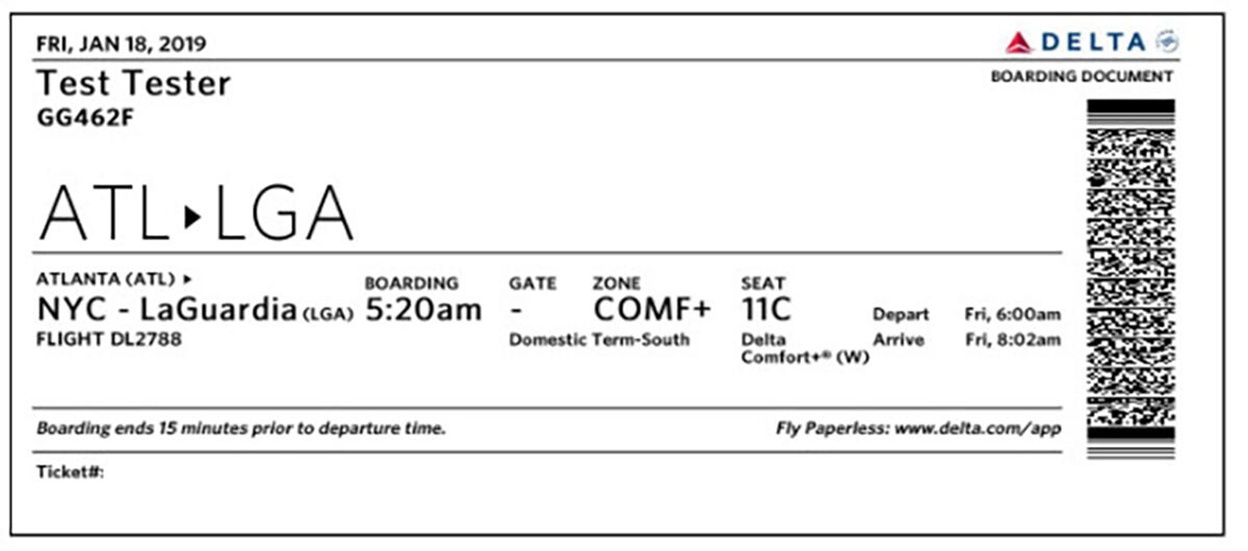
Mr. Tester can’t be happy that you shared his private account information publicly.
@Tyrone Washington — Ya never know, maybe Mr. Tester is ‘into’ it; he probably ‘gets off’ on being exposed like that. Remember, we don’t yuck others yum at VFTW…
Another chapter in the f***-you – f***-you relationship that Airlines have developed with customers.
If I buy all more candy than I actually need, am I then obligated to eat it?
Airlines continue to utilize nonsensical pricing model and then are shocked when people do what is best for them. This shouldn’t shock anybody, but the airlines are operating in some sort of alternate reality.
@Jake V — (whispering: it’s not just airlines… *cough*)
The airlines’ pricing is actually based on competition. I have exactly one choice if I want a non-stop flight to Atlanta. I have six airlines to choose from if I want a one-stop connection to Louisville. The fact that sometimes a ticket to Louisville via Atlanta is cheaper than a ticket just to Atlanta makes sense. The monopolist airline can charge a higher price on the nonstop, but has to figure in competition in pricing the one-stop.
If I’m flying to Louisville, I don’t want to be competing for better-priced seats with a lot of skiplaggers who don’t want to fly there.
I don’t need to skiplag if the flight is 2.5 hours or less. I just buy 2 one way non-stop tickets.
If the airlines don’t like it remove the pricing. Don’t offer me a service for sale and then complain about how I use it.
Airlines are constantly getting caught not following their own contract of carriage but aren’t afraid to throw one in your face when they choose too.
The pressure for profit is the root cause of these business policies.
@DaveS — Skiplaggers are not competing with the Louisville passenger; it’s that the airline is penalizing the Atlanta passenger for wanting a non-stop flight to its own hub.
The Louisville passenger is getting a market-competitive price because the airline is forced to compete on that entire route. The Atlanta passenger is being subjected to a near-monopoly price. Skiplagging is simply a rational consumer reaction to an irrational pricing structure.
A consumer’s best interest is served by purchasing the lowest-cost ticket to their desired destination. By exploiting the airline’s arbitrary fare logic, skiplaggers are acting as a necessary check on punitive pricing. If the airline wants to prevent this practice, the solution is not to impose hidden-city bans on customers, but to adopt a transparent, cost- or distance-based pricing model where a shorter flight is never more expensive than a longer one.
Yet, none of that is likely to happen on its own, because we consumers have little bargaining power here, other than to simply chose not to fly, stay home, etc.
@Spuwho — “The pressure for profit is the root cause of these business policies.” 100%.
So, airlines overbook as much as they can to increase the likelyhood of a full cabin. so much so that they reserve the right to just boot folks who didn’t check in sooner. “Sorry dude, we sold your sold seat to somebody else, or sorry our employees called dibs after you already paid so ya gotta go. we’ll get you some other flight and f your plans sir. have a nice day”. I let understandable logic but also highly aggressive and semi deceitful.
yet they want to cry when the passenger potentially helps out by not finishing their travels and leaving a spot open. A spot that was potentially sold twice anyways.( which is legal how? no other industry I know of allows multiple folks to buy/rent the same unit at the same time with the justification of “what if”. that’s used car salesman tatic vibes) Airline companys, at times, seem to want to take more then they are willing to give, imo.
You lose your left shoe. You call the shoe company to ask whether you can just buy a left shoe. They tell you, “Sure; it will cost you $40.”
“That’s ridiculous: you’re selling an entire new pair for $30. I’ll just buy a new pair then.”
“We can’t let you do that. We could have sold that right shoe as part of a set. If you buy a pair of these shoes, you have to agree in writing that you will use both the left and the right shoe.”
@pezchef — Sounds like you’d be in-favor of air passenger rights legislation, akin to EU/UK 261, Canada’s APPR, etc., where passengers at least get compensated (often hundreds of dollars) when the airlines screw them over… (or not, we can just keep getting screwed, and guzzle the sweet pro-corporate propaganda that the ‘free market’ cares about you and I.)
“Waitress, how much is a hamburger?”
“$7.00 for a burger. Or $5.00 for a burger platter, including fries and Coke.”
“I’m not that hungry. I’ll take the platter but eat just the burger.”
“We can’t let you do that. We could have sold the fries and Coke to someone else.”
I won’t skip lag if you promise to show me all of the available seats before spooking me into paying $39 for some ordinary non-middle seat so I can sit with my travel partner. Deal?
@Cpop — The irony is that you, as a mere passenger, have no bargaining power, whatsoever, to demand such a ‘deal.’ The only way to prevent such silly ‘games’ is likely through regulation… yet, we’re so predisposed to pro-corporation propaganda in this country, we’ll likely vote against self-interest, time and time again, as has been the ‘way’ since at least the 1980s…
The big exception is that empty seats are now available to airlines. Given the number of displaced passengers in any given day, particularly when weather sets in, that empty will surely have a butt in it. Between standbys, displaced passengers, commuting and/or deadheading crew, and non revers there’s usually someone ready for that seat.
Furthermore, with most routes now priced the same as a one way there’s no longer the need to buy a round trip ticket and do a no show for the return. Skiplagging comes with risk. What happens if you’re forced to gate check your bag or you are rerouted? The I saved $1.5K is probably rare anyway.
I know I can’t be the only one that knows this, but:
Airlines price their tickets with the cost of doing business built into it.
If you find that a ticket that ends in airport Z but has a stopover in airport Y is cheaper than a direct flight to Y it’s usually because of tariffs imposed by the airport authority.
And then the airlines get screwed because you decided to commit fraud.
But try to rephrase it as you’re doing the airlines a favor. No matter what, you aren’t.
This is a real issue and it directly effects bottom lines, ticket prices, etc.
And no, charging the largest tariff possible doesn’t help: There is ZERO reason I should have to subsidize you being a cheap fuxk.
For those who like to ponder this kind of thing consider the following.
There is a large pile of dirt. The price if you take the entire pile is $10. If you only agree to take half the pile the cost is $50 and if you only want one dump truck load it’s $100.
Obviously the owner want to get rid of the dirt, but that’s beside the point. If someone signs an agreement to take the whole pile for $10 and then only takes one dump truck load would the owner have recourse?
Now imagine a restaurant that posts a sign requiring diners to either finish the food they order, take the leftovers home with them or pay an extra $25 charge. Perhaps the owners don’t like to see food go to waste or don’t want to bear the cost of getting rid of it but again it doesn’t matter. Is the fee enforceable?
If so then why not the requirement to complete one’s journey or be charged extra?
Does the motivation make a difference?
I’ve done it once on American, wayyyy back in the day. I fail to see the problem. The airline can resell the seat to a standby and make more money. If there are no standbys, then the airline still has the original ticket purchaser’s money and the plane flies with fewer passengers and luggage, saving fuel and food in the process. It may only be the weight of a couple of people per plane, but it all adds up. Basically, there’s no way that the airline can really lose, here. Yes, the gains may be marginal but as I said, everything adds up in the end.
I don’t do it for the reasons noted. Not worth it.
That said, it is not a moral or ethical question. It is not theft. There is a contract. You can violate it. And if the contract calls for a penalty, the other party can impose it. Maybe they won’t, or won’t catch it. End of story.
i have no sympathy for an american corporation, that has an entire department that doesnt do anything but think tank ways to rob its customers. Morals and ethics work BOTH ways
Cory Garner drank way too much airline kool-aid. The matter of the fact is that skiplagging is a result of how complex airlines have made pricing. Airlines have a right to price their product how they want. They found a complex way to price connecting itineraries while at the same time being competitive with nonstop ones. Good for them. It’s their fault for creating such a complex system and with any system, there are crack and loopholes.
If the airlines have the right to create these pricing messes and maximize their profit, then the consumers should have the right to do what they wish with their ticket. I hope one day the DOT fights against
@ Gary — Are the ethics and/or legality of Skiplagging the same for miles as for cash?
@Arthur, @David Whitkiss, and @Kip get it. Loving all this consumer-friendly sentiment.
@George Romey — Ugh, obviously don’t check a bag when skip-lagging… c’mon, man.
So, according to Garner’s candy story analogy, if you pay for an all-you-can-eat buffet but stop after eating only a salad and jello, then you have somehow ripped off the restaurant?
Frankly, this is the airline’s fault. Imagine calling them when you’ve arrived at AAA-BBB and telling them that you will not be going to CCC. Are they going to try and reprice you? Nobody wants to take that chance. Or, imagine a “hotline” for pricing that the airlines could offer… I’m trying to go from NY to Chicago. I realize that the ticket is $400. But, If I book a connecting a flight to LA stopping in Chicago, it’s $300. IF I could call the hotline and explain it and be offered the $300 price, then I would. See the problem? This option doesn’t exist and the first scenario (calling them from BBB to tell them you won’t use CCC) are both detrimental to the consumer with no cure. The airlines get what they deserve if the flight from BBB-CCC ends up with an empty seat.
@Jack Meehoff — Have you met @Mike Hunt yet?
@ Gary — See Ben’s story re: Lufthansa today. At least in Germany, I think that Skiplagging is safe (just dont check bags).
@Gene – I have that written up for the morning, it’s pretty wild. This even extends to Lufthansa codeshares on United and Air Canada, it seems to me. Lufthansa’s Contract of Carriage is clear that it controls.
@TollHolio: “If you find that a ticket that ends in airport Z but has a stopover in airport Y is cheaper than a direct flight to Y it’s usually because of tariffs imposed by the airport authority.
And then the airlines get screwed because you decided to commit fraud.”
I don’t understand. Don’t the airport authorities charge for each landing that the plane makes? If the flight stops at both airport Y and airport Z, the airline is going to get charged by both airport Y and airport Z. But if the flight didn’t stop at airport Z, the airline wouldn’t be charged by airport Z.
The only thing worse than being talked about is not being talked about….oh look, everyone’s talking.
Much ado about nothing
Can someone explain to me how an industry that loses money on the flying part of their business can be price gouging? Seems like it’s just an automatic response from the I’m-a-liberal-but-unwilling-to-try-to-understand-economics crowd.
@Gary Leff, @Gene — Be sure to borrow commenter @All Due Respect’s nickname for LH of ‘LuftKafka’…
Happy Zork-ing!
Mr. Got Rocks can’t afford to pay for the real deal?
The rules apply to everyone else, I see. Why I don’t listen to ‘talking heads’.
The ruling in Germany cuts both ways. The court did not rule the provision was unenforceable. They only ruled that it wasn’t enforceable if the passenger intended to complete the trip and had a change of circumstances.
That might appear at first glance to negate the airline’s ability to enforce it but imagine a passenger who books hidden city tickets on a regular basis. Since it would be difficult to convince a court that they had such a level of frequent changes after purchasing their tickets the airline would be in a position to insist on them paying up.
So while the ruling is better than one upholding the provision in all circumstances the court upheld underlying principle of the provision.
I’ve never seen a bad analogy used as rage bait before… but.. there’s still room on my 2025 Bingo card
I’ve never seen a bad analogy used as rage bait.. but.. alas.. there’s still room on my 2025 Bingo card.
When your flight from ORD to LGA is $300, but a flight from ORD to LGA to ROC is $150….
What’s so special about ROC? Am i paying a premium because i live in NYC?
@James A Harrison:
Yes! You are a rich customer. Enjoy your privilege.
OK, that was sarcasm. The real answer is that the airline is charging for convenience. Value pricing. If the flight was ORD to ROC to LGA, the ROC price would be higher.
The candy store comparison is bogus. When a customer buys a two leg ticket, the customer is paying full price but just not enjoying a part of what was purchased. The airline sets the sales price. Since when does a customer have to use all that is purchased? In the candy store comparison, if the customer buys all the candy, does he have to eat it all. I don’t think so. I don’t think the candy store owner can force eating all of it. The airlines seem to argue they can force consumption. The rules adopted by the carrier are probably invalid as an adhesion contact.