
Tax law changes in the U.K. could have worldwide consequences for airport lounges and points-earning. Starting April 6, family-owned private businesses are subject to U.K. inheritance tax above £2.5 million.
Specifically, Business Property Relief gets capped, with 100% relief only up to £2.5m (per person), with reduced relief above that (effective 20% inheritance tax on the excess if 50% relief applies).
When the 79-year old founder of Priority Pass, The Club lounges and partnership on Chase Sapphire lounges, and numerous other travel businesses like online shopping portals and card-linked merchant offers passes away the business will have to change control (e.g. get sold to private equity).

The Club at MSY
Or so suggests The Times, which runs an interesting piece on the Collinson business and the family dynamic. The lounge business “has about 1,500 clients around the world, including Visa, Amex and Mastercard, which pay membership and transaction fees as their customers use the lounges.”
At Heathrow, its My Lounge, No 1 and Clubrooms, are operated in a joint venture with Swissport. Around the world it owns and operates more than 85 of its own, with the others owned by other operators. Collinson tracks six million lounge visits a month, through its Priority Pass and LoungeKey Pass membership schemes. The usage figure is 60 per cent higher than 2019.
…Its Valuedynamx division runs ecommerce loyalty programmes for brands. It handled $1.4 billion in transactions last year, including for John Lewis.

The Club at CHS
So what does private equity look like in this context, seeking to squeeze more value out of the enterprise?
- Prices go up (not in ways consumers see it). Push to raise the per-visit fees paid by card issuers or tighten contract terms. Issuers then respond with visit caps, more guest fees, or higher card annual fees.
- Harsher capacity management. Private equity looks more at yield per seat-hour in the lounge. That creates pressure for strict time limits (e.g. 2–3 hours).
- More two-tier lounges where access is Priority Pass plus upsell. Base lounge access gets increasingly stripped down. Premium lounges, paid reservations, and add-ons for better food and beverage become common (taking elements that are now bundled and charging separately).
- Reduced operating spend in lounges. That means reduced staffing, reduced food and beverage quality and less replenishment of buffets, less cleaning, and longer maintenance refresh cycles.
- More crowded lounges. The ultimate constraint driving packed lounges is access and footprint. The ecosystem needs more capital investment, not less. And while private equity will promote its access to capital, a desire to limit expenditure and maximize short-term revenue and the ability to sell at a premium starves the network of capital, at the same time gating of lounges comes off because each entry is revenue (even if the lounge guest immediately walks out because of inabiltiy to find a seat).
- And what about merchant offers and shopping portals? Expect more breakage, more points getting lost (tracking issues) whether as a breakage strategy or due to underinvestment in the technology. Over time that may mean fewer customers lost to competitor ecosystems, but in the short run tends to improve financial performance, cleaning up the books to flip the business. It’s the classic example where the long-term focus of multi-generation family control is better both for the company and for consumers.

I’m not a U.K. tax expert by any stretch, but with £2 billion revenue and over £70 million pre-tax profit, I expect they can afford good lawyers. In the U.S. you do something like put ownership shares of the business into various trusts, with restrictions around only existing owners being able to own shares and exercise voting power without the ascent of other owners. Then you write down the value of the shares based on:
- lack of control [due to minority stakes]
- lack of marketability [due to the private nature of the shares], and
- a block discount [it’s hard to sell large stakes in a large business for which there’s no liquid market].
Each of these cuts the value 40% – 50%, but the value snaps back once transferred to an existing owner. Very roughly speaking, it makes a $1 billion business worth $125 million.
Now, there are unique limits on transfers into trusts in a U.K. context that don’t apply in the U.S. And there’s a lot of nuance to how the trusts need to be structured. That’s why expensive attorneys are involved, this isn’t something you pull a form off Google or get ChatGPT to write. You also need trust purposes beyond tax-avoidance (but you need those in the U.S., too!). And you’re going to need to gradually transfer the assets.
It might be easier to move the family out of the U.K. and ownership in the company out of UK-incorporated entities, even with UK exit charges. Relatively little of their business is generated in Britain, Heathrow lounges and Virgin Red’s shopping portal notwithstanding.
I’ve had the pleasure of meeting Collinson founder Colin Evans on many occasions – he’s a genuinely good guy, and deserves all his success, and I can’t imagine anything more gratifying than having your children successfully drive forward your life’s work – or anything more gut-wrenching than having the state take that away from you.



Easiest solution: move the family out of the UK to a more favorable tax climate.. It’s already happening throughout Britain; the affluent tax base is leaving in droves.
I understand wanting to skim taxes off the wealthy, and really, that’s how it should be: everyone should pay their fair share. But there is a limit to what “fair” means. Don’t kill the goose that lays the golden egg.
I’m a dual US/UK citizen and my primary reason for not moving to the UK isn’t weather or lifestyle, but the tax scheme. When one starts to have income in the six figures and holds numerous assets, Great Britain doesn’t look so great.
Interesting connections – thanks for sharing this story
havent these people got enough money?
Informative piece. Private Equity is all about extracting value, never creating it. Scourge
What? Did you think hotel rooms and vouchers are free?
If the company made 70 million pounds in profit last year I suspect they can afford to pay their taxes instead of weaseling out like our billionaires do.
Private equity never improves a business. It destroys many businesses with a few making a killing along the way. Companies are vulnerable because private equity will offer current stakeholders an outsized premium on their shares and thus an easy sell.
Don’t get the violin out too soon…Collinson (and Colin Evans and family) has rolled up to a controlling entity in the Isle of Man for a long time: Parminder Ltd, which is obviously to reduce its UK tax liability. Seems like the past is catching up with them.
On Instagram and other social media, there are many meme about taxing rich people, saying that they won’t move. Other memes say that the tax rate was 91% in the 1950’s United States.
To that, look at North Korea. Nobody moves away so they must be great? The tax rate on Jews was 92% in Nazi Germany and weren’t they great?
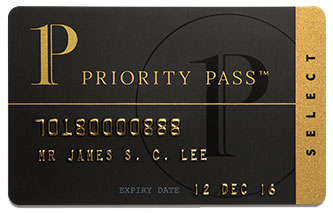
Oh no! My precious 9 Priority Pass Select memberships! Nooo….
Seems like a convoluted excuse to make an argument against inheritance taxes and using a weak scare tactic about this driving a sale to private equity investors to drive up opposition to inheritance taxes.
Even absent inheritance taxes, founders of big and profitable companies often sell to private equity funds to generate liquidity and do so at much higher valuations for heirs/estate beneficiaries and minimize tax liabilities while at it.
One way to avoid inheritance and/or gift taxes in some jurisdictions is to pass assets to a spouse/surviving spouse.
Theoretically, people in such jurisdictions could get married to try to avoid the state’s right to inherit a proportion of the assets from a dead person’s estate.
A reminder by the way that all the profits have already been taxed, and distributions get taxed as well. Taking an additional tax forces disgorgement of the company. Even @GUWonder won’t like what that looks like.
We work, earn money and pay taxes.
We drive, get gas and pay gas taxes.
We pay our utilities and pay more taxes on that.
We find some money to invest and pay taxes on any profit.
We pay social security taxes for 40+ years and then get told you have to wait 2 more years because we are insolvent.
At what point does the government tighten their belt?
At what point does the compassionate political party allow the other party to audit spending and stop buying votes with taxpayer money?
I’m with @Gary – Rich people should be allowed to pass unlimited wealth on to their heirs through tax ̶c̶h̶e̶a̶t̶s̶ loopholes. That way those pesky normal people can learn their place while the rich grow perpetually richer. Works out great – for the rich. We’re merely returning to the era of The Robber Barons so there’s nothing even revolutionary about this view, just going backwards 150 years. As for the poor, let them eat cake.
Private equity is good. Anyone saying otherwise is a pinko commie!
Inheritance taxes: punish you for being frugal.
The UK continues to make truly stupid, short-sighted, anti-competitive decisions that contribute to it’s continuing slide into mediocrity. More taxes, higher costs, yet nothing to spur the national economy. Most of the UK, outside of Greater London, is in a state of economic distress. That’s the big picture. The smaller details include people going out of their way to alter their behavior in order to avoid a variety of confiscatory taxes.
I’ll give you one simple example that’s well known here: the UK Departure Tax. The highest departure tax in the region for those flying mid to long haul. Taking my family of 4 to the UK this summer; we’re entering via Glasgow and will return to the USA from…..Shannon. Why? Because that stupid tax adds nearly $200 per ticket to an award seat in economy. Flying from SNN saves us about $800. Yes, we need to hop a Ryanair flight to reposition so we’ll give some of that back. But still, avoiding that tax is a huge savings. And we’ve done this repeatedly when traveling there. The finance bros in The City may have no issue with this tax on their flight to Phuket, but for a lot of travelers it does matter. And that’s not all: the train fares are higher than in the rest of the region, for service that is not as good as you’d find in France, Germany or Italy (to name a few). High taxes and nothing to show for them. So, while the Priority Pass guy’s trevails will not affect me, it is emblematic of what pitiful political leadership in the UK is causing. Honestly, get outside of the tourist areas of Greater London and you’ll see a nation in rapid decline with a per capita income lower than Mississippi.
@Michael Mainello — Brinin’ back the ole ‘TEA’ party, eh? Yeah, you know what else is a ‘tax’… higher gas/food prices because of wars of choice… (Don’t worry, I’m still personally pleased the Ayatollah’s gone, so, overall, well-done, but good luck with the aftermath… yikes… 243 days…)
@stogieguy7 — Ever been to Blackpool? Just north of Liverpool… makes Atlantic City look great.
@1990 – No, I am looking for accountability from our government. They have strayed to far. A lot of the discretionary budget is used to buy politicians and votes. I am sure Omar and AOC earned their millions legitimately (snark). Yes the mid-terms are coming and Democrats might win back control, but it does appear that more and more of the Democrat crazies are outing themselves. Now if the current administration can get the vote cheating machine fixed and the vote counting and verification system in place, it might be a good election.
@1990; Yes, Blackpool is a great example of what I’m talking about. Stoke on Trent (former home of Wedgwood) is another.
@Michael Mainello — By all means, go after those with mere millions. Hunter’s board seat is pennies by comparison to the billions in grifts and self-dealing by the current regime. Or, do they get a pass? If we’re following the Putin-model, it seems, they will indeed get a pass. Vilify opposition. Do the same corruption, 1,000x worse with impunity. We are becoming the Soviet States of America.
@stogieguy7 — Heyday of those places was around 1950s, post-WWII, strong working-class, but, alas, all the manufacturing went East, so that those in London could offshore their excessive wealth. Someday, we really should seek ‘accountability’ for the global kleptocracy. Was hoping those Panama/Paradise Papers would’ve been the start; instead, we’ve quintupled-down on it all.
Per Wikipedia: a soviet is a workers’ council that follows a socialist ideology, particularly in the context of the Russian Revolution.
@1990 – Great we agree. Why are Democrats blocking the audits that DOGE was identifying? I am for accountability of all parties. Also if any of these rich folks you dislike (envy) gained their wealth thru breaking the law to include tax laws, then by all means prosecute and lock them up.
During his first term the current president had the SALT deduction capped so the wealthy paid more income taxes. “The SALT (State and Local Tax) deduction cap, which was set at $10,000 under the 2017 Tax Cuts and Jobs Act (TCJA), is scheduled to expire at the end of 2025. From 2026 onward, if no further legislative action is taken, taxpayers would be able to deduct their SALT without the previous cap limitations.” I doubt congress will re-enact anything like the previous cap.
The taxes in the UK are simply becoming insane. People who are only moderately wealthy are considering leaving the UK. The inheritance tax is so bad that farmers who have had land in their families for generations are facing selling it when the primary owner dies and losing the family business. Taxes and costs are so high for farmers that the UK is facing a food shortage situation later this year, something that Parliament has only belatedly come to realize as farmers leave their fields fallow instead of incurring the costs of farming. We can quibble and laugh sarcastically about a tax on a Priority Pass and make fun of the proverbial Poor Little Rich Girl, but the damage to the UK economy is real and quite stark. It’s a Death By a Thousand Cuts as each new tax or fee is imposed. Businesses are offshoring; workers are choosing to not work extra to lower their gross taxable income; anyone with property is considering selling it and moving overseas. The worst part is that these higher taxes will barely move the needle as the UK government has clearly never embraced the Laffer Curve; they don’t understand that every new tax they pass eventually reduces His Majesty’s tax revenue as people learn to adjust to it, or not partake in the activities that these taxes address.
For those crying crocodile tears about the potential loss of apriority Pass, perhaps please read an article on this inheritance tax to see how it really operates, how family owned businesses in the UK are being affected (https://www.thetimes.com/business/entrepreneurs/article/inheritance-tax-businesses-farms-reeves-u-turn-pn2bf8dcq). The Priority Pass issue is truly simply the tip of the iceberg. This actually transcends across the British business scene.
It isn’t pretty.
@ Michael Mainello
Read a newspaper! The disgusting SALT limitation lives on albeit at $40k. Sadly the loopholes mean that only the middle class is hurt by it.
Inheritance taxes make it so that we are not subject to perpetual rule by brain dead fail sons. Instead, we just let them run the FDA.
@Gregg – please explain from your point of view. As I have read, if you pay more than $40k in SALT then you are doing very well financially. Maybe it is the state and local governments taking advantage of federal write offs. My request is genuine, please explain.
@Brent – so you are one of those that doesn’t critically think, just blindly follows orders. Please list and explain some policy changes that you disagree with and how they should be changed. Or at least let me know what you handlers tell you to say.
“Rich people should be allowed to pass unlimited wealth on to their heirs through tax ̶c̶h̶e̶a̶t̶s̶ loopholes.” Elimination of Inheritance tax is what I support, and it isn’t a loophole or cheat. It is fair and wise policy. Why should someone who dies penyless pay (yes, their estate pays) zero Inheritance tax, while another with the same income stream pays 40% of what they saved (after the exempted amount) because they are thrifty?
BTW, if you eliminate Inheritance taxes you’d need to either force the estate to pay cap gains taxes as if the investment were sold or pass along the original basis to heirs.
@Gary Leff – Not sure if you read all the comments, but I find it very telling that the liberals love to verbally vomit their position then never defend it. IMO, they are very shallow and childish.
This article is clearly written by AI: AI that does not know what a comma is. Come on Gary! What are you, Pinterest?
@Rob – for avoidance of doubt I wrote this – to paraphrase raymond chandler i write in a sort of broken-down patois which is something like the way a Swiss waiter talks..
@stogieguy7 – agreed on the dumb departure tax. Went to the uk for the first time last year, and was shocked at that tax, especially since it only applies if you leave by airplane. Anyhow, when I go back, I will make sure leave from somewhere else.