
FAA Wants To Centrally Plan Airline Competition — Starting With Spirit’s $87 Million LaGuardia Slots

The Trump administraton wants to repeat Biden-era competition mistakes in the airline industry.

FAA Administrator Bryan Bedford has been in the news saying that the agency wants the 22 New York LaGuardia slots that Spirit Airlines had to go to a discount carrier. He’s said that if they wind up with a major airline, the FAA may confiscate them and retire them instead.

  • Bankruptcy creditors want maximum proceeds from what they estimate as an $87 million asset
  • The FAA wants to engineer a specific competition outcome
  • But the government may also want to stick it to creditors, who didn’t go along with the administration’s (illegal) bailout plan for Spirit.
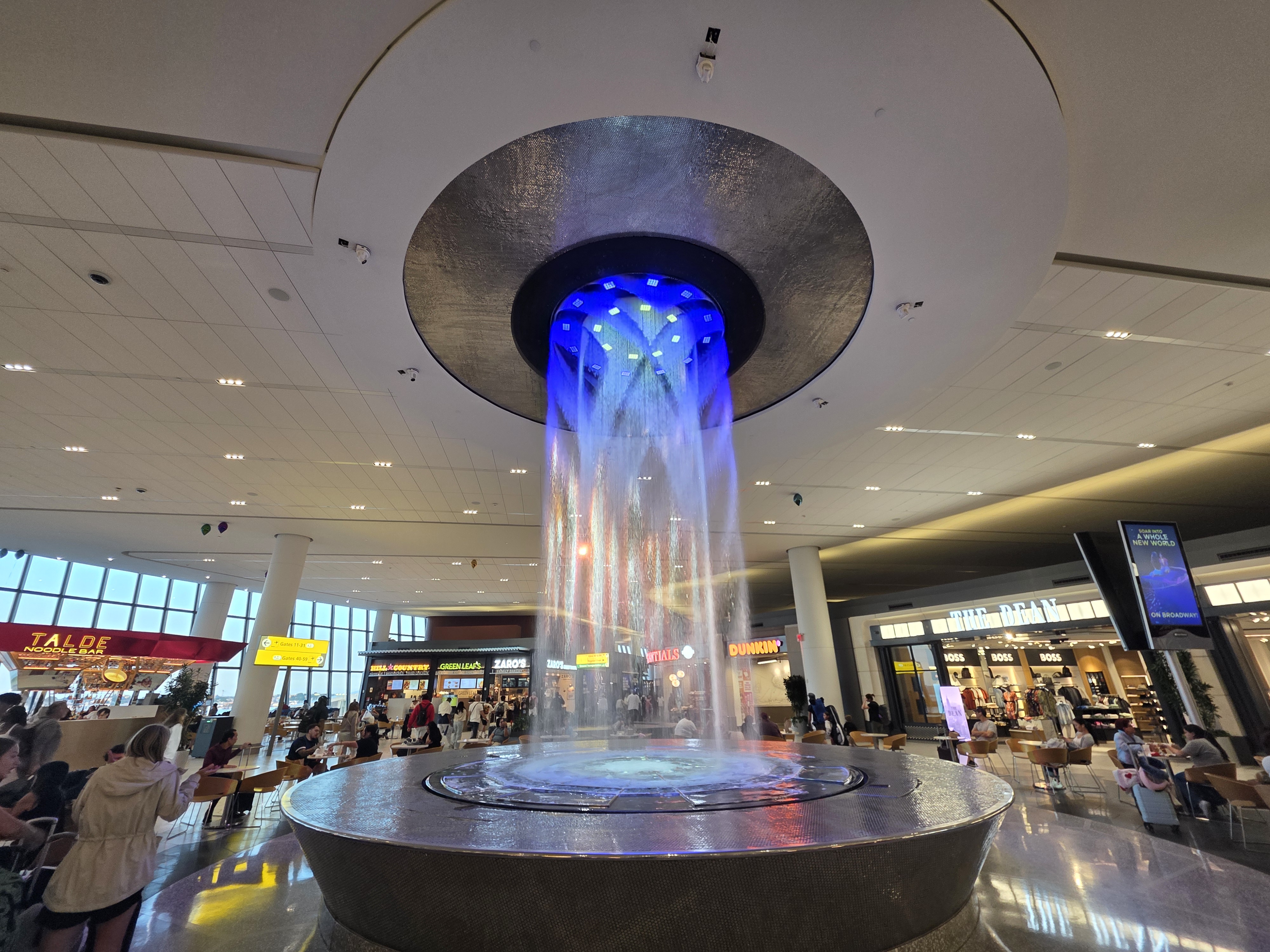
Here’s what he said:

“As long as the slots are going to a low-fare airline and for the public good, the FAA and DOT would support that,” Bedford told reporters in Charleston, South Carolina, as quoted by Bloomberg.

If that is not an option, he said he believed the slots should be retired “and just get rid of the congestion.”

Does that mean only Frontier Airlines, or theoretically Allegiant could buy the slots? Frontier can’t really make money at the cost of New York airports. Sure, they rely primarily on passenger fees, but airport costs represent about half of base fare. The economics of serving New York are hard. And they’ve historically leased slots rather than actually buying them outright.

This is more ‘government putting its thumb on the scale’ of winners and losers for scarce resources in aviation. We should actually be replacing slot controls with congestion pricing so that the government isn’t gifting valuable rights to use the most important airports and exclude competition.
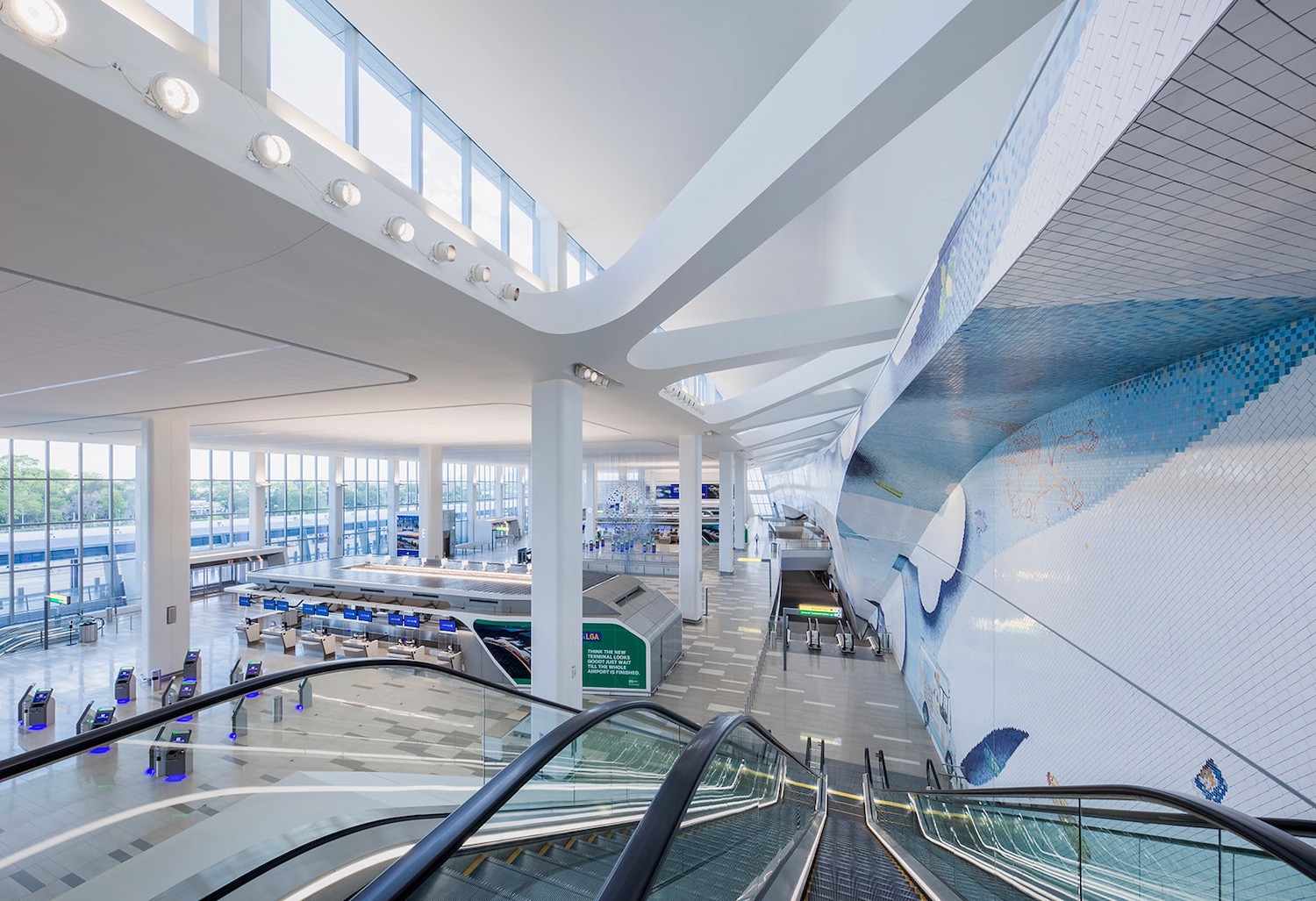
In his Airlines Confidential interview only a week earlier, Bedford suggested that the government should should be managing airline schedules because each airline scheduling themselves causes too much congestion.

This is part and parcel of the same central planning that members of the Trump administration were criticizing the Biden administration for only two months prior when Spirit Airlines went under, arguing that it was the Biden administration’s attempt to micromanage the industry and ensure that Spirit’s planes all operated under the ultra-low cost model that caused them to block JetBlue’s acquisition of the troubled carrier. (There is some merit to this argument, but it is overstated and the reality much more complicated.)
They just can’t help themselves but to repeat the same mistakes that they criticize. Indeed, the entire point of the Airline Deregulation Act that’s made air travel within reach of Americans, was that the federal government needed to stop centrally planning where carriers would fly and what they could charge.


About Gary Leff

Gary Leff is one of the foremost experts in the field of miles, points, and frequent business travel - a topic he has covered since 2002. Co-founder of frequent flyer community InsideFlyer.com, emcee of the Freddie Awards, and named one of the "World's Top Travel Experts" by Conde' Nast Traveler (2010-Present) Gary has been a guest on most major news media, profiled in several top print publications, and published broadly on the topic of consumer loyalty. More About Gary »

More articles by Gary Leff »

Comments

  1. Folks will bid as if the FAA administrator didn’t make this comment, and then negotiate with the government afterwards.

    The real question is who will take over Terminal A, if anyone. You may not like LGA very much, but folks continue to enjoy the new LGA TB and TC (just had the very tasty LGA burger at the Chase lounge – yum). Having to go to Terminal A would be a huge downgrade. Maybe Porter would want it for shuttle service to Toronto or something like that if they consolidate away from EWR and move closer to coordination with AA/Oneworld.

  2. Is the US airline experience better now or before deregulation? I am not certain.

  3. I think this is a rare case where government intervention is actually a good idea. One of the reasons why there is little innovation in the domestic aviation sector is the chicken-and-the-egg slots and capital problem. It is in practice very difficult to get startup capital for an airline without already having slots. Yet it is generally very difficult to get slots in the first place. The problem is magnified by incumbent airlines’ incentive to use their massive capital access to temporarily pay above-market rates for fresh slots to “catch and kill”, preventing new market entry and strangling nascent competitors in the crib (forcing them to use inferior second-tier airports).

    The optimal solution is a handicapped auction (where new and low-fare airlines get a significant handicap to win the auction but incumbents can stil bid and win at a higher price if they truly need the slots). This disincentives the “catch and kill” strategy and promotes better long-run competition.

  4. Some of the airlines that could be considered “LCC” would find LGA a difficult airport to operate from. Mainly Avelo, Breeze, Allegiant and to a certain extent Sun Country look for underserved routes that they can operate less than daily. That’s not LGA. Frontier is losing too much money.

    JetBlue and Southwest might have an interest.

  5. They are going to bring the Civil Aeronautics Board back, aren’t they?

    (Probably as part of a Making Aviation Great Again campaign, with our luck…)

  6. Best part of this article is we didn’t call Southwest a “low cost carrier” anywhere in it.

    Maybe we’ve finally turned that corner?

  7. @gary: the 1978 deregulation act is responsible for you having to close your laptop earlier

    the root cause of lga congestion is so obvious and never discussed

    it’s the same flaw in deregulation

    finite capacity of a government resource can not and will not find and continually re-balance a competitive equation

    it is mathematically impossible

    in 1978, lga was capped at 78 ops per hour, with short nines and 732s balanced by FIFTEEN widebody 10-10 and 1011-1 ops per day

    yes the DC-10 and L1011 operated from lga at the time of deregulation

    number of DC-10 and L-1011 hull losses at lga: zero point zero point zero

    flashforward to the era of kettle service badger bridge and tunnel nirvana:

    the cap is now 71 ops per hour, down 8% from 1978

    AND…… 49%….. FORTYNINE PERCENT…. of all ops are RJs 75 seats or under

    not controlling this insane use of slots, gates and airspace is something only late-stage capture us government could conjure up

    the rest of the world laughs at us for this stupidity

  8. No need for a new practice. Sell them to the high bidders. Use the money to help pay back the creditors. Do not turn the creditor’s contracts into charitable donations.

  9. Steven – not sure what country you are referring to, but in the US only 8% of passengers fly to/from slot-controlled airports (LGA, JFK, EWR, DCA, HPN, SNA, LGB). The vast majority of airports, large and small, do not require slots for domestic flights. For recent startups like Breeze and Avelo, they have paid zero (or close to it) for slots.
    Exclusive-use gates can be hard to get at some larger airports, but most airports have common use gates that startups can use.
    Unless your US start-up business model is focused on LGA, JFK, EWR, or DCA, you shouldn’t need to allocate any startup capital for purchasing slots.

  10. @Alex Only a few airports are slot-controlled, but they are absolutely vital for revenue, loyalty (for international partner flights), and credit card spend. There is a reason why United was so desperate to get back to JFK. It is nearly impossible to run a sustainable east coast airline without access to one of the core NYC metro area airports. These airports are crucial chokepoints (similar to the Strait of Hormuz). NYC access is not sufficient for east coast success, but it is a vital necessity. That is why the federal government needs to give nascent airlines a chance through a handicapped auction.

  11. @Peter — “You may not like LGA very much” … Only folks who haven’t been there since the 2000s would say such a thing. Anyone who has witnessed the glorious new LGA Terminals B & C, and EWR Terminal A, too, for that matter, should know better. All world-class terminals these days. Can’t wait once JFK’s new T1, 6/7 are open, too!

  12. @tomri — Or, crony capitalism, because that’s what this administration is actually pushing for… all in-favor of a Big 3 oligopoly in this industry (as in others). Attempts to strawman any and all regulation as ‘communism!!’ is merely abusing vocabulary to create a yet another boogeyman.

  13. @1990,

    Regarding LGA – not really. Four problems:

    1) The walk from the curb to security is much longer
    2) Security is now centralized – everyone waits as a result
    3) Every time you want to get to your gate you are required to walk through the (domestic) wanna-be Duty Free shop…extending your walking time to get to a gate
    4) There is only one exit – on the east side near the Amex Lounge….adds about 5 minutes to the exit for those in the westerly gates

    I’m sure those visiting NY think the new LGA is the bee’s-knees – but live with it as your primary airport…not so much. I’d say the old B terminal worked pretty well.

  14. @Mike — You live here, and prefer the old terminals? Oof. That’s an outlier opinion. I live in NYC, and most locals who travel regularly or even sparingly nearly all consider the new LGA a major improvement. Sure, many complained during the construction (and I almost missed a few flights because of it), but that’s now over. The ample new lounges in B (and new, further expanded SkyClub in C) are also a major bonus. A is still a joke, but it’s now basically not used since NK is gone. Most of your concerns are about having to walk a little extra in C; and, most actual NYC-folks walk plenty, already, and don’t seem bothered at all.

  15. “Is the US airline experience better now or before deregulation? I am not certain.” For me the answer is an unequivocal yes. The prices alone are enough to say yes.

  16. @Gary Leff — Insomnia or jet-lag? Either way, woof, those are some absurd hot-take(s). You, our dear credit-card-lounge ‘king,’ really prefer the old LGA Terminal B? Bwahhh! I tell ya h’what, Bobby… it didn’t have a C1 Landing or Chase Sapphire, that’s for sure. (Besides, you’re based in Austin, which proves my point that some visitors simply aren’t used to walking much, and seemingly cant handle new things…) Locals and visitors alike mostly are impressed by and prefer the new LGA (B & C).

  17. Oh, wait, Gary, are you a Spurs fan? Uh oh… maybe that’s why you’re all upset with NYC…

  18. Thanks to the government for stepping in. New York City becoming an area where only the wealthy and upper middle class are able to fly in and out of is crazy.

  19. @1990, Gary, Mike – the only problem I have with the new LGA TB is the wannabe duty free shop. My kids always want to stop to play with the big Lego guy that talks when you hit the button while P2 and I want to “walk like a NYer” over to the Chase lounge to put our names down on the list. This is, of course, why Chase needs to add a virtual wait list.

    Security really takes a very minimal amount of time at TB especially with Precheck and now Touchless ID. And no problem about letting kids use the Touchless ID lane – they just manually scan the kids boarding passes. “Why are we skipping even that line, Dad?” was the comment I got this week.

    The walk at TB is really no issue for me and the gate areas are nicely divided. I do think TC is a little bit more unwieldy with subpar gate areas.

    But this is nitpicking – the airport is a vast improvement over its predecessor airport. Sorry not sorry about the extra few minutes of walking.

    EWR TA – that place I’ll trade you back for, not my cup of tea at all. Designed with the same lack of soul as the new Giants / Metlife Stadium.

    Looking forward to the new JFK terminals!

Leave a Reply

Your email address will not be published. Required fields are marked *