
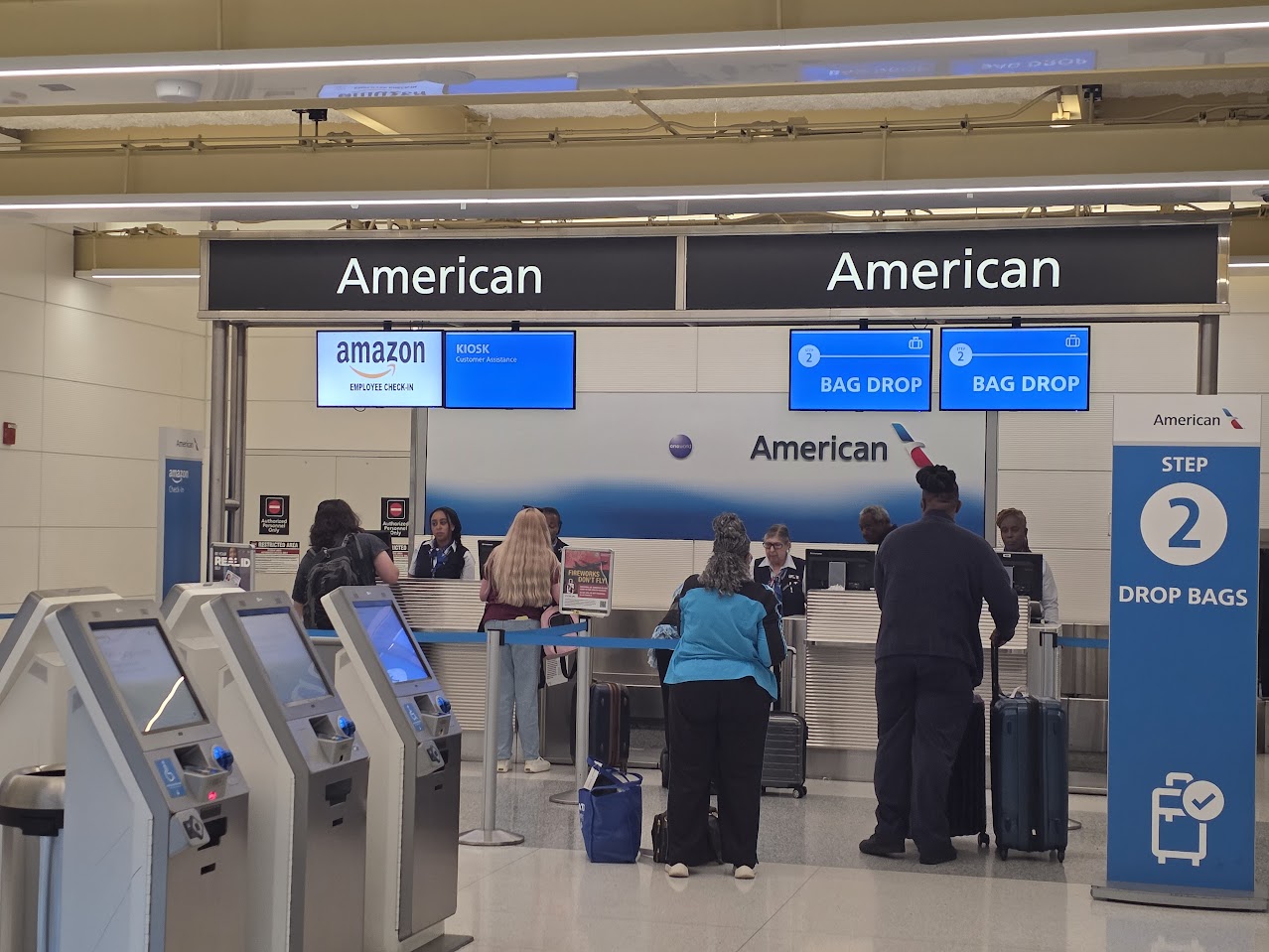
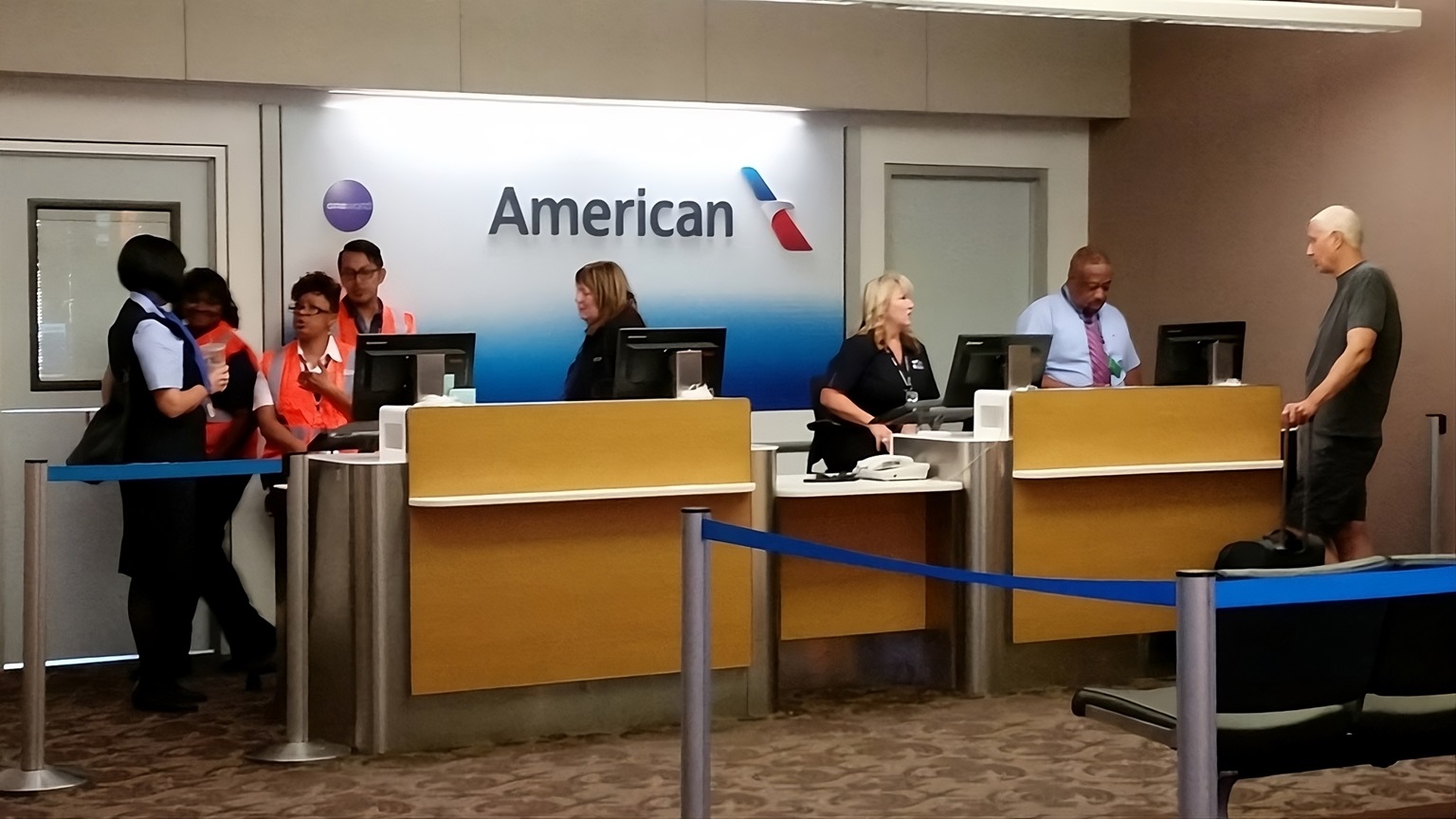
American Airlines customer service agents have filed an attempt at a class action lawsuit saying that they’re being systematically cheated of pay and overtime – that the carrier forces them to work during unpaid lunch breaks, makes them clock in and start working before pay begins, and keep working unpaid after the end of their shift.
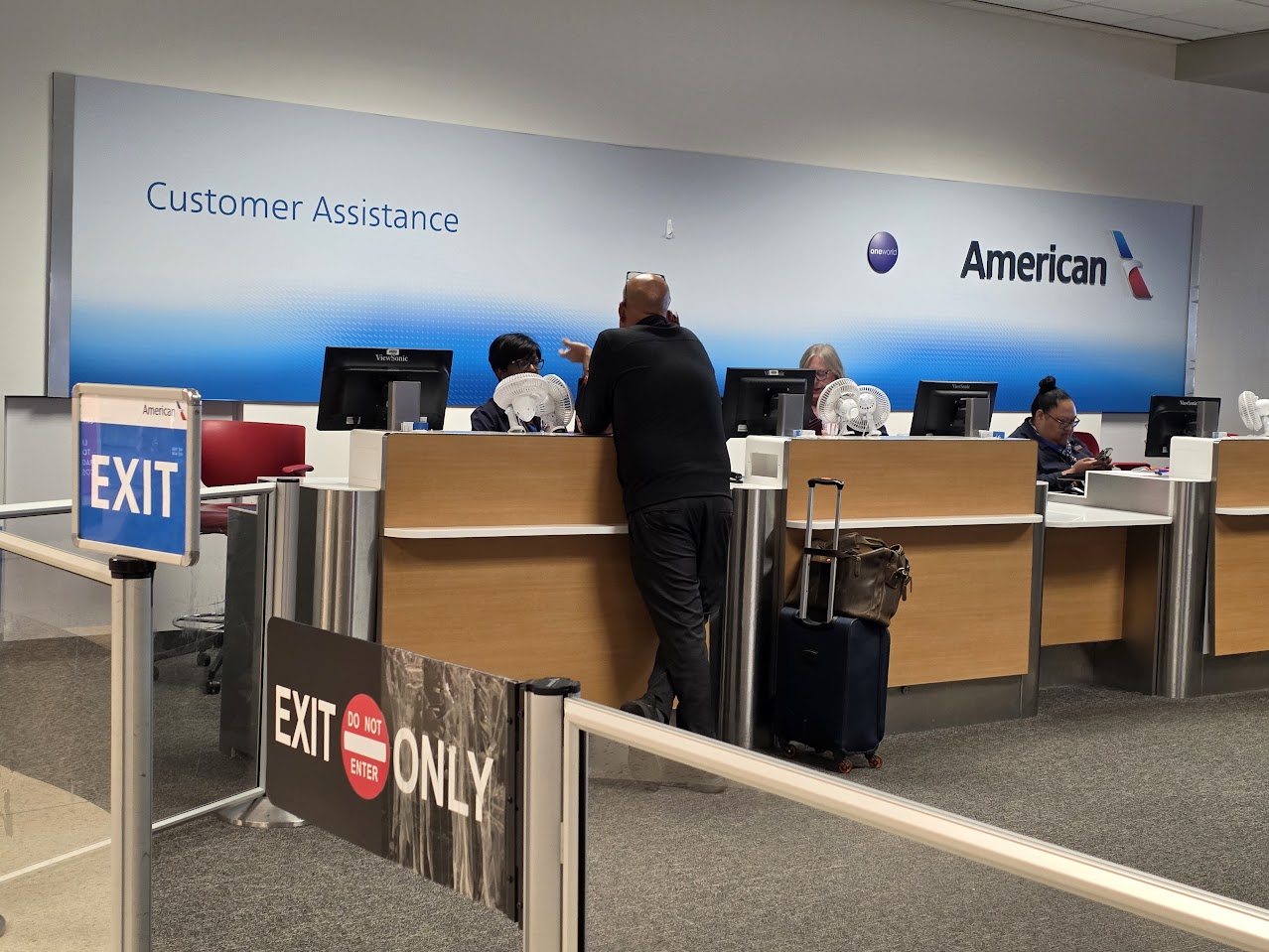
The case is Tencza v. American Airlines, Inc. in the Northern District of Texas. Incidentally, someone under the same name as the plaintiff and identifying as an American Airlines employee has commented here at View From The Wing.
- The lead plaintiff says she worked for as a customer service agent American in Nashville from 1995 – 2025, and that the airline employed hourly customer service staff nationwide as Customer Service Agents, Gate Agents, and Ticket Agents and that those who worked at the airline since January 30, 2020 should all be covered by the suit under the Fair Labor Standards Act. There’s also Tennessee-only class proposed as well.
- The complaint says that American automatically deducted 30 minutes per shift for meal periods even when employees were not fully relieved of duty – agents were required to help customers even while headed to break or on break, could not ignore customers, and therefore often did not receive uninterrupted meal periods.
Managers were told about missed breaks, were supposed to reverse deductions, but often denied the reversals. This cost them 0.5 to 2.5 hours per week of unpaid work time.
- Additionally, it says American rounded clock-in and clock-out times to the nearest 15 minutes (which is allowed as long as it works out on average). However employees were expected to clock in at 1:08 p.m. and start pay at 1:15 p.m., and to clock out at 9:22 p.m. to get paid only until 9:15 p.m. That stole 14 minutes of work per day, while if employees punched in at times that rounded to their benefit they were disciplined.
This is an off-the-clock wage case – that employees were working overtime but not getting those hours or at the proper rate.
A meal period is only supposed to be unpaid if the employee is completely relieved from duty. An employer can use automatic 30-minute meal deductions, as long as they receive the uninterrupted time, and if they have reason to know the employee is continuing to work the time must be counted as hours worked. And quarter-hour rounding of time is permitted only if, over time, it averages out and does not undercompensate employees for time actually worked.
And yet American probably doesn’t face a lot of risk here!
- The Fair Labor Standards Act’s overtime section does not apply to “any employee of a carrier by air subject to” Title II of the Railway Labor Act. The airline has even won on this before in Hartwig v. American Airlines at the district court level. Since customer service has more than a “tenuous, negligible and remote” relationship to air transportation, the overtime claim was dismissed.
- American will certainly argue that if an individual employee was shortchanged hours, that was an individual practice. Figuring out whether an employee actually worked during their automatic meal deductions and whether they worked more than rounded timesheets show is going to require individual proof. Whether someone was interrupted on break, whether a supervisor knew, whether a meal break deduction was reversed, and whether that the method for handling this was actually the same across airports are all things that invite a station-by-station and employee-by-employee inquiry. That makes a class difficult to certify for uncompensated hours.
- American is not liable for time it had no reason to know was uncompensated. American had a system for reversing missed-break deductions of time. The plaintiffs would need a smoking gun that managers were systematically refusing to reverse time when they knew that time was worked both to get to class status and to prove the case.
There’s a separate Tennessee claim which is likely precluded by the Railway Labor Act because of the airline’s contract with the CWA-IBT union covering passenger service agents and that contract covers breaks, wages, etc. And American’s timekeeping practices – absent a smoking gun – were facillay lawful, which makes willfulness and liquidated damages tough.
It seems increasingly common for airline industry workers to sue for not being paid overtime. Those suits usually rely on state laws that are in tension with federal rules and union contracts. Southwest flight attendants are suing for lack of boarding pay, working under a formula that pays more than total block time. A group of United flight attendants are suing, too. And there’s a lawsuit covering workers at the Delta Sky Club LAX who complain they aren’t compensated for work time going through airport security.
At some level those seem frivolous compared to the facts here, if these hourly customer service workers are having to work during lunch breaks and not being paid for it, and having time shaved at the front and back ends of their shift. But that’s likely an individualized claim. It could be true for certain workers, but it’s hard to imagine it’s broadly true across the company and something that will be certified as a nationwide class acction. Ultimately, if the facts are true, there’s a strong unpaid work story. Getting from one station to a class action on this will be tough.
This is very much outside my area of expertise so I look forward to readers with knowledge of this area of law weighing in.
- The complaint says that American automatically deducted 30 minutes per shift for meal periods even when employees were not fully relieved of duty – agents were required to help customers even while headed to break or on break, could not ignore customers, and therefore often did not receive uninterrupted meal periods.



” Figuring out whether an employee actually worked… more than rounded timesheets” is something that might be provable on a classwide basis, such as if the airline has an improbable distribution where vastly more people than expected on, eg, xx:15-yy:15 shifts are clocking in at :08 than :07 and clocking out at :22 than :23.
(However, even though it might be provable on a classwide basis, I don’t think it will get that far due to the RLA, as you mentioned.)
Have witnessed this roll out. It is on you to take your break. Supervisors can adjust your time to accommodate demand, but in my experience no one was ever denied… breaks are recognised as essential by all. In a year you may miss a handful and the are generally paid out with live time supervisor engagement. If you seek it once, you quickly learn company policy is NOT to pay out overtime for list break time. It’s on you to ensure it doesn’t happen. Seek a life career of back time pay for list breaks is ridiculous and won’t win unless you have proof ms ages were unresponsive to the practice.
Where all the bootlickers at? *slurrrrp*
How y’all can justify the billions in wage theft taken by greedy corporations and owners, but then cry over petty theft on here… astounding. Instead of just punching-down, let’s go after corruption, large and small, friends.
This is how most wage theft happens. It is not acceptable by AA to accept free labor from employees. Sloppy procedures like this make you vulnerable to claims, legitimate or not. Society does not accept wage theft and this is how it is enforced. Good luck.
While I presented the silliness of the case, I also have to say the inflexibility of airline middle management was galling. They can call a flight 14 min late… on time, yet their workers were not allowed 01 min late for an equal or larger amount of uncontrollables getting to the time clock. In BOS you would have a whole starting shift stuck on an employee shuttle bus because the bridge is up at a lot located in another town.
Seemingly the command was from layers above who park outside the office.
Just ANOTHER example of why AA customer service is at the bottom of the industry right along with Spirit & Frontier. Exact same caliber of executive upper management. No different in mindset to the LCC.
High hourly employee morale/satisfied customers=revenue regeneration. It’s very simple.
Careful, AA employees… Any supposed overtime you might not have gotten credit for is a pittance compared with what you owe AA in time you were supposed to be working, but were instead browsing on your phones, gossiping, napping, or just generally ignoring and treating customers with disdain. Talk about looking a gift horse in the mouth. Unskilled labor who are overpayed yet bad at their jobs, always somehow still have their hands out for more.
I worked in RES for an airline until I moved on to a dream job. We had an 8 hour working shift. We bid for our shift every quarter. Bid for what you want…not what you think you can hold! Let’s say, a 9 to 5 job. That’s 9 hours. I set my watch to the company’s clock that way the company and I were “in sync” on the times. I would punch in at 0800. During that 9 hours, I had a paid 10 minute “read” updated company items, two 10 minute breaks and a 30 minute lunch break. At the end of each work week, I got a score of my percentage of “availability” for taking calls. As long as I kept a 90% or above, there were no issues with management. If, for whatever reason I went over an allotted down time, I’d make it up during the day. If I only needed 5 minutes of my allotted “read” time, I could “bank” it for use later in the day. Managment was happy and I was happy. If I got on a long winded call and it encroached on my shift ending, I was paid overtime. It was all automatic and documented at the end of each week and pay period. For the most part, my colleagues and I were satisfied. We knew the rules going in and most followed the rules. For those who would buck the rules, management would quietly let them know and show the recalcitrant agent the score breakdown. At some point, those who couldn’t or wouldn’t comply were terminated with cause or allowed to resign. It’s too bad that American and their employees have such a contentious relationship of mistrust on both sides. It seems to be a cancer that keeps metastasizing among every union and work group at American. It’s a sad state of affairs that neither side seems willing to give an inch to save a mile.