
United Airlines held a media day last week where they made major announcements about their product plans, from a premium-configured small regional jet to their own version of the Air New Zealand ‘Sky Couch’.
They’re certainly the most improved U.S. airline of the past decade. They have a lot to be proud of, though there’s also a long way to go along many dimensions. They’re also in some sense the flag carrier of the United States, serving more far-flung destinations than their peers.
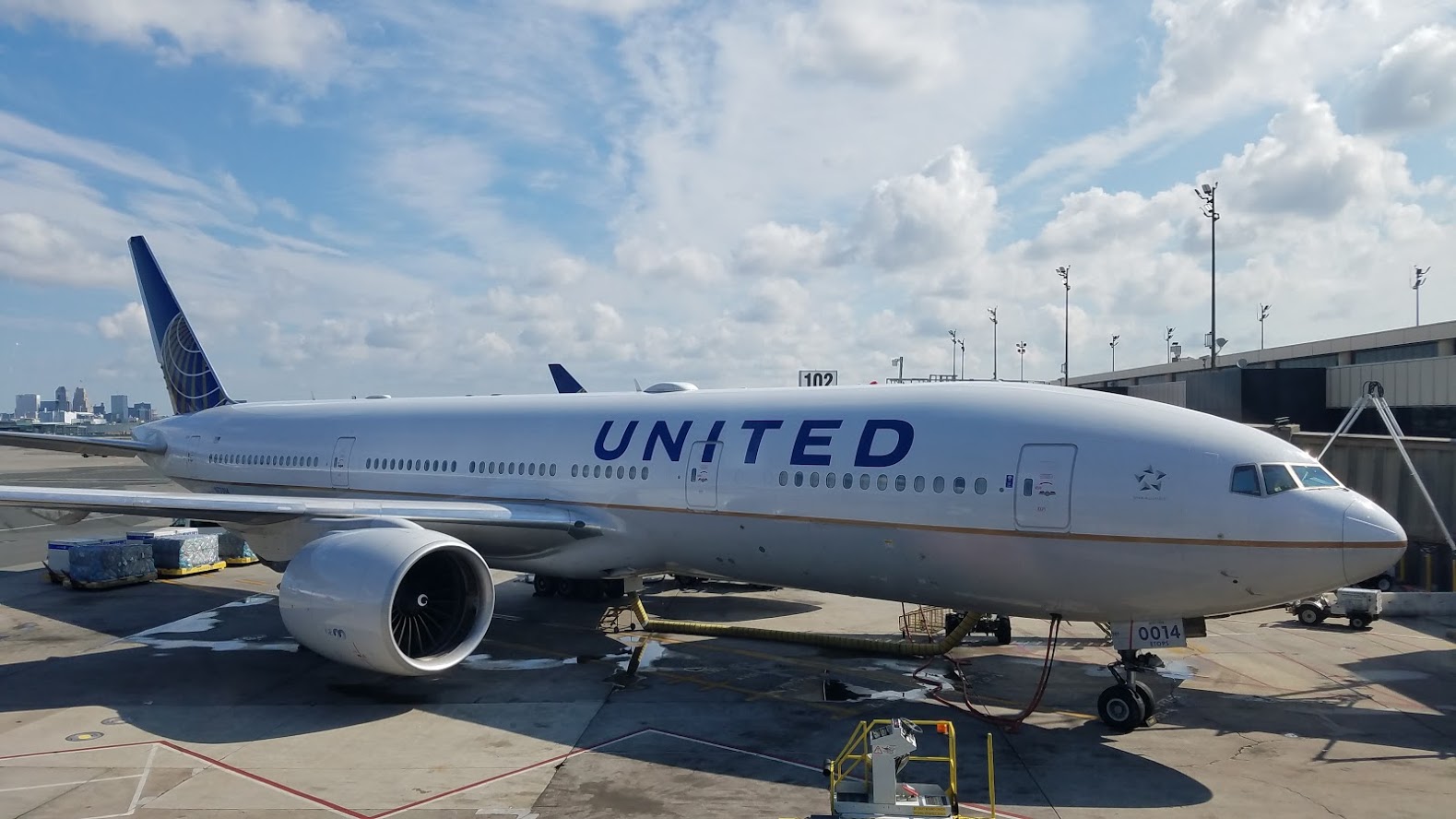
However in telling this narrative there is, unsurprisingly, some embellishment. Live and Let’s Fly writes about some of the claims that they made. I want to offer the truth behind them.
- “Our global network is four times larger than Pan Am in their international heyday.” Wait, can this possibly be true? Yes, but only if you define global network in a way that’s non-intuitive for this content.
United’s route network is larger, but not close to four times larger. They have about 800 daily flights to 150 international destinations.
Pan Am at its peak in the late-1960s served about 120 destinations in 86 countries. So United is larger, even internationally, but that’s about 20% more destinations not 4 times as many.
Even though the claim here is about a ‘global network’ if you include domestic destinations (and until the acquisition of National Airlines, Pan Am was an outbound international carrier) United’s ~ 380 destinations would compare to Pan Am’s 120 and that’s a bit more than 3x, it is not 4x.
The only way to get to United’s claim is available seat miles. United flies about 151 billion international seat miles. Pan Am was at 36 billion in 1973, and 47 billion in 191. So United can claim more seat miles against a specific Pan Am year – selectively defining Pan Am’s ‘heydey’ rather than peak flying.
That’s not really fair, and what they clearly want to suggest isn’t true, but parsing their words in the most generous manner possible I can come up with a definition that makes it true.
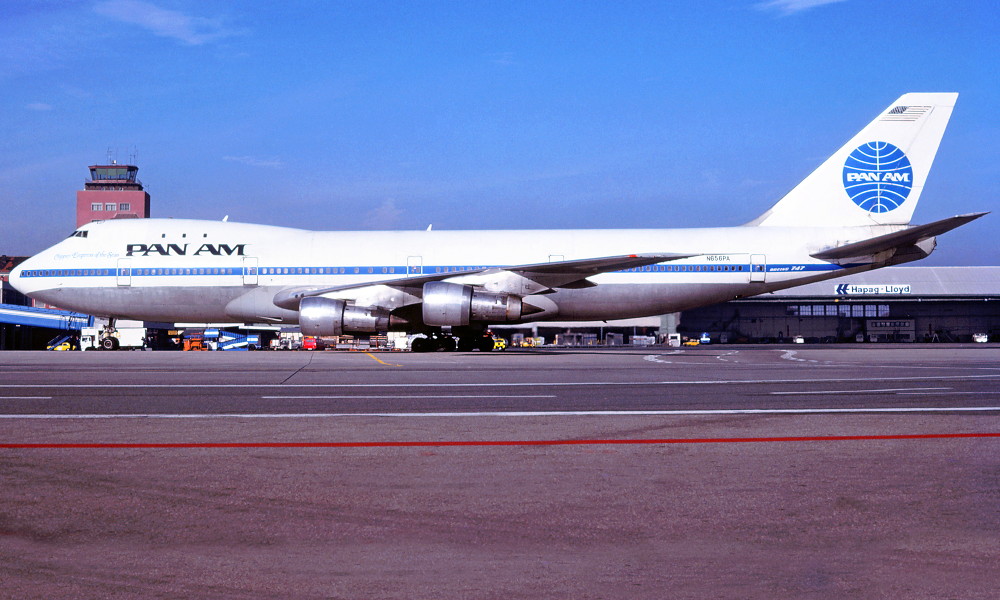
Pan Am Boeing 747, credit: aussieairliners.org via Wikimedia Commons - “It serves more cities than any other airline in the world, by a wide margin”
This is technically true, but it doesn’t mean what most people think it means. Most of United’s cities are domestic. The United States is a large market. United is currently at 392 destinations, versus 367 for American, 315 for Delta, 291 for Turkish, and 227 for Ryanair. Also, by the metric which it’s true it is very much not a wide margin – 7% more than American Airlines.
The framing here is that United is a large global airline, but it’s not close to the most global. They serve around 150 international destinations.
- Turkish Airlines, which serves the most countries, flies to 245 international destinations.
- Even SAS has them beat with 152. And American actually isn’t that far behind (it’s just many of American’s international destinations are Caribbean, Mexico, and Latin America).
Verdict: United’s claim is true, but not by a wide margin. Its implied claim is inaccurate, by a wide margin.
- Turkish Airlines, which serves the most countries, flies to 245 international destinations.
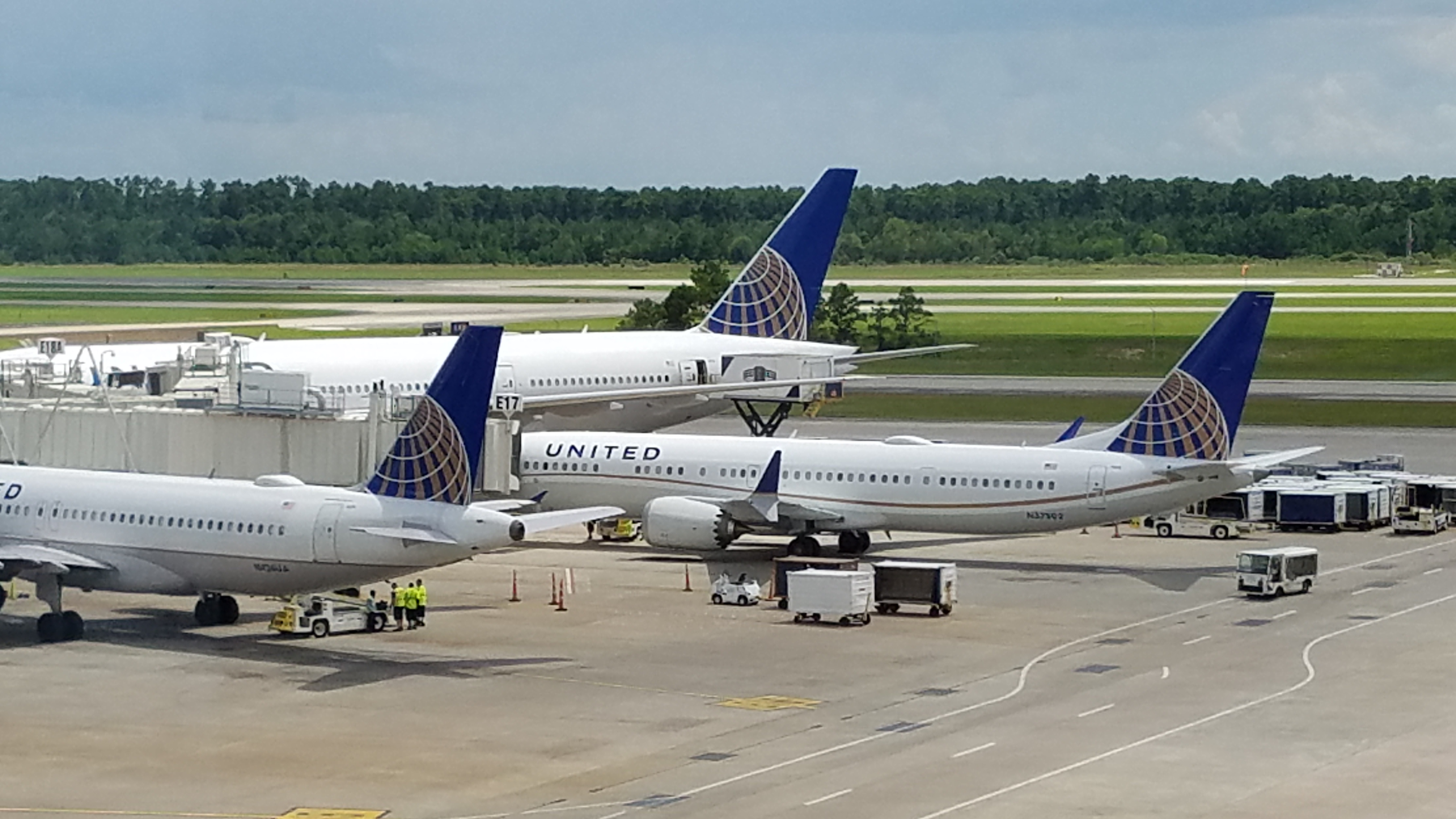
- “Houston has grown into a powerhouse for Central and South America, with more connectivity than even Miami to Central America” Houston has been United’s most-ignored hub for years, so the claim here surprised me.
Houston is a powerhouse of Latin flying? Sure. But again I have to torture the language to get to “more connectivity than even Miami to Central America.” Houston doesn’t have more Central America destinations than Miami does. There are fewer frequencies to Central America than from Miami. And Miami is even bigger when you add in South America.
So here’s how I can get to United saying something that is true-ish. “Connectivity” means possible connections via Houston, not actual Latin America service.
Houston Intercontinental has about 120 domestic non-stops and serves a total of 193 destinations. Miami offers flights to 83 domestic cities, and 190 total cities. So while Miami’s international route network is larger, Houston might be said to offer more one-stop connections to Latin America, because it has service from U.S. cities. It’s really a point about Houston’s domestic network, given its location in the middle of the country, and less about Latin service.
United is a big global airline. They are competing with Delta for premium business. And they seem to be taking a page from Delta on self-aggrandizement.



United makes so much money.
It’s finally time to agree to a decent pay contact for the FA’s!
@RunningJock – after flight attendants rejected a deal their union negotiated last summer, they came to a new agreement last week https://viewfromthewing.com/united-flight-attendants-reach-deal-top-pay-would-exceed-100-an-hour-after-5-5-years-without-a-raise/
It’s United – where execs and fans manipulate every facts possible to make themselves look better. It’s a sure sign of insecurity.
and they can’t explain how they manage to generate just 2/3 of the profits – $1.7 billion less – than DL generates even though they fly 10% more ASMs than DL.
UA is the airline version of somebody that desperately needs Ozempic – or Jardiance since it works better – since UA has focused for decades on quantity rather than quality.
Putting aside the quibbling about whether United is 2x 3x or 4x the size of PanAm, two things that are true: if you can pick an airline to call the USA’s flag carrier, United is the one you would pick. United does have far more destinations and far more capacity than Delta or American or any other U.S. airline. And United is certainly much larger that PanAm ever was in international capacity. United operates far more international gateways than PanAm ever did, and there are many destinations that receive flights from multiple gateways and sometimes multiple daily flights on given routes. All of United’s 7 mainland hubs have robust international service, plus HNL.
PanAm mainly served Europe from JFK and a little IAD, mainly served South America from Miami, and mainly served Asia from SFO and LAX. Back in the day, PanAm had many more less than daily routes but also far more beyond service and fifth freedom routes.
Of course PanAm was largely prevented from having a robust U.S. domestic network and adequate domestic connections, and that may have ultimately contributed to its demise.
It’s Tim Dunn – who ignores facts when clearly presented due to an unhealthy bias towards Delta.
UNITED RISING
How crazy to use the accepted metric for comparing passenger airline operational size, ASMs! Too funny.
Thanks for the example in how statistics can be manipulated. As usual, getting the facts is what matters. But far too many people don’t bother, perhaps don’t know, how to do that with claims from advertisers or politicians.
One big difference:
PA = extinct
UA = extant
I think that is all that really matters. At least some Pan Am people migrated to United during the assets divestitures.
Right on cue, the United Internet Defense Force shows up. User rebel must be getting at least 10 kirbybux per post with how much she’s posting. Honorable mention is the “UNITED RISING” guy who posts on a-net as well.
Timbits: I take Ozempic and Jardiance, so I know more about this subject than you. I also know more about United than you. And my advice to you is to shut up.
Tim Dunn would never manipulate facts or be insecure.
Tim, you’re the one who manipulates data, talking about profit in terms of ASMs. That’s not how it’s measured and you lose credibility every time you say it.
I’ll correct it and point it out each time you say it, but fortunately for you I don’t stalk these comments sections as much as you do.
Yield is the measurement, and there is a one point difference between UA and DL. The gap has been narrowing, in spite of huge fortress hubs protected by cities like Atlanta that will prevent a second airport from being built, and in spite of the billions of extra credit card revenue DL gets, another gap that will soon go away when UA gets its new deal with Chase.
@RunningJack. AFA makes so much money. Let’s hope they present a negotiated and intentionally stalled contract (waited for AA result) that won’t be overwhelmingly rejected by its dues paying membership.
Both can be true. I hope they get what they need; a rewarding contract and an AFA wake up call.
Read the article and my takeaway is the claim as stated is correct. When you start trying to fact check “implied” you are acknowledging the fact and have decided to be defensive of it. The story is about his claim, not his feeling. Turkish Airlines advertising is everywhere with their claim of international destinations by merit of a considerably smaller domestic network and fewer frequencies per market . That claim is absolutely correct. Quayle didn’t overstep that.
“Our global network is four times larger than Pan Am in their international heyday.” Wait, can this possibly be true? Yes, but only if you define global network… by the industry accepted method of defining size.
$8/800 points for WiFi doesn’t feel ‘friendly’ to me, though; feels more like the ‘Dr. Dao special’ to me…
@Tim Dunn as delusional as always. You seem to bitch about United and kiss the butt of Delta.
Predictable yet nauseating.
Tired old crap.
I quit flying United when their lying took money directly out of my pocket. I haven’t flown them in many years.
Of course, Kirby would say things to make him the best CEO in the century. Services – United flight attendants can never provide the service level of Asian carriers (VN, BR, SQ, TG…). Food – Other carriers serve meal on domestic short-haul flights. Aircraft – Some United aircrafts are way too old, eg. the 777 with 4 business seats in the middle section. United might be better than Spirit, but comparing to Pan Am and claiming they are the best is another strategy of the “talk too much” Kirby.
So by the most charitable viewpoint, United is torturing facts to look better; at worst they’re once again simply lying. If there was some actual constructive purpose in lying then maybe it might be understandable but there’s not. It was bad enough when it was only Kirby who had a very distant relationship with the truth but apparently that view has trickled down the ranks.
I agree that United has improved over the past decade but the litany of lies by upper management means that we simply can’t trust almost anything management says.
Tim
I’m not sure a Delta fanboy should be bragging about Delta, given its pathetic international network.
Delta exaggerates too. It charges 450-500K for biz seats on AF/KLM or VA, seats that AF/KLM or VA sell for around 85-120K. Delta exaggerates the value of seats, but clearly innumerate Delta fans think its the greatest bargain since McDonalds 2 for 1 breakfast sandwiches.
someone gets it
the UA paid internet crowd shows up in force any time someone dares say anything negative about UA – despite the fact that it is accurate.
UA simply focuses on mass transportation at the expense of maximizing revenue or profits.
and the gap GREW in profits between 2024 and 2025 between DL and UA.
and it will grow even more in 2026 as DL benefits from the refinery.
UA is not rising but rather still continues to hang out in the basement. esp. in baggage handling where it had the worst baggage handling among US airlines in 2025
The best comparison between PA and UA is that one is dead and the other is working its way there but just don’t know it yet.
DL is gonna claim some prime UA real estate in this next industry downturn even as UA thinks it is taking share from the ULCCs and LCCs – which DL itself is actually doing.
If this wasn’t real life, it would be funny but UA has real people who think so much more highly of themselves than reality so that it is sad
@Tim Dunn — Thank you for admitting there’s a downturn on-going; I just hope when Ed, Scott, Bob, etc. all come to Congress demanding a bailout, that, we, the people, through our elected representatives actually attach real strings this time, in exchange for handing over billions of dollars, which should not be used for stock buybacks, should be used to retain workers, maintain aircraft, support the essential transportation of the nation, and include meaningful consumer protections as well, like an EU261 equivalent. Just looking ahead…
It really is amusing how small Delta’s network is vs United and American.
Talk about a subpar network and destination count
1990
I totally agree with you.
let’s be clear that if money hadn’t been handed out during covid, the airline industry would have come out smaller and DL and WN were the two airlines that would have come out w/o a trip through chapter 11.
Ironically, UA would likely not have made it w/o government help; they keep so much cash on hand now because they don’t have anywhere near the cash to keep up w/ the amount of capex they have on top of rising fuel costs.
While the UA bravado keeps going on full tilt, UA is highly vulnerable.
Did rebel and Jon bother to look at the earnings gap between DL and UA GREW between 2024 and 2025? And it is because DL grew its earnings a whole lot more than UA.
and let’s keep in mind that UA is trying to settle w/ labor even as it already pays the most per gallon in fuel of the big 4.
UA and AS are highly vulnerable to much higher fuel costs.
It’s getting worse in the Middle East.
UA talked about a thinning of the herd during the next downturn; they just don’t realize that they might be one of the “thinned”
and it is beyond laughable that anyone suggests that it is “unfair” that profits per ASM should be compared? Really?
UA doesn’t earn as much on an absolute basis or per ASM but we are all just supposed to turn our heads and believe that UA’s size – as fat and inefficient as it is – is all that matters.
the only thing that is “subpar” is Max’s equipment and cerebrum.
it’s not a surprise that he genuinely thinks that one of the largest airlines in the world has a subpar network?
it’s pathetic how hard some people fight the reality that it is UA that underperforms – and they are convinced that dots in Asia matter more than serving the good ole US of A – which DL does better than any other airline.
Yes, DL generates more domestic revenue than any other airline.
UA is well down the list in that regard.
the truth is hard for some to accept.
btw, Max, what is Jon saying about DL’s designs for LAX?
> Tim Dunn: and they can’t explain how they manage to generate just 2/3 of the profits – $1.7 billion less – than DL generates even though they fly 10% more ASMs than DL.
This is super simple and obvious and I don’t think anybody disputes it: Delta essentially has a monopoly in 4 large single-airport hub cities (ATL, DTW, MSP, SLC), while United has real competition in every hub city between multiple airports and other hubbing airlines (AA, SWA). Monopolistic pricing definitely generates high profits. Good for Delta — nice business if you can get it. Obviously United doesn’t have access to those sorts of easy profits, so they have to compete on quality, network, and even value. I know which I prefer.
“it’s not a surprise that he genuinely thinks that one of the largest airlines in the world has a subpar network?”
Just saying… Delta is a distant third on network to United and American. That’s not a debate. It’s fact. Whether it’s destinations served or JV partners. Delta is a distant 3rd to American and United.
How would you like to say Delta is anywhere near AA and United on destinations? Delta can’t do it with their current hubs. They’d like to but 15 gates in AUS and no AM JV isn’t going to make the next great Mexican carrier like DFW & IAH are able to do. It must really sting that Delta is so far behind AA and United in destinations served. God, Delta must outsource all their good flying. “Biggest hub in the world” and it can’t do what IAH and DFW do. Maybe Delta shouldn’t have walked out of DFW with their tail between their legs in surrender?
I wish it was a surprise that it seems to offend you 😉
You never disappoint in your stupid responses lol
Actually, the data clearly that UA is more profitable running its airline, but it lags on loyalty and CC revenue. That is changing rapidly, and despite that UA has managed to pay down debt to the point where they have matched DL’s.net debt while growing their fleet much faster with great deals in which they purchased, not leased, far more aircraft. Amazingly, UA has higher OCF over the last six years and only $1b less in net income.
This Iran War looks like it is going to be very rough for the airlines and the economy, but UA is well positioned with a management that has proven they are outstanding in a crisis. DL is a fine airline that is also well positioned.
Gary’s core critique holds. United’s ‘global network’ claim relies on a technical, investor-facing definition, most plausibly ASMs, that is defensible on paper but clearly broader than how most people would interpret the phrase. Scale alone is not a proxy for economic quality. On the metrics that actually matter, DL outperformed in 2025, reporting $6.2 billion in pre-tax income at a 9.8% margin versus United’s $4.3 billion and 7.3%, despite United’s assertion that it operates the larger network. That gap is not easily explained by network size alone. Over the past decade, Delta has deliberately built a model centered on higher-margin hubs, premium revenue, and a loyalty platform that generates substantial, recurring cash flow, particularly through its Amex partnership. UA has made real strides in product and international reach and deserves credit for that progress, but the ‘bigger than Pan Am’ framing reads more like marketing than a meaningful indicator of economic strength. The more relevant question is which airline is converting its network into durable earnings, and on recent evidence, @Tim Dunn’s view aligns more closely with financial reality than the narrative being promoted by the UA advocates in this thread.
Does not matter one bit how large United becomes. Only a fool would spend hard earned money to travel on ANY US3 airline overseas when there are such better options with foreign carriers especially to Asia. And United doesn’t have 1/100th of the class and service that Pan Am did. The likes of which we will never see again from the USA . Unfortunately.
ASMs are exactly how one compares the size of airlines and their networks. Good job by Patrick Quayle in stimulating publicity and awareness of United’s amazing network.
of course, ASMs are the right metric for airline size and profit per ASM is the correct metric to use for a for-profit airline which UA is.
the vast majority of Americans, including corporate travelers, aren’t interested in metrics of how big or how profitable a company is but there are business-minded people that do get it.
2026 will be a watershed year for aviation. DL is by far the best positioned airline in the world to ride this out which is why DAL’s share price is down about 1% over the past month while the rest of the industry is down double digits
DL will consolidate its strength in key markets including LAX in 2026 just as UA used post covid to grow.
AS just said that it expects its loss for the first quarter to double based largely on higher fuel costs; they get 20% of their fuel from SIN – shipped to Hawaii – and SIN fuel prices are seeing some of the highest fuel cost increases. E. Asia fuel prices are going up up and down the Pacific Rim.
Using small, fuel INEFFICIENT aircraft on a large Pacific network while west coast fuel prices are already higher than the rest of the US is a liability.
Unlike post covid, demand will fall and UA has a cost DISADVANTAGE – which is opposite of what happened post covid.
there is a very good reason (actually, many) why UA was one of the first carriers to announce capacity cuts
@Tim Dunn — Spirit is the canary in the coal mine; they can ‘clean up’ as best as they can, but the macro fuel price dilemma and rip current of a liquidity crunch (rising interest rates) could crush, even some of the big dogs (your AA-downfall thesis may come true, depending.) This “war” is pretty unhelpful for most business (not arms manufacturers, one assumes; they’re lookin’ great, again!)
1990
despite the rosy talk, this war is not going to be over soon – esp. the after effects.
NK is still in chapter 11 so is more safe than others.
There are a lot of vulnerable carriers and those who were convinced the government was hands off will be disappointed to find out that it really is; the war is going to be more costly – there will be no appetite for bailing out part of an industry.
DL might have a DFW hub again after all and gain a DCA hub as a bonus. UA might have ORD to itself – including the bills of an airport rebuild
I was a Pan Am flight attendant in the mid 1980’s. We were very much ” America’s Airline To The World” at that time.
United certainly could claim that now but to compare themselves with PA and PA’s rich history is not exactly apples to oranges, if you will.
Bart
By the mid 80s, Pan Am was in serious financial trouble. It had been surpassed in service in the late 70s by JAL, Cathay and Singapore. I’m not even sure it had that many non American customers except on some legacy routes where it had sole rights.
PanAm might still have been seen as America’s Airline in the mid 80s, but I don’t think it was considered that positively in terms of actually flying it.
I do agree about the rich history, but I would argue that a lot of that is pre 1975 or so.
United’s flying alone is more profitable than Delta’s.
Delta’s greater profits are more than accounted for by the difference in Delta’s Amex deal. Add in Delta’s MRO profits and the gap becomes more striking.
and yet, Gary,
1. the costs of flying alone are not stripped out so DL is carrying the costs of the refinery while, in this model, only gets credit for passenger revenue
2. passenger revenue is actually the least profitable part of the legacy business model which is precisely why DL carries a lower percentage of it and more ancillaries. UA agreed to the same model so it is, at best a cop out that UA hasn’t done as well at the full revenue model
3. UA’s costs have been suppressed because of their underpaid labor – that chapter is finally ending with the FA’s tentative agreement. Mechanics will be next.
Add in soaring fuel costs which DL will not pay to the same degree as UA because of the refinery and actual airline costs will very likely flip in DL’s favor – even as UA has to hike labor expenses.
The whole notion that UA had better costs and thus its flying was more profitable was a short-term reality that was going to end.
@Tim Dunn – you’ve touted the refinery as profitable and that only further underscores my point
Gary is right and once again Tim is wrong. T does a good job twisting the data, though.