
The new system American Airlines is using to connect pilots with flights at the last minute, and make sure flights are staffed, is fueling a revolt of its more senior cockpit crew. It means junior pilots get access to more high paying flights. With senior pilots furious that their union let this in the contract, it could tip the scales in efforts already underway by half the pilots to overthrow their union.
American Airlines rolled out a new process this month to make sure that flights have pilots available. When trips don’t have crew assigned at the last minute, those trips are made available to any available pilot to pick up, rather than reserving them for the most senior pilots first, or even pilots whose ‘base’ is normally entitled to the flight. This has created some backlash and a desire for legal pushback on the part of senior pilots who see themselves as losing out.
Interesting times brewing for [the Allied Pilots Association, American’s independent pilot union] as they implemented a new scheduling app on April 8 called APU (Aggressive Pick Up). It bypasses all in base and seniority to fill trips that open up within 4 hours of departure. Pilots are livid and looking at legal options. This will cost senior pilots 100s of thousands during the last few years before forced retirement at 65…This happens at a time with they are considering a vote to be join ALPA. The APA board meets early May.
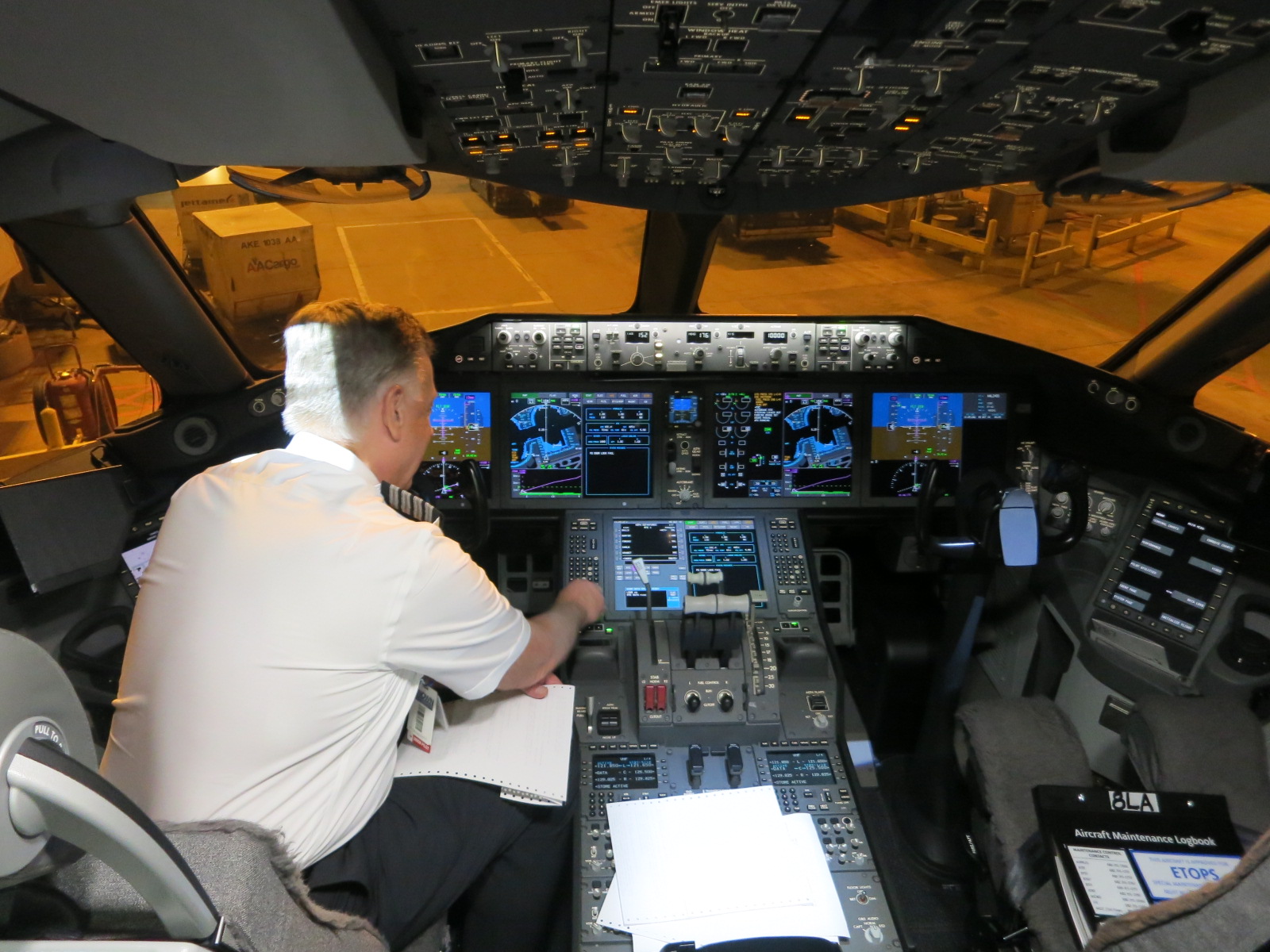
The April 6th pilot union podcast mentioned the April 8 launch of Aggressive Pick Up.
In the pilot contract, open time that becomes open within four hours of sequence sign-in does not have to sit for the normal 15-minute ballot window. That is getting conflated with the Aggressive Pick-up window within three hours of scheduled or rescheduled departure sign-in, and that carve-out is first-come, first-served for both in-base and out-of-base pilots, with reserves included at company option.
Outside that carve-out, the agreement still preserves seniority. Under the current pilot deal, Aggressive Pick Up isn’t a contract violation, it’s something American appears to be rolling out following the contract (a negotiated exception to seniority).
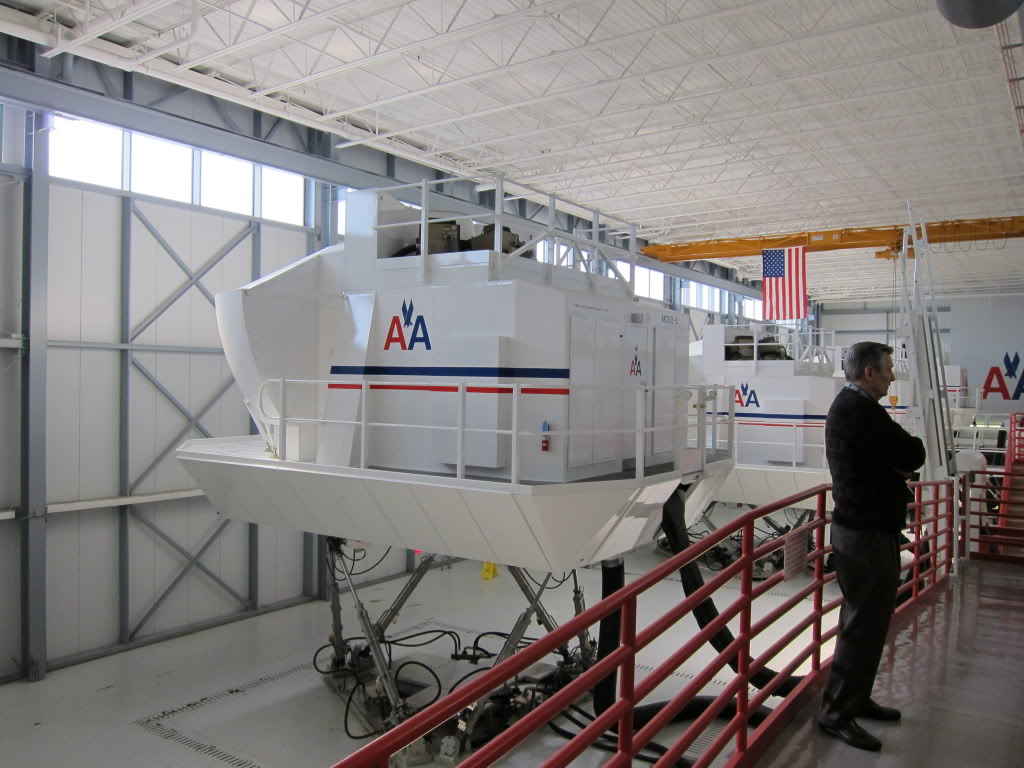
It does move late-notice premium open-time pay away from senior pilots who previously captured it, and toward whoever is fastest, closest, and most available. So I understand why senior pilots are furious about it. For pilots looking at challenging this, the key questions seem to be:
- whether the app is doing exactly what the agreement permits, or something broader;
- whether the timing window and award mechanics match the actual contract language;
- whether anything that should still be governed by normal seniority-based/open-time procedures is instead being swept into Aggressive Pick Up
If any of those are the case then it’s a Railway Labor Act “minor dispute.” That means a grievance and System Board arbitration.
This new system is all about getting flights covered so they don’t have to be cancelled at the last minute, when a pilot suddenly becomes unavailable. In contrast, the system in Delta’s ALPA contract breaks down at scale, because it gives too many pilots an opportunity to accept trips and each one has 12 minutes to confirm in order to compensate anyone that ‘should have’ gotten paid for the trip, even if they don’t fly it. When there are a lot of open trips due to things like bad weather, Delta’s operation spirals.

Will This Push The Pilot Union To Merge With ALPA?
There has been a Monty Python Life of Brian-style battle within the union over whether to merge with the Air Line Pilots Association or stay independent for some time.
APA’s board voted to form a merger committee to open negotiations to join ALPA last May. In February 2026 APA reported that the Merger Negotiation Committee was entering its fourth month of formal negotiations, with some issues tentatively agreed and others still open, including governance and a potential Master Executive Council budget.
58% of polled AA pilots favored exploring a merger and 8,219 support cards had been signed for this (out of about 16,000 pilots at American).
This Aggressive Pick Up issue feeds the merger narrative that because it suggests, to the most senior pilots, that the current Allied Pilots Association is weak or incompetent – that they missed the harm this causes, and so doesn’t have the chops to negotiate their contract, or they’re unable to assert pilot rights against the company and so they need a stronger union.
Of course, junior pilots benefit from the automated pick up that the airline has rolled out – they get more opportunities for premium pay flying. And the operation benefits, because it’s easier to get flights covered. That actually benefits all pilots, because it means fewer flights stranded and fewer cockpit crew stranded.
Internally, from those made worse off, it’s not being framed this way. It’s framed as the company taking away flexibility from pilots. I’m not sure junior pilots understand the upside to them.
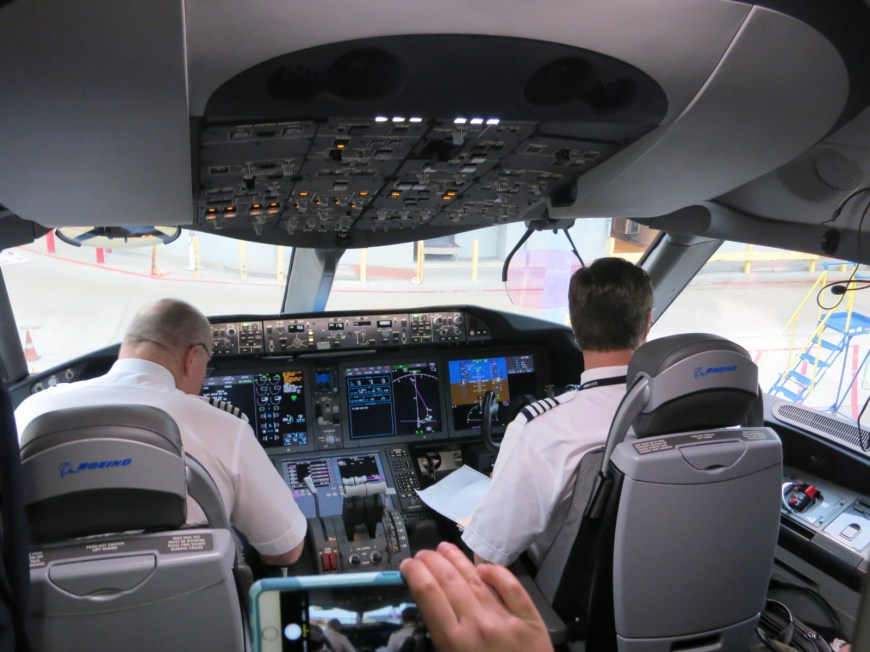
Pilots Continue To Battle Each Other
Having learned the operational lesson watching Delta’s problems, it’s hard to imagine American agreeing to terms like what Delta negotiated. In fact, it’s a priority for Delta to unwind this. So I’m not sure that voting for ALPA will get senior pilots at American what they want – the broader question is whether ALPA would have ‘missed less’ and therefore negotiated more make goods, redistributing more income from junior pilots to the most senior ones.
This is more of an internal battle between the pilots than between pilots and the airline even if some would prefer not to frame it that way. And what’s interesting is that many of these pilots have been through internecine union battles before.
The current American was formed by merging with US Airways, finally putting to rest the battle between US Airways and America West pilots. Those pilots all got raises through the deal, and American pilots outnumbered them. But when US Airways and America West merged, the two pilot groups were more dedicated to destruction of the other than to negotiating with the company.
As a result that merger never actually completed, pilots were kept as separate work groups and couldn’t reach a new contract with higher pay together. That’s because of a battle over seniority lists. Both groups had been represented by the same union (ALPA!) with rules on combining pilot groups, but that disadvantaged the US Airways pilots who were a larger group and they vote. There’s still bitterness over this period. (And also bitterness between ex-TWA pilots and legacy American pilots.)
Of course, United’s ALPA chapter has had its own internal battles. So has Southwest’s independent pilots union.
I have no judgment on whether ALPA representation would be better for pilots. ALPA has scale and lobbying strength. APA gives pilots more direct control – it’s their own union, and it represents only them. ALPA charges higher dues – 1.85% vs 1.5% – although there’s some nuance to this.



Highly paid professionals should not be in unions. It’s stupid, and causes people to fo stupid things. Everyone knows this, which is why it generally does not occur in the United States. But 100 years ago, Congress had the “brilliant” idea to treat airline pilots like railroad workers. Which is why silly disputes like this exist in the industry.
It unfortunate that Gary feels he needs to rely on union-bashing to produce rage-bait. But, hey, if it helps the site… *slow clap*
@Chopsticks — Wrong. More professionals should have unions, like in technology, finance, and law, because those are the industries facing layoffs and worse conditions in the coming years. Organizing, collective bargaining, representation, training, worker protections, and more benefit all workers against management that would rather gut them on a whim than actually work with them to improve.
Right to work. Employers should have the right to hire and fire without a third party’s intervention. If I am running a business, I will agree that I should not discriminate in hiring or firing. I should be able to hire based on what I perceive is the right person for the job. If that person doesn’t meet my expectations or violates company policy, then I should also have the right to terminate. I pay my state’s unemployment insurance that, once paid into the system, I cannot get back from the state’s government. That money is placed in an “interest free” (to me!) escrow account. That’s why every employee signs for a copy of the “rules of the road” (if you will) at my company. If I randomly terminate the employee, then that person can apply for unemployment monetary compensation. That money comes from my “account” with the State. The employee has the right, under law, to contest the termination. The state will cross examine my company and the former employee. It will determine “liability” if you will. If I terminate an employee “for cause”, and the State agrees, then that former employee doesn’t get unemployment money. Fair and square. Don’t need a union.
@Win Whitmire — “Right” to work laws are a farce. In those mostly ‘red’ states, you can be fired at-will, on a whim, no protections or recourse. That’s no way to live when healthcare is often tied to jobs. I realize this site is often ‘View from the Right Wing,’ but, fellas, we need two wings to fly most aircraft…
@1990 – where is the union bashing? i literally have no opinion on whether American pilots should keep APA or join ALPA, there are tradeoffs to consider.
A union is a necessary evil, but necessary. No union and the company can tell a pilot to fly when the weather or condition of the plane is bad. Fly or you’re fired is bad for all. I got that at my first airline with no union. E. L. Cord had an airline with no union in the 1930s and too many crashes.
Heaven forbid that a highly paid pilot is passed over if a more junior pilot is more readily available to get a plane in the air. Maybe I’m missing something but it seems to me what American is doing will benefit their customers which is the main group the airline should focus on.
Seems like all the pilots got to vote on the contract. A majority must have found it acceptable. Seems like the agreement helps equalize the pay for pilots. Yes, younger (more app savvy), lower paid pilots are incentivized to work the system to earn more money. Senior pilots shouldn’t have priority just because they are senior.
Changing unions will likely just change one contract problem for another.
Ok, Gary, less-so you, in-particular; more-so the inevitable onslaught of union-bashing that nearly always occurs whenever the concept is brought up. Like, to me, it shows how astroturf’d the anti-worker propaganda is; clearly, upper management and the ownership class would rather divide and conquer any and all labor. One assumes, most on here are not billionaires or even centi-millionaires; maybe some are mere millionaires, small business owners, or mid-level managers in a large corporate environment. Cool. Good for them. Yet, wow, they sure do act like they hate anyone who works for a living. The punching-down is prolific.
Gary, I don’t read the poster you addressed this to: “where is the union bashing? i literally have no opinion on whether American pilots should keep APA or join ALPA, there are tradeoffs to consider.” I think your problem is that objective reporting on unions makes unions look bad (because they have so many stupid things). So, the pro-union types think your bashing. Similarly, objective reporting on Trump…
US East (legacy US Airways ) pilots decertified ALPA, became USAPA, arguably committed DFR violations versus US West (legacy America West j ALPA pilots, about which ALPA did nothing, while USAirways (company) opportunistically deferred implementing an arbitrated seniority award, about which ALPA did nothing, resulting in a decade of stagnation and an eventual three-way seniority merge with American.
I don’t have a dog in this fight between Junior and Senior, but I do find it highly suspicious that a Pilot that is Based on one side of the country, can take away a trip from a guy that lives local and in base. As Usual Gary, you have a fraction of the information but have posted as if you’re an expert. Or even somewhat knowledgeable. You certainly are not. Whomever is your feed for your STORIES, you’re a sucker for one sidedness. By the way, this statement below is so far off…it makes me think you’re a CRACKPOT.
“But when US Airways and America West merged, the two pilot groups were more dedicated to destruction of the other than to negotiating with the company”
What bullshit. The senior pilots are acting like spoiled children because they don’t get everything they want. Unfortunately for them, the airline kinda has an obligation to move passengers around in a timely fashion so senior pilots acting like dicks because the needs of everyone – everyone except the senior pilots – combined counts for more than only the senior pilots. If senior pilots are each losing hundreds of thousands of dollars a year due to this policy then they must be clearing well north of a half million a year anyway. That greatly mitigates my sympathy for the poor multimillionaire pilots. Sometimes, the needs of the customers AND the business have to come first. Are the pilots so narcissistic that they refuse to see that or just don’t care?
You know it. I know it. Hell, even they know it in their hearts. Unions are the last refuge for the comically incompetent, run away from work, take no personal responsibility, always play the victim, mediocrity is the their middle name crowd. It’s the difference between FedEx and the Post Office. No one who reads this blog, and I mean no one (even the 1990 clown) would ever trust the Post Office over FedEx when it comes to delivering a mission critical document. I don’t even trust the unionized Post Office to deliver a letter successfully in my own city.
@Wake Up, Coffee’s Brewing — *honk honk* (clown noises)
You should know better. The Postal Service is just that, a public service. To compare it to a private company, in scope and when evaluating it financially, is willfully ignorant at best. Besides, you can’t use FedEx for a P.O. Box, and there are some pretty important things sent to P.O. Boxes at times.
Plus, if it’s truly a ‘mission critical’ document, I’ll fly across the world and hand deliver it myself. Anything else really isn’t that important. Have you seen the movie Castaway? Delivering that silly package was his motivation to get off the island… what was in the package itself (might’ve been divorce papers) wasn’t relevant.
All said, it is wild to be one of the few people that seems to actually ‘give a sh*t’ about workers and consumers on here; like, have the rest of you never had jobs, or gotten screwed by an airline? You’d think you’d have some empathy, if not, a little self-interest, in wanting better for yourselves and others on here and out there. Naw, naw… that’d be socialism! Ahhh! *honk*