
Airport Architecture reveals a fast-tracked proposal that’s been shared with airlines to remake Washington Dulles, as part of the President’s push to reimagine the airport.
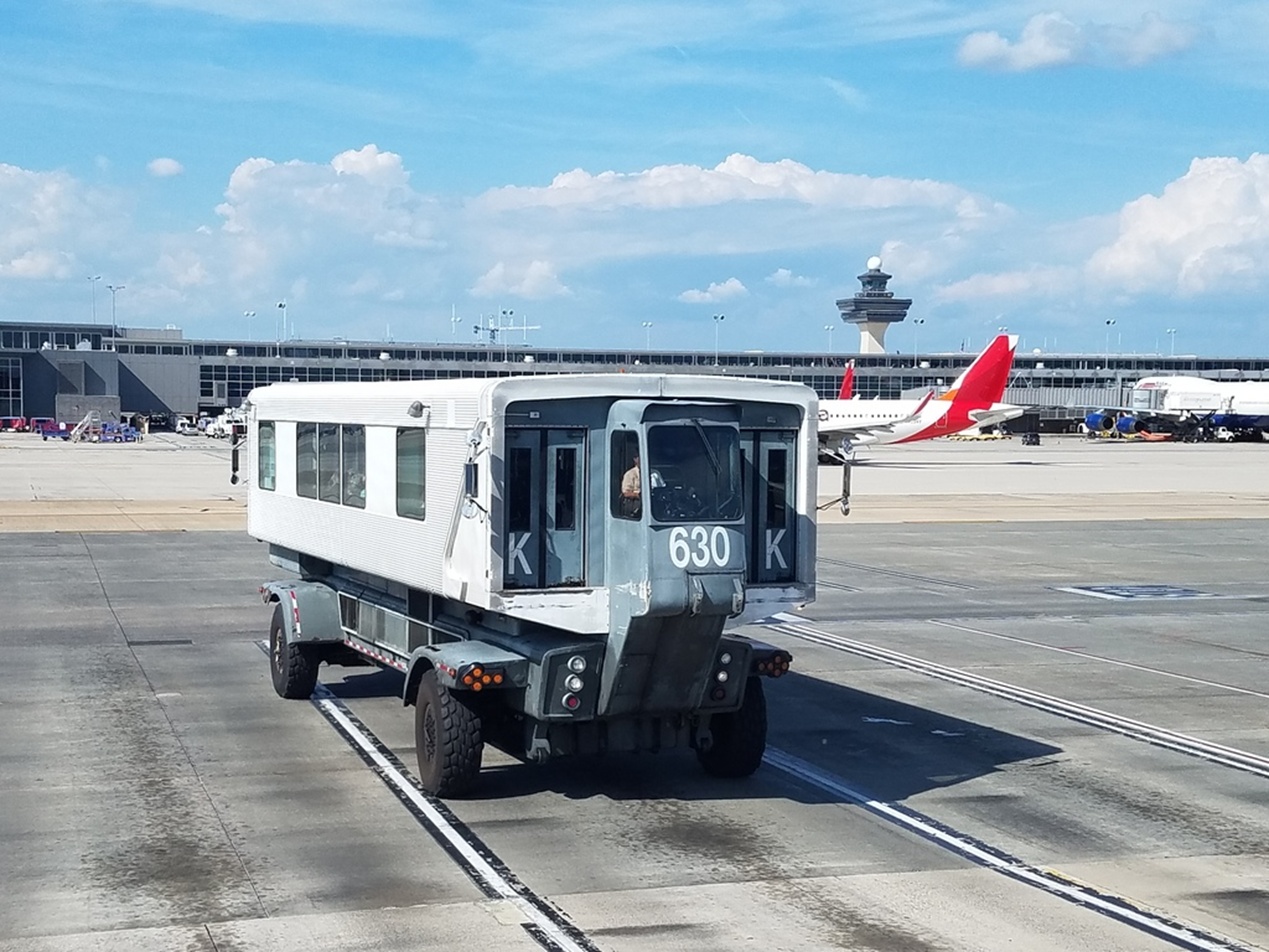
The plan would transform the main Eero Saarinen terminal plus awkward midfield concourses into a more conventional, high-capacity hub layout with linear concourses, underground connections, expanded airport train service, and the potential elimination of mobile lounges.
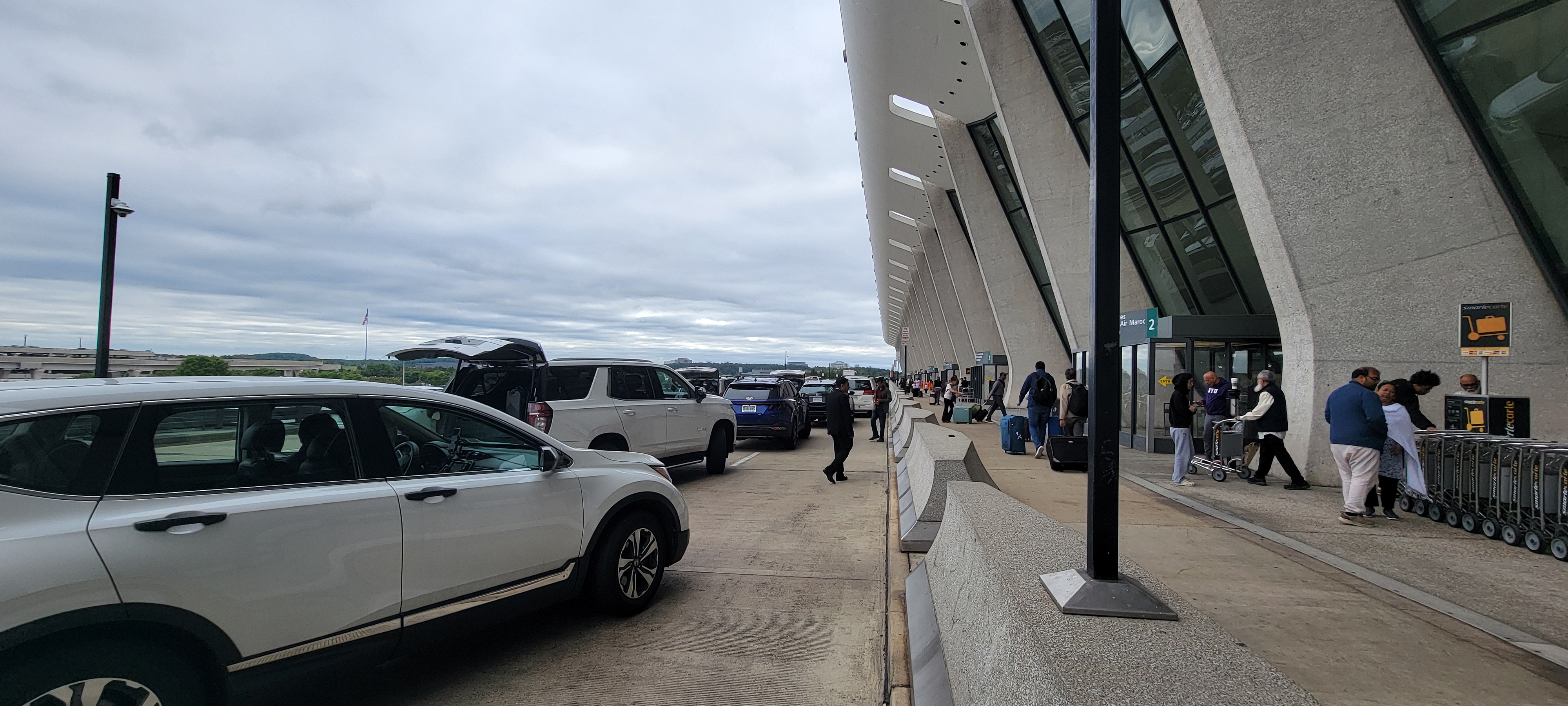
- Main terminal expansion and Concourse A work — $6.2 billion the plan keeps the Saarinen terminal, renovates ticketing, extends the building 300 feet in each direction. It would add a new terminal concourse, build an above-ground connector to the current A/B concourses, and renovate Concourse A. Target schedule: April 2027–December 2034.
- AeroTrain and underground connector — $3.75 billion the AeroTrain would be extended west from Concourse A toward a new Concourse D, with a new below-ground central conncetion from A through D. Dulles would move away from regular mobile lounges. Target schedule: January 2028–December 2033.
- Buildout of Concourse E, renamed Concourse C — $4 billion taking the existing 14-gate E project and mkaing it part of a much larger Concourse C buildout, including an AeroTrain station. Target schedule for later phases: start as soon as May 2026, finish by December 2030.
- New Concourse D east gates — $3.7 billion building the east side of a new Concourse D first, with west gates an eventual add-on when demand grows. Target schedule: June 2027–December 2033.
- Full Concourse B buildout plus demolition of the temporary C/D concourse — $2.26 billion the 1980s “temporary” C/D complex would finally go away, with a new Concourse B offering 33 regional aircraft gates. Target schedule: January 2028–December 2034.
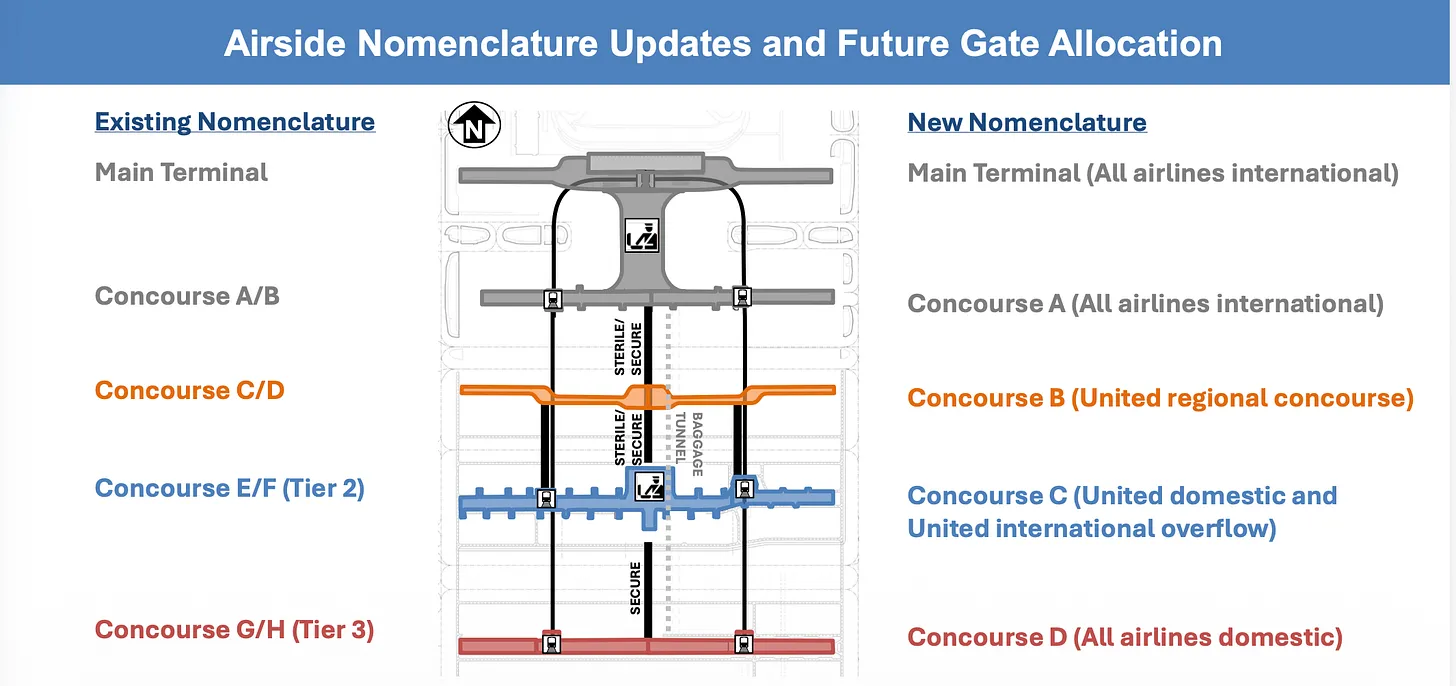
International flights would use the new main terminal concourse and Concourse A, including United’s international operation. United would get Concourses B and C. Other domestic carriers would use Concourse D.
The cost adds up to about $20 billion, with financing and inflation bringing the current budget to $22 billion. Without significant federal subsidies, the cost per enplanement reaches an incredible $90.64 by 2035. In 2013, United found $26.47 impossible to manage. Funds have been transferred from Washington National to keep costs at Dulles in check and mollify United. No low cost carrier could ever serve Dulles. And only high yield flights would make any sense (limiting economies of scale and network effects of a hub.)
Trump administration discussions on the project have included Transportation Secretary Sean Duffy, the Metropolitan Washington Airports Authority, and United CEO Scott Kirby. Kirby’s United has sponsored Trump’s inauguration and Duffy’s road trip reality show. He pitched Trump on acquiring American Airlines. Perhaps picking taxpayer pockets for their Dulles hub is the ultimate end game.
The airport authority board approved the updated Dulles master plan on July 16, 2025. DOT launched a Request for Information in December 2025 seeking concepts for new terminals and concourses. Renderings came back in January.
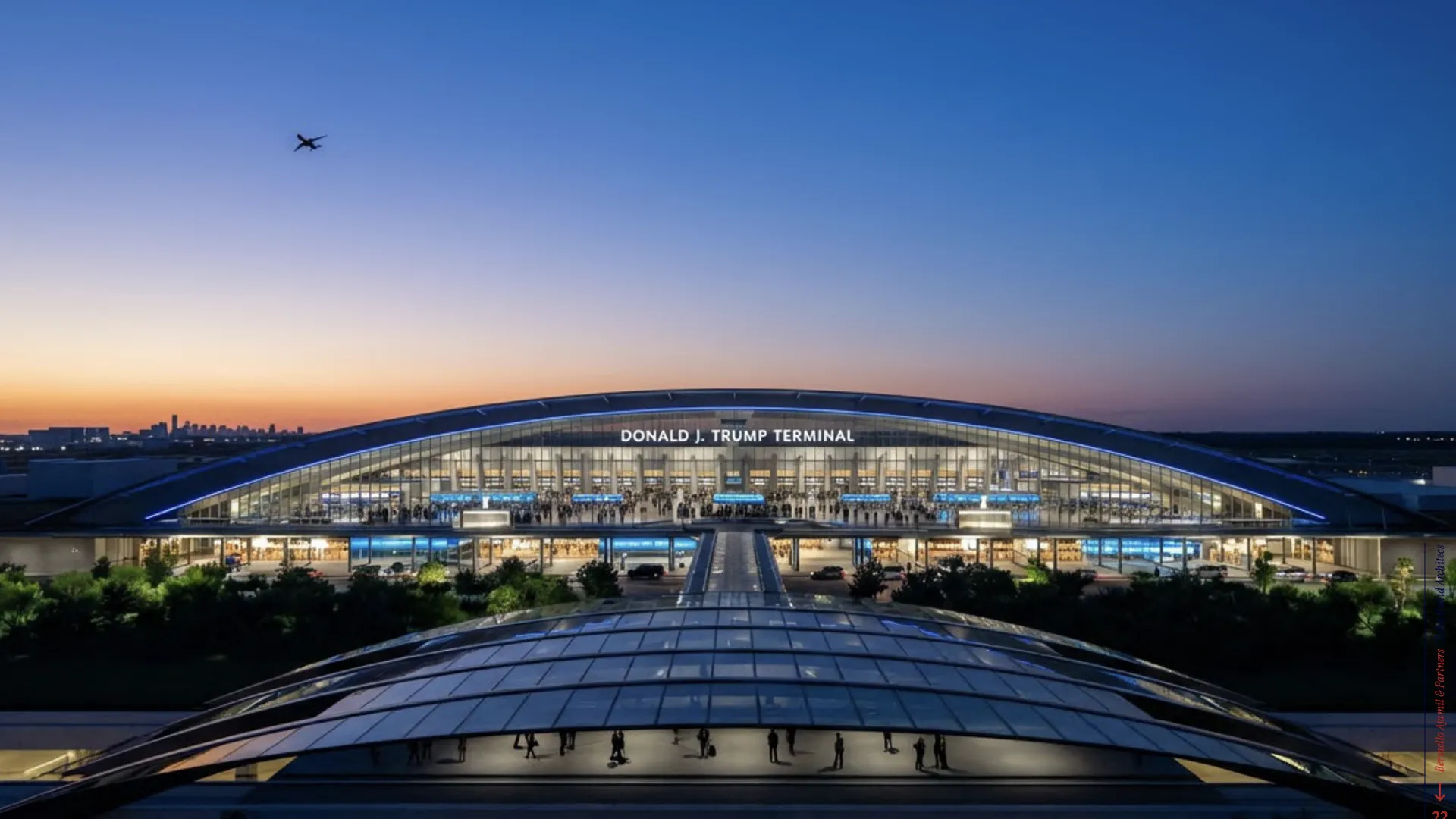
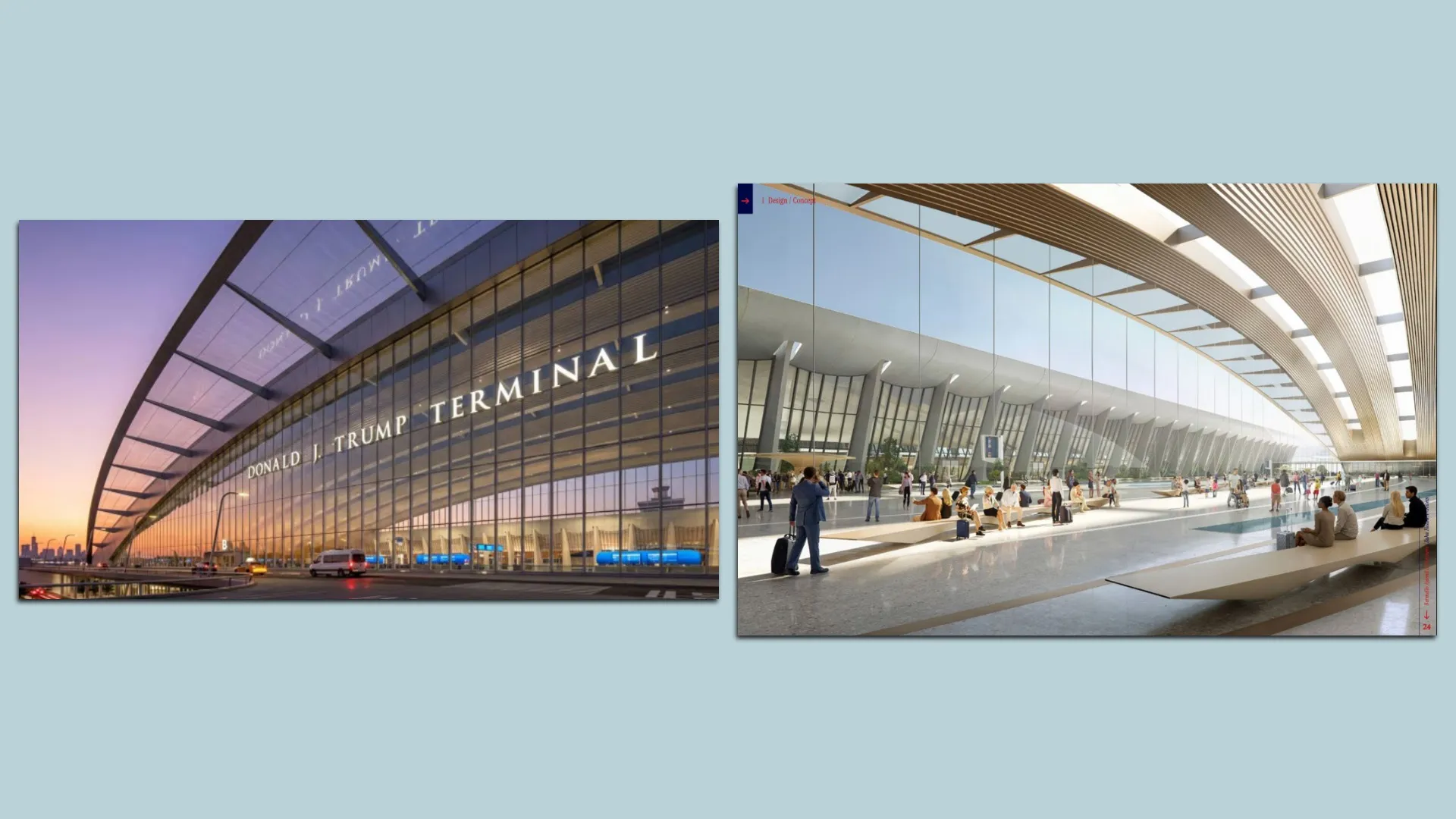
There’s no approval on the $22 billion. The airport authority and Department of Transportation have to settle on whether this is simply the 2025 master plan accelerated, a Trump-modified version, or a hybrid with federal funding or privatization (effectively selling off concessions revenue streams for developer cash). The Department of Transportation owns the airport property, while the airport authority operates it under a long-term lease that runs through 2100. And nothing is going to happen without United’s approval, unless Congress funds the full cost.
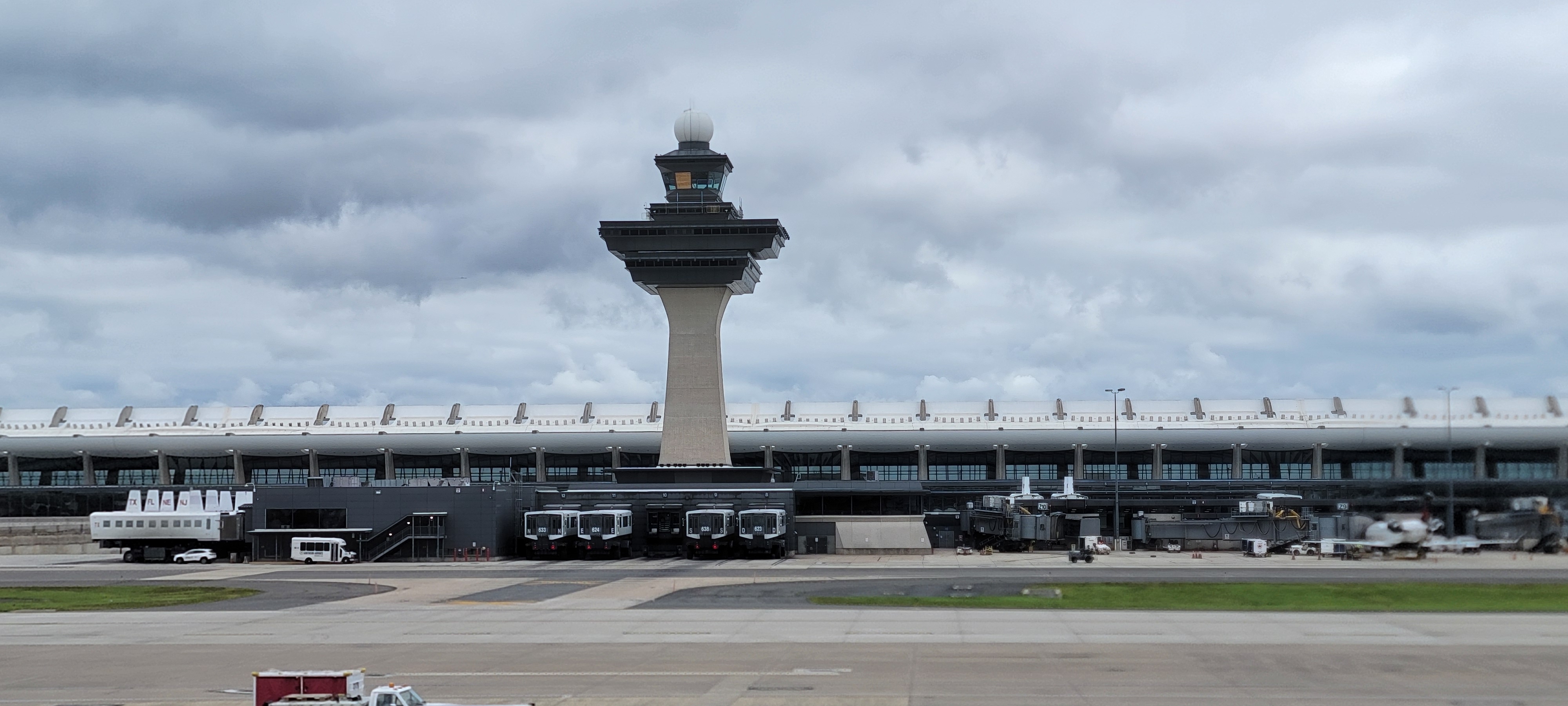
The plan makes sense in a world without resource constraints – eliminating the 40-year old temporary concourse and mobile lounges, replaced by a real rail-connected terminals. But there’s no world in which $90+ airport costs per passenger makes any sense. So this only happens with taxpayers footing much of the bill.



Move over, Disney. $20B is some real imagineering!
Building an entirely new airport somewhere else would likely be cheaper.