People are confused why the cost that businesses incur for their employees means an extra charge to customers – in addition to the price of whatever items that they buy. That’s just a cost input for the business, like rent or inventory, but it gets separately charged. And this seems to be especially true at airports.
New York JFK airport tells passengers that’s meant to “offset costs related to employee minimum wage increases and benefits” – but why wouldn’t the vendor just list the correct price in the first place? It turns out that
- in some cases airports are driving the fees in the first place, they encourage it!
- even though airports or localities demand the wage increases, these fees also wind up reducing tipping. Go figure!
Good morning Sujeet, an employee benefit and retention charge is a 3–5% fee added to a customer bills by businesses to offset costs related to employee minimum wage increases and benefits. We hope this information helps. *TA
— John F. Kennedy Airport (@JFKairport) April 12, 2026
I first ran into restaurant surcharges at the San Francisco airport years ago. Businesses with more than 20 employees have to either provide employee health benefits or pay into a fund for uninsured residents that do not qualify for Medicare or Medi-Cal. It’s a cost of doing business that’s required in the jurisdiction so it should be part of the price and it comes across as sneaky, almost fraudulent when imposed as a surcharge. But that isn’t everything that’s going on.
And this does not ‘go to’ employee benefits. It goes to the employer’s bottom line.
- Employees get their benefits as part of their employment package, whether or not you make a purchase. Your meal doesn’t increase the benefits they receive. This is top-line revenue.
- And since the money could even exceed the cost of benefits, and doesn’t go to benefits, they also label it ‘retention’ which can just mean wages – you have to pay people to retain them.
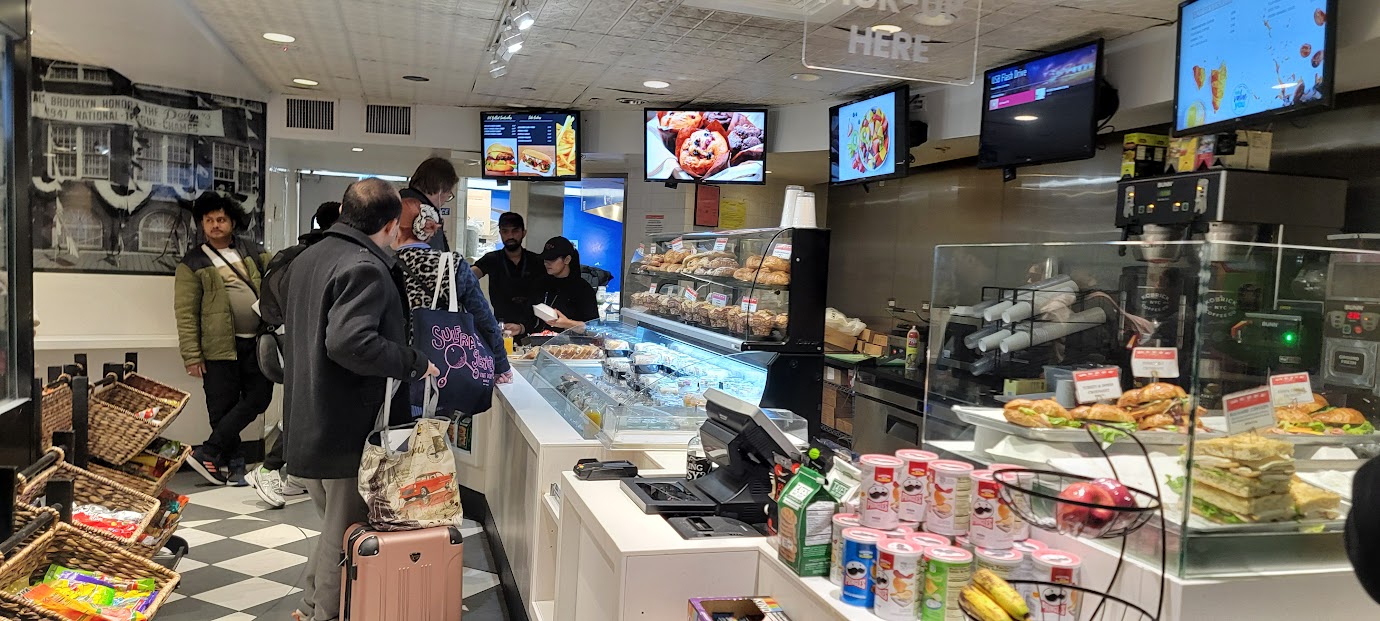
Surcharges have become increasingly common at airports, in fact some airports even encourage them.
- Many airports have ‘street pricing rules’ – concessionaires cannot charge more (or not more than 10% or 15% more) than comparable items off-airport.
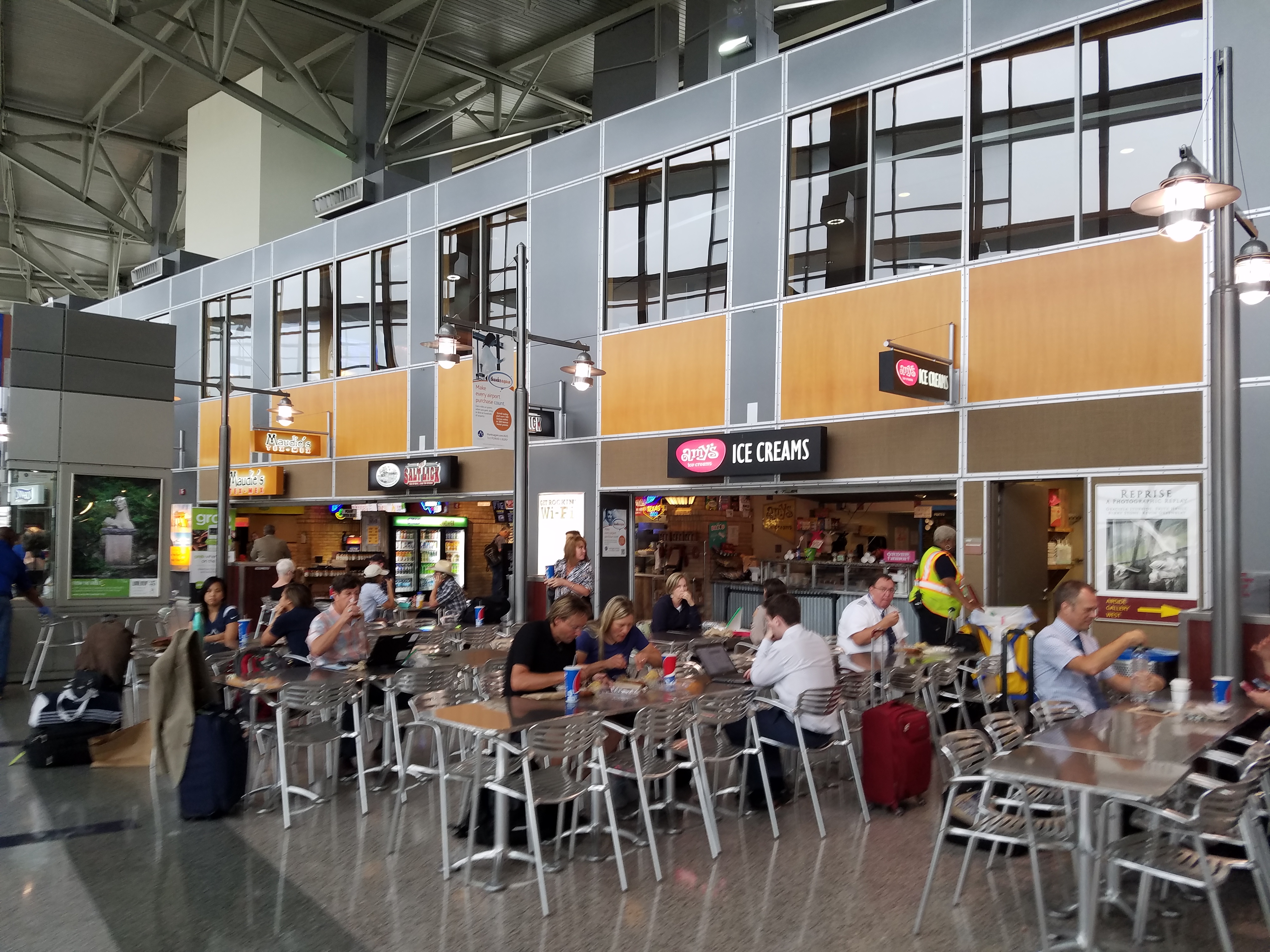
- However, operating in the airport is expensive. At major airports, it’s some of the highest rents in the country to begin with. It’s hard to attract workers, given the commutes, parking off-airport, and security checks. And airports may impose higher minimum wages,too.
- Since they won’t let vendors raise prices, they tell them just to add surcharges (and pretend that’s not a price increase).
Surcharges mean that menu prices appear to be lower than they actually are. The price of an item listed at $10 on the menu is not $10, it is $10.30 or $10.50. How can this be allowed? And by the way you’re asked to tip, too. The 3% – 5% is a surcharge, not a service charge.
Ironically, though, even as airports mandate higher minimum wages, these surcharges discourage tipping. Customers often round up, and the surcharge means that the retailer is capturing more of the roundup. Plus, consumers are willing to pay a certain amount for what they buy.
They ‘name their own price’ by adding a tip. That price doesn’t go higher because of the surcharge – it just eats into what they’d have added as a tip.
Although I’m not even sure whether this is better or worse than when an airport requires you to add a tip for self-checkout.



How is this not illegal drip pricing?
Oh, so, more lies, aka, market, aka, bullsh*t… USA! USA! USA! Reminds me of Ben’s post yesterday about what’s a ’boutique’ hotel? Means about as much as “bespoke” and “curated” and “sustainable”… so, call it a surcharge, a tax, inflation, greed. All the same.
As long as patrons continue to pay these charges, surcharges, required tips, etc. etc., they will continue to increase. While it is wishful thinking, I would definitely support a boycott of ALL airport business until there was a minimum 25% reduction in prices. I almost never make purchases in the airport concourses. Everything is overpriced and service is minimal. Consumers need to exercise restraint in making unnecessary purchases.
I try to avoid airport restaurants and any food is to go. The idea of spending $100 for a crummy airport food?
And you wonder why people are willing to stand in line for clubs and grab extras to take for later…
Oh, gee, another problem caused by government. Please, make it stop!
@Mike P — Just as @DesertGhost has his one-trick-pony (suggesting Gary can’t have an opinion because he’s never been an airline CEO), there you go again… pitching anarchy and chaos. Ya both wrong. *incoming* bad faith retort *incoming*
I am getting close to including NO tip when there is any sort of surprise surcharge added to a bill. Period.
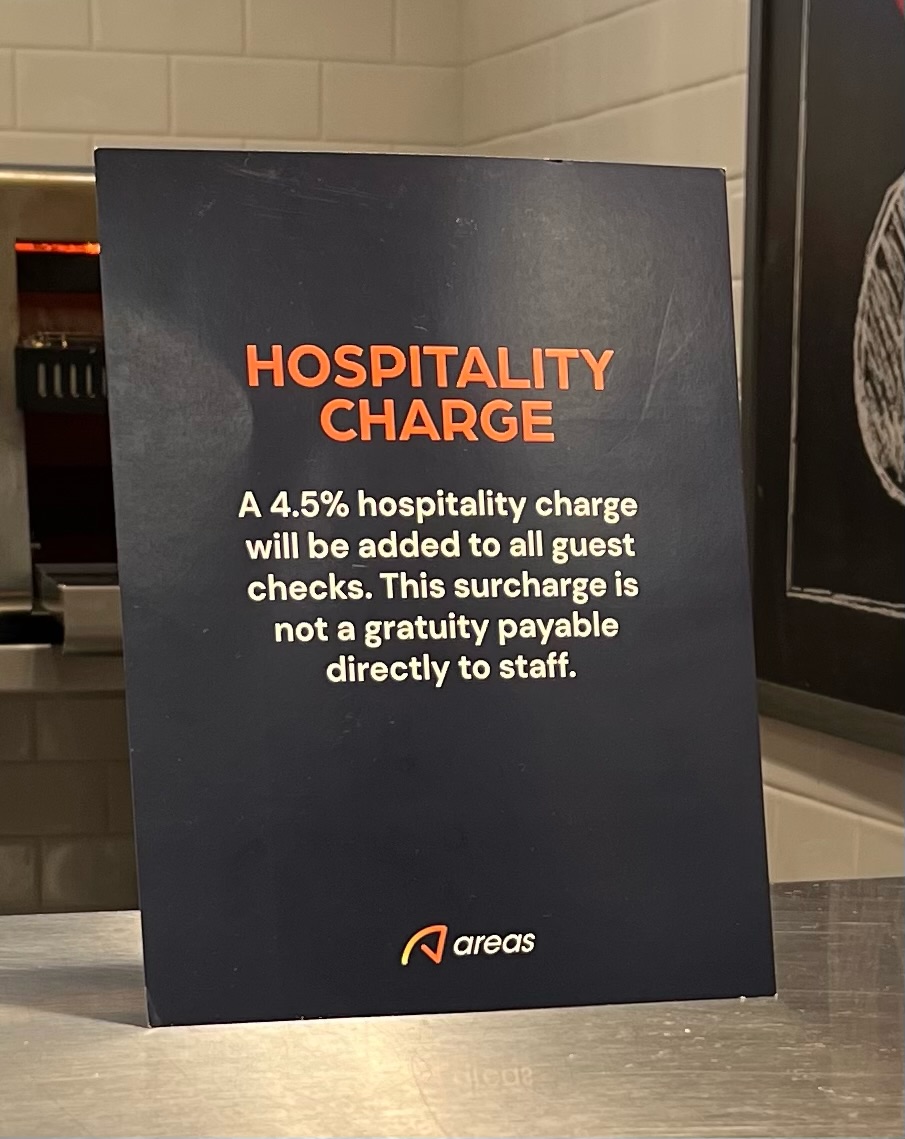
I don’t care if they say (e.g., the pic Gary includes in the article) that the surcharge doesn’t go to employees. ANY surprise surcharge and I am seriously ready to leave zero in tips across the board.
And isn’t it kinda ironic to call a mandatory surcharge that doesn’t go to employees a “hospitality charge”?
Yeah, really hospitable there, a**holes
Airport concessions would be tremendously profitable if they charge what the market will bear. You have a high volume of trapped consumers. Variable costs are higher, but it would be a cash machine. Except, the real estate is controlled by an airport that knows this. They extract this bonanza by the rents they charge and the percentage of sales they collect. Airports might limit prices relative to street/nearby prices. Doing so reduces the bonanza, so their rents/% must be slightly lower. What does the airport do with this? Well, if they didn’t extract large amounts from concessions, they’d have to find it elsewhere: charges to airlines. So, my ticket would be more expensive if airports didn’t charge high rents/%. If they reduce rent/%, concessions keep the bonanza.
@This comes to mind — Wow, multiple uses of bonanza… it’s a bonanza bonanza!
“*incoming* bad faith retort *incoming*”
You mean, like stating the truth.
@ 1990
Bet you were bummed when Bonanza Air Lines was subsumed to form Air West in 1968 !
…lol
Yes! Americans have voted for deregulation and you can immediately see the benefits for businesses, who used to be strangled.
This is EXACTLY what deregulation is about, and businesses are doing much better thanks to all these fees.
Americans are really smart voters!
I despise surcharges and similar scam fees. Charge what you’re going to charge but scamming people beyond that just makes them angry.
@bossa — Livid!
@Mike P — Nurse: “That’s right… you’re the truth… mhm… now, let’s take your meds… good boy… alright… nite nite!”
@NoobNoob — This guy gets it.
@ Thing 1
Do it! I stopped tipping entirely several years ago. I’m a customer, not a payroll department. An employee’s wage is what they negotiate from their employer. I’m not party to this arrangement.
Here’s what’s true: every $0.00 you write in a tip line is easier than the last time.
> How is this not illegal drip pricing?
Because — at least in California — Scott Weiner authored a bill that carved out a “junk fees” exception *specifically for restaurants*. Not sure why he caved to the NRA (National Restaurant Association) vs. actually doing the right thing for his constituents, but I’ve stopped trusting him after that.
It was a very bad day when Bonanza got subsumed into Air West.
Why oh why are we being constantly being ripped off, there is always a scam to get more money for the shareholders yearly dividends………..