
Former Delta Air Lines President Glen Hauenstein, who retired three months ago, gave an interview on this week’s Airlines Confidential.
The architect of Delta’s commercial success, Hauenstein was no friend of the frequent flyer and was proud of the airline’s moving from selling only 13% of its first class seats on domestic flights (only 6% when stripping out domestic connections on longer international journeys) to today where they’re selling about 87% of those seats – even if it means taking $26 from a once a year flyer rather than allowing a complimentary upgrade to a $30,000 – $50,000 a year customers.
What was new here, though, was his teasing of a “reinvigorated” product coming soon. And the discussion of Delta’s growth strategy, why low cost carriers can’t become premium, and how people no longer buy just on schedule and price (even if many do).
Delta’s Coastal Strategy Feeds Their Credit Card Profits
Hauenstein says Delta’s strategy was to build in major metro areas of LA, New York, Boston, and Seattle because smaller cities weren’t where the revenue was. I think the genius here, which they may not have really even realized at the time, was how that would capture the credit card spend of those markets.
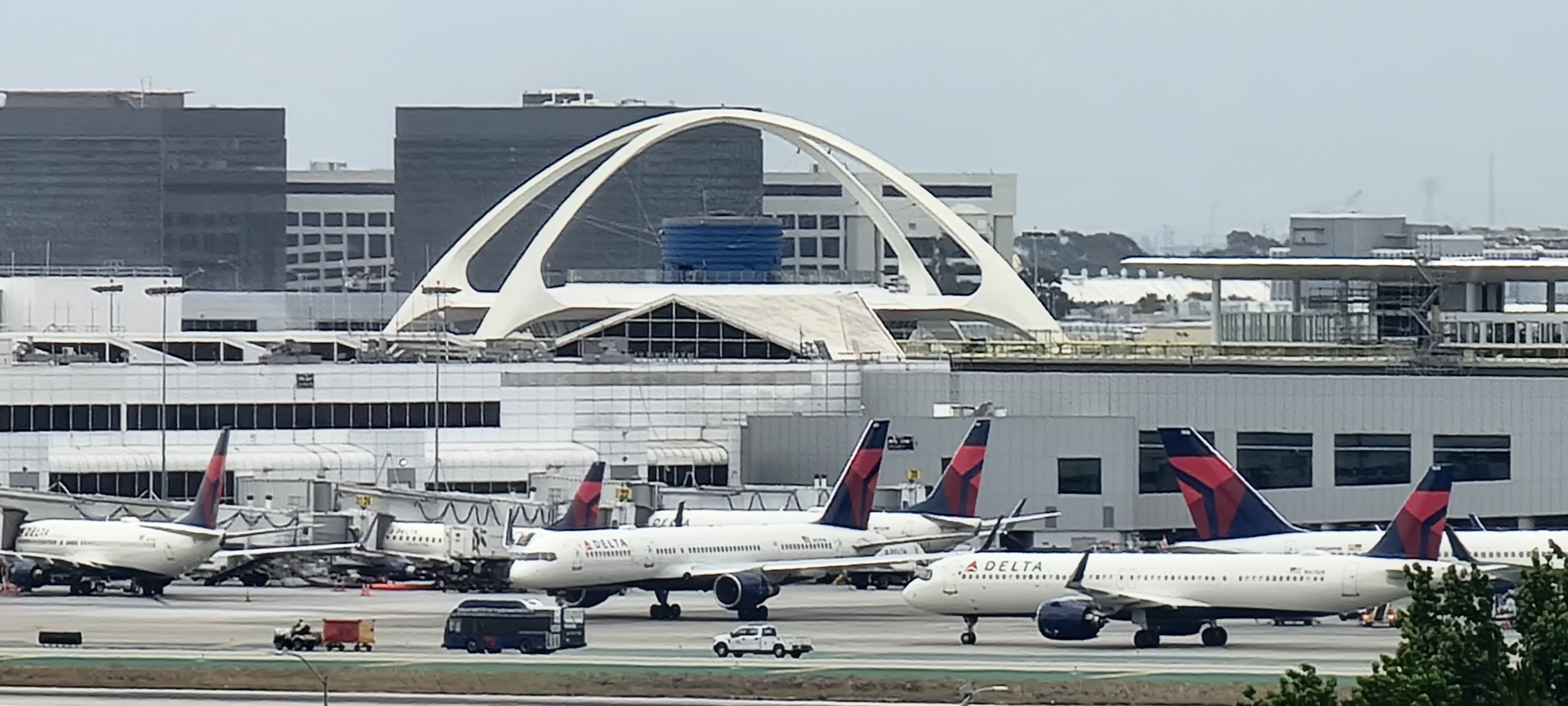
Delta LAX
Delta’s deal with Amex, of course, is the most profitable because of Delta’s market position in the most important spend cities in the country, and the brand they’ve built on the back of their historical reliability. So they’ve offered a less valuable rewards program, Delta American Express cards have given consumers less, but the best airline option in a city captures an outsized customer loyalty and card spend. And that’s how Delta makes its money.
They earned $5.8 billion in operating income in 2025. They took in $8.2 billion in revenue from American Express, and previously disclosed a 39% margin for SkyMiles. That would equate to $3.2 billion in profit, or a majority of profit at the airline. They wouldn’t be earning this, for instance, if they hadn’t bought the US Airways hub at New York LaGuardia 15 years ago.
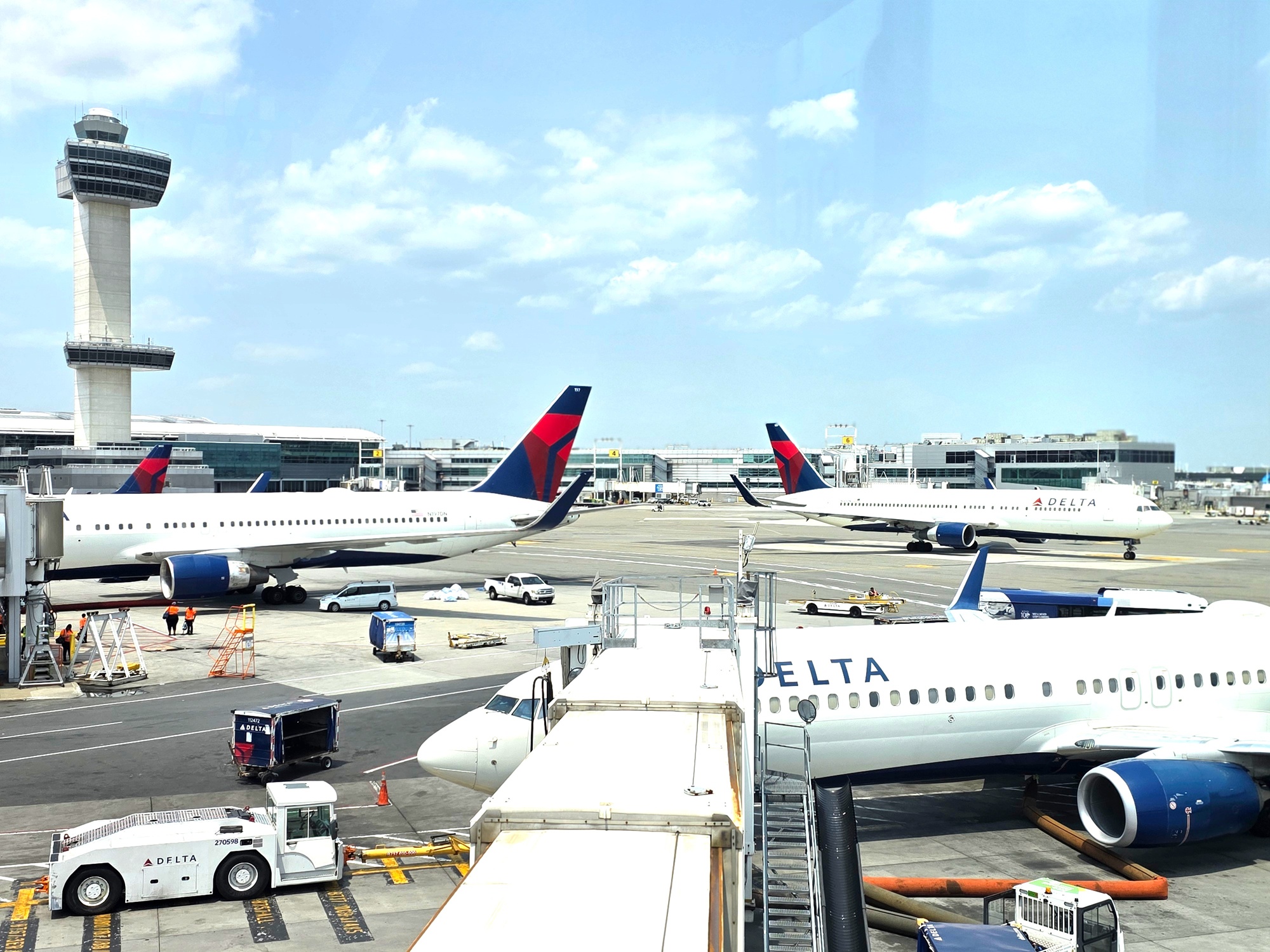
Delta New York JFK
Revenue Has Become More Important Than Cost
Hauenstein does make the important point that airlines used to focus too much on cost to the detriment of revenue. Air travel is no longer just a commodity business.
He’s too polite to say it, but that’s ultimately what’s been the biggest mistake behind strategic blunders at American Airlines since US Airways management took over – a management team that came out of American West, and neither of those carriers had real premium revenue, so their focus was stripping down the product to deliver the most seats at the lowest cost – precisely when consumers were looking to buy a more differentiated product.
I think there was a period of time where the only way that was being sold to airline management by consultants, external consultants, was the only thing that mattered was cost. And I can’t remember how many meetings I was in with the people at McKinsey or the people at Bain telling, this is the way, the only way you’re going to survive. And that created offshoots like Song at Delta or… you know, TED at United or Continental Light at Continental, that we were trying to send out rescue boats. Rescue boats that could have a lower cost structure, that could eventually overtake the legacy airline. And when you think about it, how did we miss the fact that we weren’t getting paid for our most premium products?
How did everybody miss that for so many years? And these are really bright people. These are people coming out of Harvard with the biggest MBAs. And how did you overlook that, you know, I think I was always indoctrinated into the 65% of the travel decision is made on schedule and price alone, which is absolutely true, which leaves another 35% of travelers who are selecting on all other product attributes. And nobody was catering to those 35%. Everybody was focused on the schedule and price. And that left, I think, a wide opening for Delta to start what we initially called decommoditization. We had evolved that many times, and I think now we call it the premium product strategy. But originally, it was more of a defensive move to say, how can we stop losing? And I think we did a great job at Delta turning everything upside down and saying, wow, instead of having first class domestically be a loss leader, Now it’s the giant profit center.
And that enables a whole transformation, not only of Delta, but of the carriers that followed us. And I think it’s really redefined how airlines work.
Low Cost Carriers Can’t Be Premium
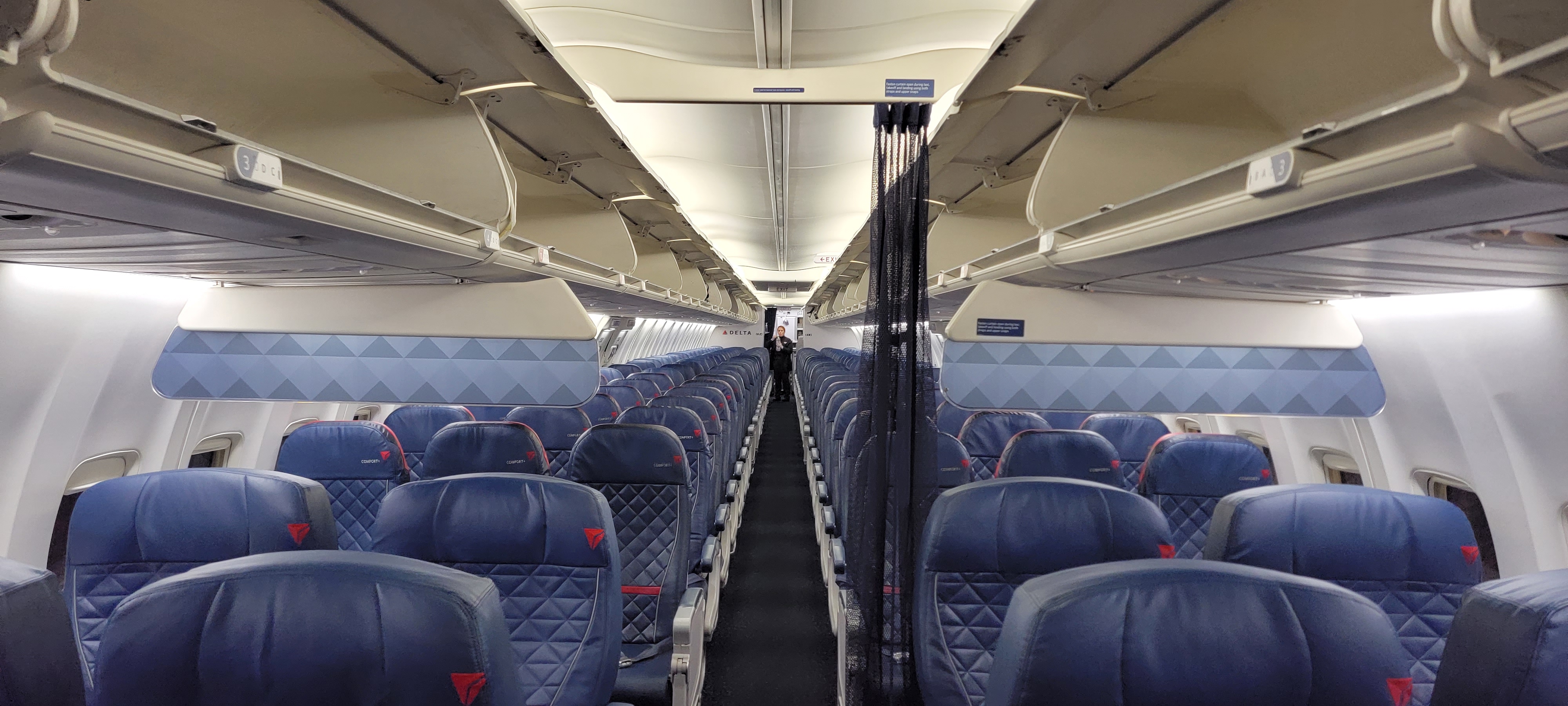
He also shared his analysis on low cost carriers trying to sell more premium products. Consumers have increasingly been willing to spend more for a better experience. Airlines like Delta try to offer something at every price point, and upsell customers. Ultra-low cost carriers have historically mostly focused only on the bottom-end of the market which is tough because (1) that’s not exclusively what customers want, (2) their costs have been rising, and (3) Delta can serve that market and have upside with those same customers and others.
However, Hauenstein is skeptical of attempts by low cost carriers to be more premium. Spirit Airlines tried it. Frontier Airlines is adding a domestic first class, and so is JetBlue. Southwest is expected to. However, he says that:
- Low cost carriers lack the club infrastructure, schedule density, and broader premium proposition customers want.
- That means they will need to deeply discount their premium cabins to attract passengers.
Having only part of a premium proposition in terms of flight options, clubs (which JetBlue and Southwest are adding but it takes time), and seat back entertainment (which JetBlue has) means the overall product won’t command the same revenue that Delta can. It also means their premium product costs are lower. Multiple products complicate the business and come with costs of their own, but that doesn’t mean offering more options along a fare ladder can’t be accretive.

But Delta’s Own Product Is Slipping
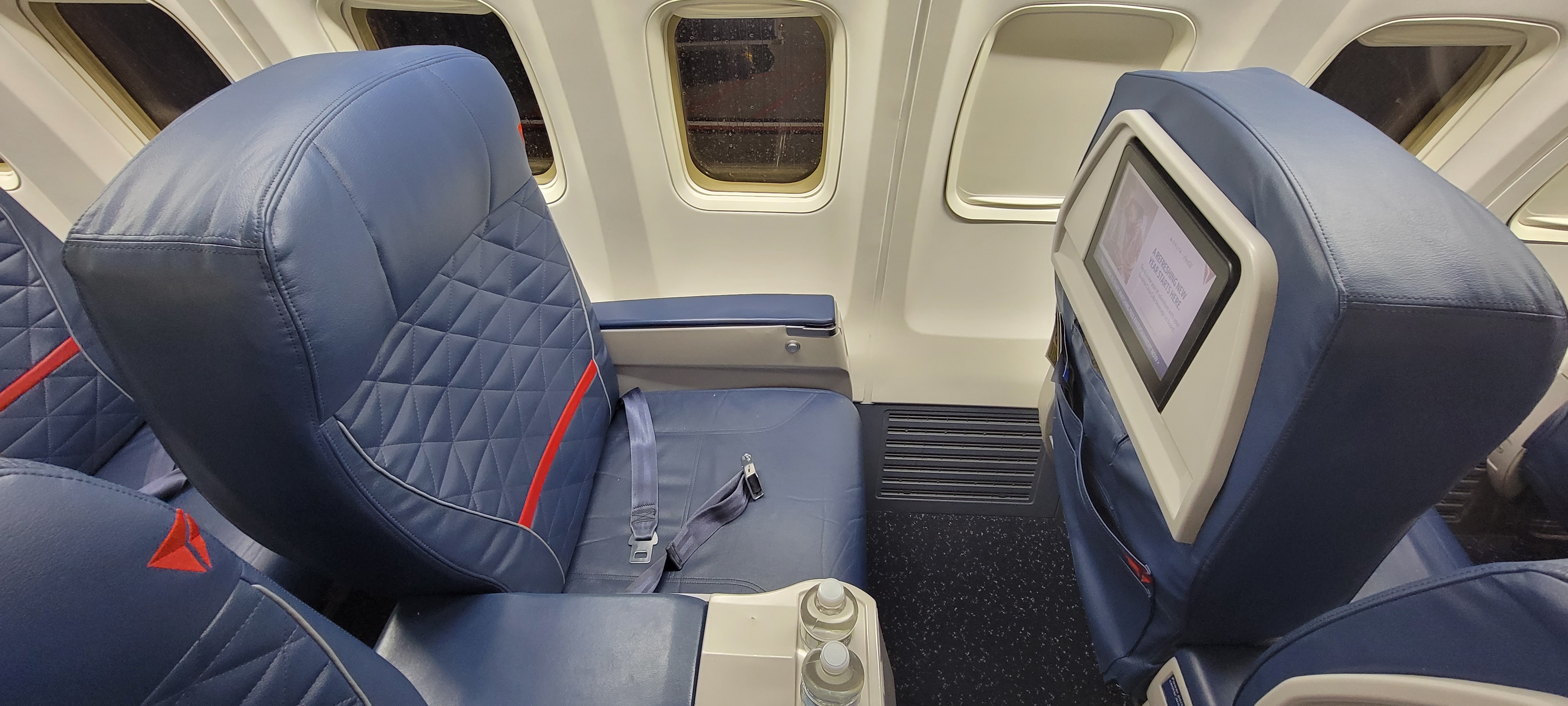
Premium as a differentiator – and offering a ladder for customers to buy up – has become especially important, but Delta’s own product has been slipping – from reliability to the product itself. Hennry Harteveldt in the interview highlights some of the challenges that I’ve also noted here over time from pilot scheduling leading to operational mess, to the withdrawal of drink service in back on short flights, to a first class product with less orbust food, and a business class cabin that still only offers suites on 50% of their fleet a full decade after rolling that out.



TLDR… the complimentary upgrades vanished… because… profits… over people…
I still believe that adding clubs will not be a profitable move in the long run. Once the novelty wears off, customers won’t spend much extra to spend a short time at a crowded club rather than out in the terminal, which might even be less crowded than the club.
My family members really enjoyed their first visits to clubs, but now it’s not very important to them. Not to mention that if you are traveling efficiently there is very little spare time to spend at a club.
Deciding not to upgrade is a BUSINESS DECISION and eventually when the economy turns, they will have no choice but to treat top tiers better and differently than now. Their equipment, mainly the old 757 and 767 are HUGE problems. Been on 3 757 this year, all were late b/c of maintenance and the interiors are SO bad. Platinums and Diamonds deserve upgrades. And yes, I have the Reserve card but even being Diamond w/ the Reserve – no upgrades. And their economy plus is nothing to write home about. NO flight I’ve been on has a snack basket anymore. Catering issues, reliability issues and so much more. They were the best to customers only a few years back. I dont get the new Delta. Meanwhile, United is gaining steam!
@Jeff T — You may be onto something… (@Gene, do you concur?)