United Airlines CEO Scott Kirby gave an interview to CNN’s Richard Quest, and repeated a lot of things he’s said elsewhere. But listen carefully.
- He’s given the chance to say that his plan to merge United and American Airlines is now off the table. He refuses to say this. Instead, he says that it needs American Airlines to buy in for it to work. Still pitching the merger, still trying to keep the idea in the ether, so that American Airlines feels pressure to support it as a “willing partner.”
Many people thought Kirby pitched the big, almost nonsensical idea of combining United and American to make buying JetBlue seem reasonable by comparison. Kirby has said that notion is stupid, and it is from a competition law standpoint. Kirby pitched United buying American to President Trump. You don’t make your ask to the President a decoy.
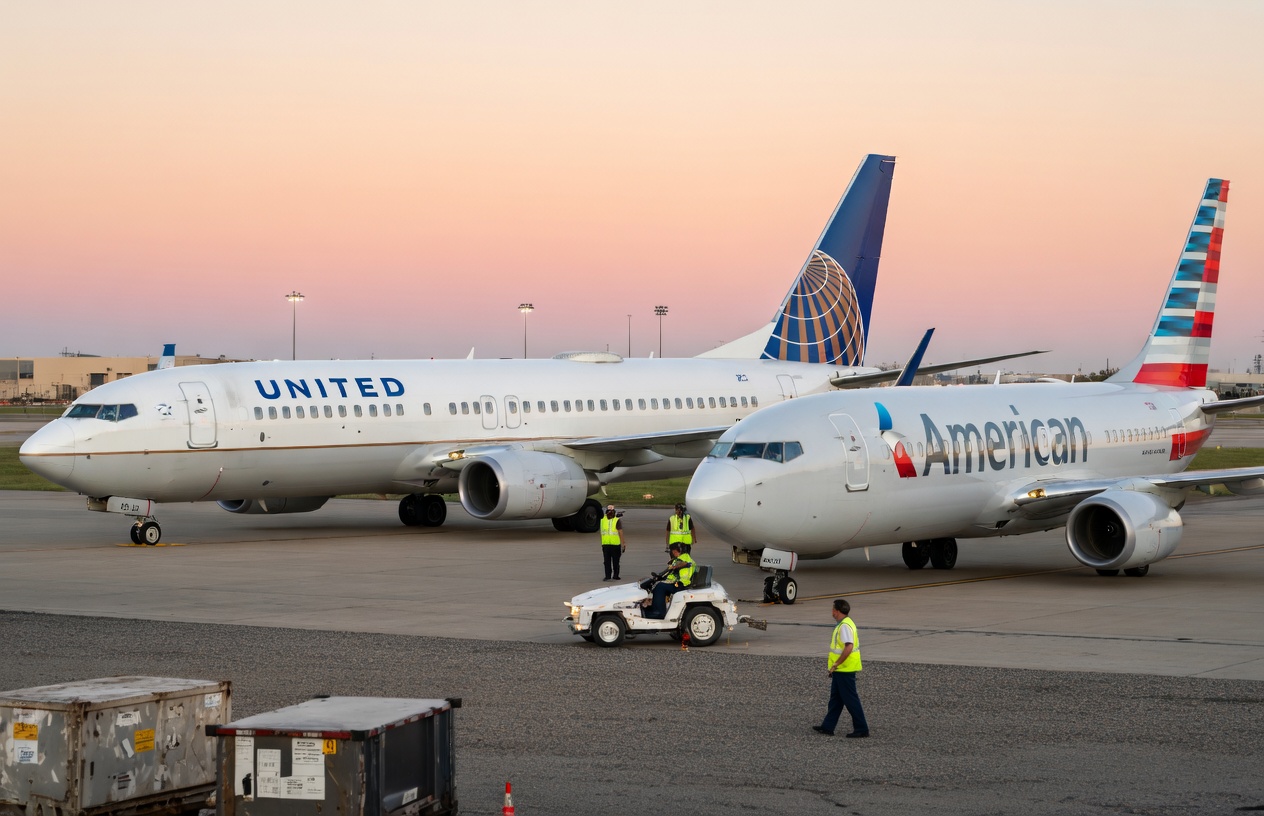
- He’s asked about industry mergers. Kirby doesn’t think any further consolidation in the U.S. makes economic sense. “Deals may happen anyway, but it’s hard to see deals that make economic sense in the U.S.”
What he’s really saying is that airlines like Breeze and Avelo are too small to bother with buying, and JetBlue has too much debt. Delta has dismissed the idea of buying another airline but Delta and Alaska would be interesting (giving up some assets in Seattle). Delta Chief Commercial Officer Joe Esposito said,
We don’t need it at this point. We are successful on our own.
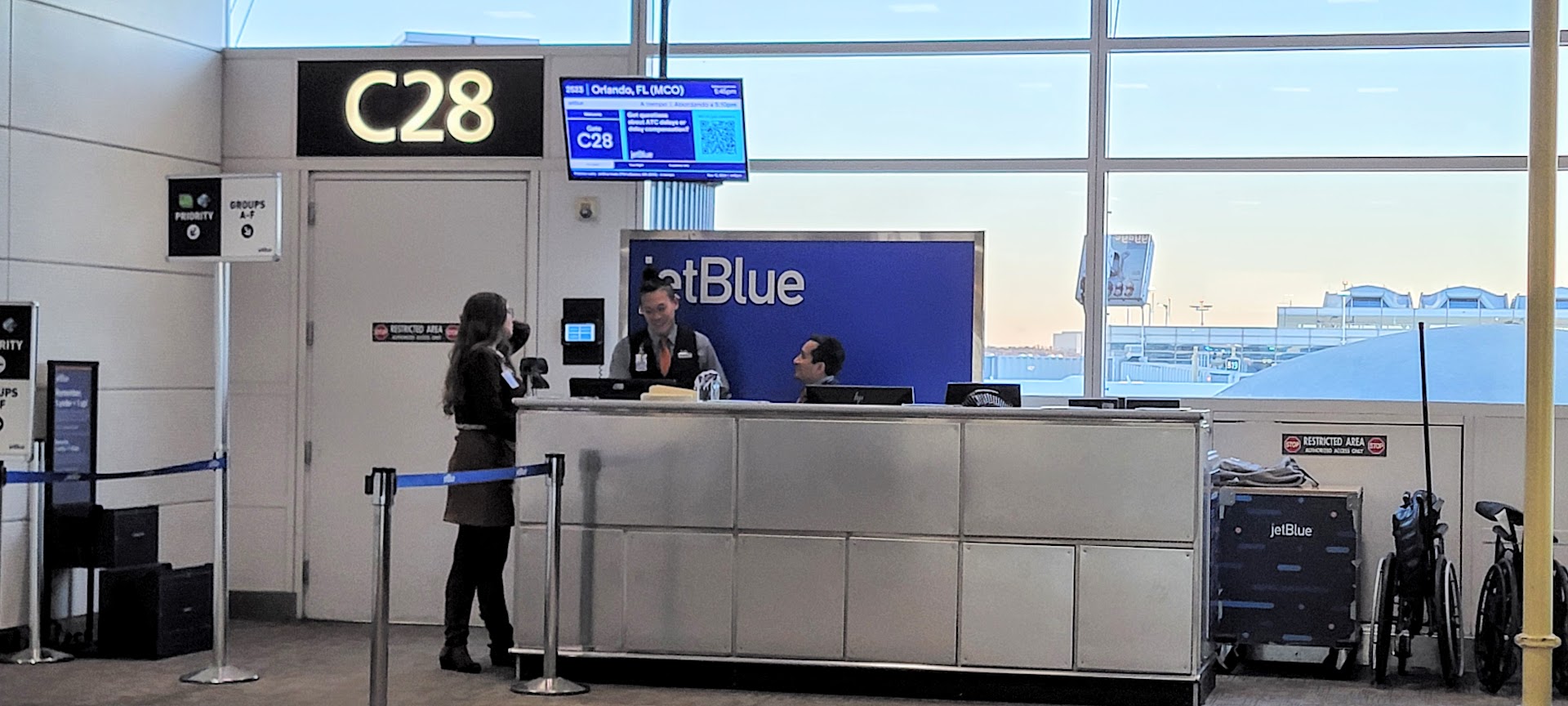
Kirby’s then immediately asked about getting closer to JetBlue, and he says yes – “they have a tough hand of cards, but they’re playing them as well as they can.” He then says they have the “customer DNA” that “we have at United.” “I’d like to do as much as we can together, see how far we can take it just as being great partners for each other as opposed to having to put the two airlines together.”

United-JetBlue may not make economic sense now, but a prepackaged bankruptcy would change that where they could shed some of their debt. It’s not just the New York slots (they’re the number four carrier in the New York market) along with Boston and Fort Lauderdale, it’s the customers who would feed a larger airline’s cobrand deal.
But when he talks about United Airlines and JetBlue as two great customer service cultures, well, JetBlue is generally good in the air. They’re a disaster on the ground. The two airlines overlap most in the New York market. That’s a strong international departures city for United, more than a strong customer service one.
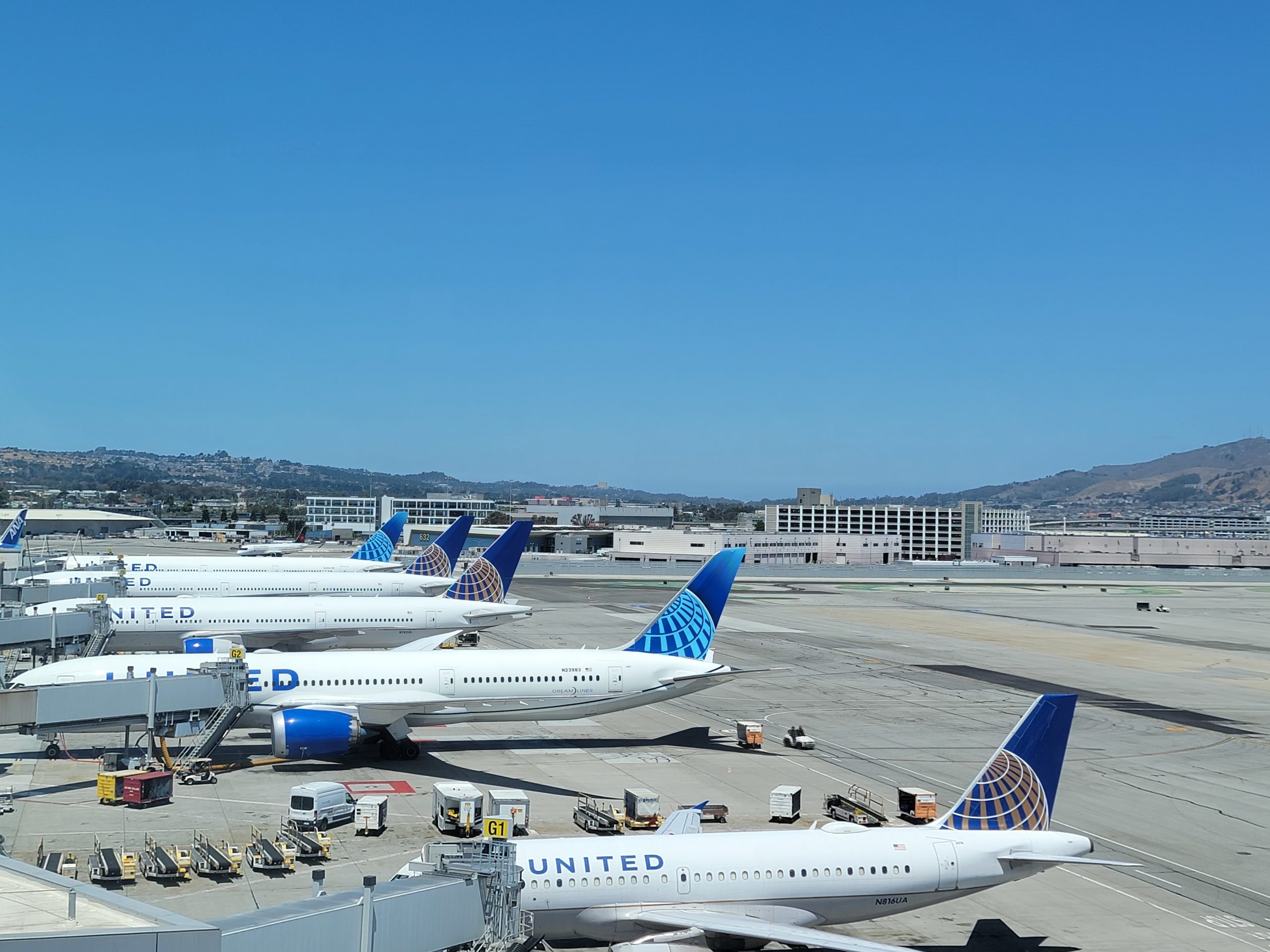
- During the IATA Annual General Meeting, Kirby (and others) blasted engine manufacturers for their inability to supply parts and keep planes flying. Kirby pats himself on the back for placing large aircraft orders during the pandemic to get ahead of supply chain issues, but he acknowledges “we ordered excess.” That’s the first time I’ve seen him admit that they have more planes on order than they can probably productively use (if they met delivery timetables) although perhaps I’ve missed it elsewhere.
- People are still buying tickets despite fare increases. Kirby argues that it’s because airfares have fallen in real terms, they’re proportionately a smaller portion of total trip costs (“If you’re in New York, you will often pay more for your Uber back and forth to the airport than you’ll pay for your ticket to Florida”) and so “air travel is regaining some of its natural share of the travel demand pie” and other parts of trip expense aren’t rising at the same rate.
He’s been predicting fares rising significantly, though, since 2018 and they’ve largely fallen, again arguing that there are natural forces that mean airlines earn a percentage of GDP. That historic relationship has actually broken down.



Did he pitch the combined entity as “Great America Airlines?” Because that would very much be on-brand for the current State of Affairs.
Airfare as a percentage of GDP isn’t a helpful measure. Tickets are sold to individuals who don’t have the average per-capita GDP income. Some have more, some have less. This is why ticket prices and services are stratified. People at the very top are likely flying private. Below, they are likely saturated with travel because they still need to work. These are the Medallion, Global Services, etc. members, and increased purchasing is unlikely to be for more trips. At the bottom, if they can afford to for at all, they are very price sensitive. The place where more trips are possible is the middle, but this economy doesn’t seem to be growing that segment of the population.
Consolidation usually brings fewer flights overall, but more for one of the merging airlines. I’m not sure what United would do with American. They don’t need two hubs for transiting passengers in Texas. Antitrust is unlikely to allow taking over essentially all of O’Hare. It would force Alaska into Delta’s arms. And, unless the associated airline alliances merge, whoever is left without a US partner would suffer. It just doesn’t make sense.
Huh, odd, because Matt at LALF posted earlier today: “Scott Kirby Says United’s American Airlines Merger Dream Is Dead, But JetBlue Is Still In Play”… so, which is it? Dead, or not dead?
it is dead. UA simply isn’t willing to admit it yet.
and John H
air travel data for ticket prices does not include general aviation including private jets. Air fares really are increasing; given that fuel prices are up far more than even the 27% that air fares have increased, airline profits will go down.
yes, consolidation reduces supply but it will raise fares even further esp. since the big 4 are the ones that will increase fares the most.
The US is simply not willing to accept that 48 years of domestic deregulation will end with 4 legacy or legacy wannabe airlines controlling all of the US travel market.
UA recognizes that there is little opportunity to grow not just because the domestic market is saturated; I said all along that it would be much harder for UA to grow into the domestic markets that it neglected while it chased international aspirations than it would be for DL to grow into UA’s top markets -and recent developments prove me right.
@Tim Dunn — Dead? …”DEAD!” — Aldo Gucci (Al Pacino) in House of Gucci, 2021. Great scene.
The merged United/American Airline will be named Unamerican.
@Donn — Zing! *ba dum tss*