
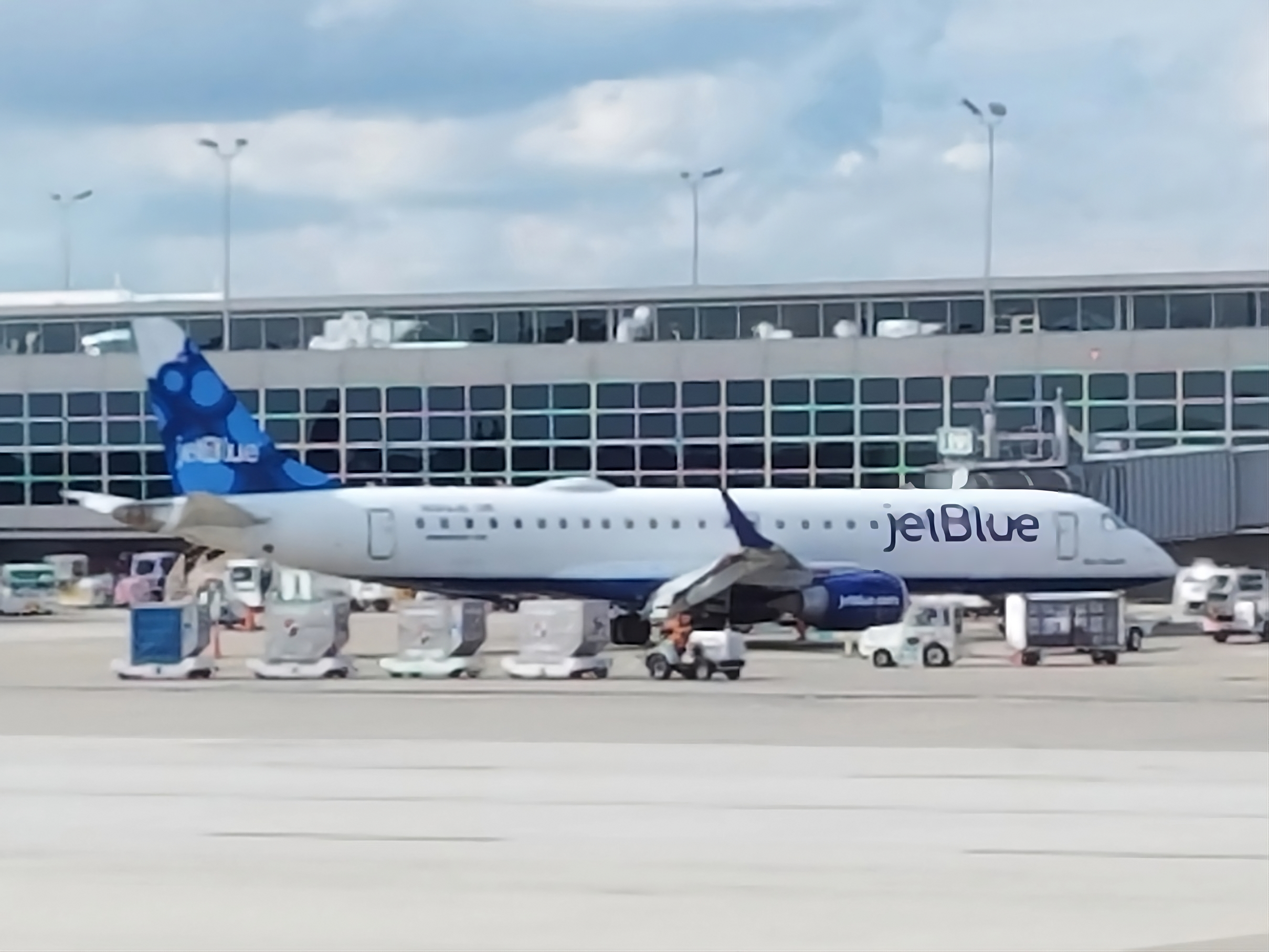
JetBlue is exploring a merger, selling itself to a larger airline.
They are reportedly working with advisors on “the viability of selling itself to a rival” with scenario-planning for antitrust, given that they lost both their American Airlines partnership and their attempt to acquire Spirit Airlines to competition lawsuits brought by the federal government during the Biden administration.
The airline is specifically look at “how a deal with United Airlines, Alaska Airlines, or Southwest Airlines might fare” in Washington.
JetBlue has been working on a turnaround, cutting themselves to profitability which is hard, and leaning into premium with the addition of lounges and a plan to add first class cabins to their domestic fleet. Meanwhile they are offering non-denial denials,
“We’ve made meaningful progress on our multi-year JetForward strategy and are focused on executing the plan,” a spokesman said. “We’re confident JetForward is the right strategy to restore profitability and create value for our shareholders and opportunities for our crewmembers.”

Which Airlines Wins The Sweepstakes For JetBlue?
JetBlue has a market cap of $1.8 billion. Presumably a ~ 30% premium might be required. JetBlue was set to pay a 38% premium for Spirit in a bidding war with Frontier. However, Alaska paid about an 86% premium for Virgin America and about a 270% premium for Hawaiian relative to pre-rumor prices.
Here are the potential players:
- United Airlines raises antitrust issues in New York, but CEO Scott Kirby has pivoted from woke to aligning himself with MAGA since the start of the Trump administration. United has consistently claimed that Newark is New York but if any deal comes to fruition they’ll switch to claiming that the west and east sides are separate markets. United has a $30 billion market cap.
Kirby has previously said that a potential merger is “in JetBlue’s court.” United wants JFK slots, and any potential deal would have to come down to price to see whether it’s worth the distraction. He’s described JetBlue as having a similar DNA to United in current strategy, focused on brand loyalty. And of course JetBlue would also give United a South Florida hub – a region of the country where they’re very weak.
United’s CFO suggested that the current environment makes mergers possible right now and said that “this industry would benefit from some.”
JetBlue’s pilots are suing over the airline’s United partnership although ironically an outright merger presents no problems there.
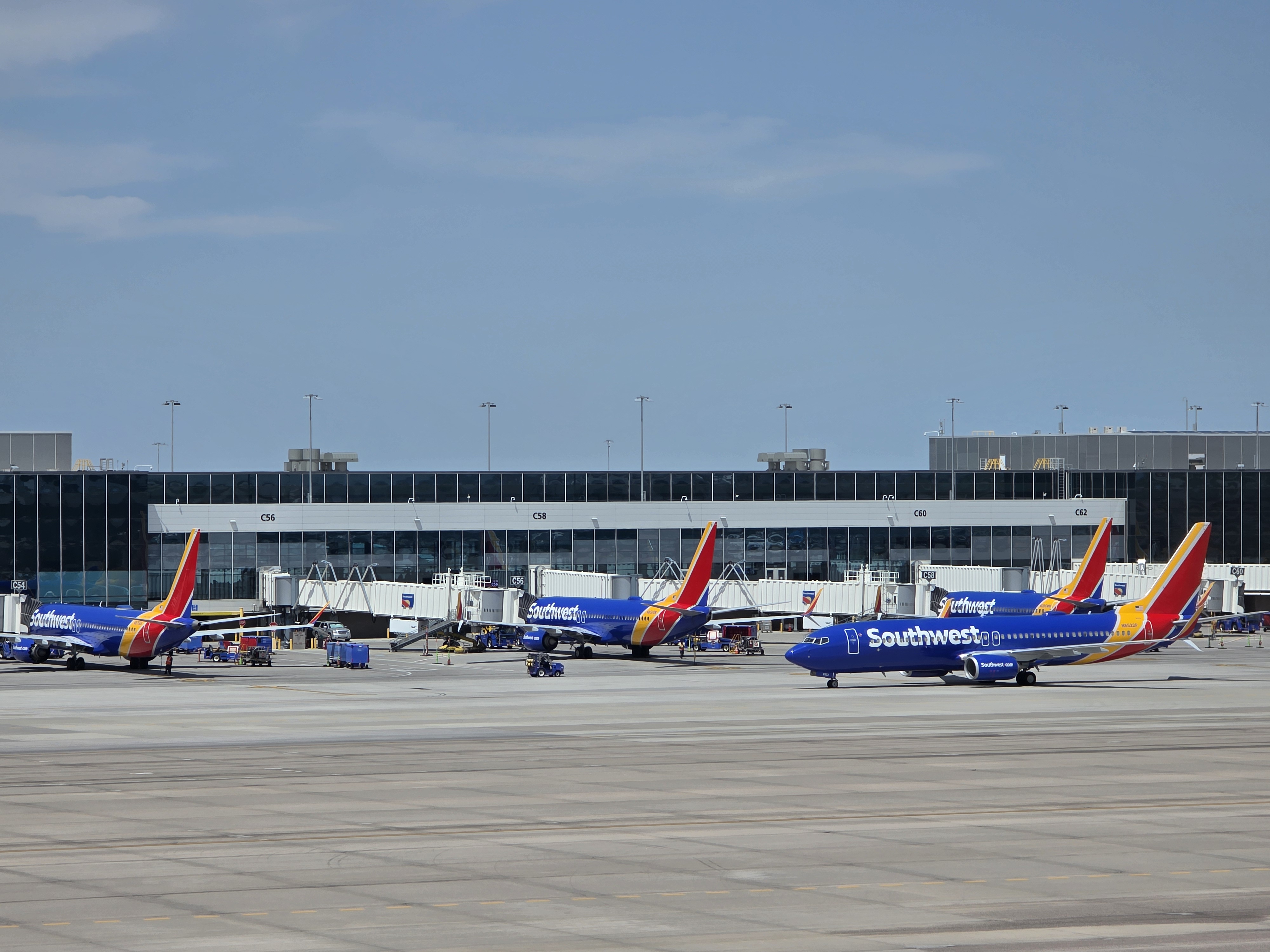
- Southwest Airlines raises antitrust issues in Florida potentially, but Fort Lauderdale should be addressable. They have a $19 billion market cap.
Both Southwest and JetBlue have been actively looking to add airline partners. Southwest hasn’t made New York work, so JetBlue could be helpful there. Southwest is strong in LA where JetBlue has pulled back.
- Delta has a $44 billion market cap. They can afford a JetBlue deal but it’s hard to conceive of an allowable path to sell JetBlue’s New York and Boston positions to Delta.
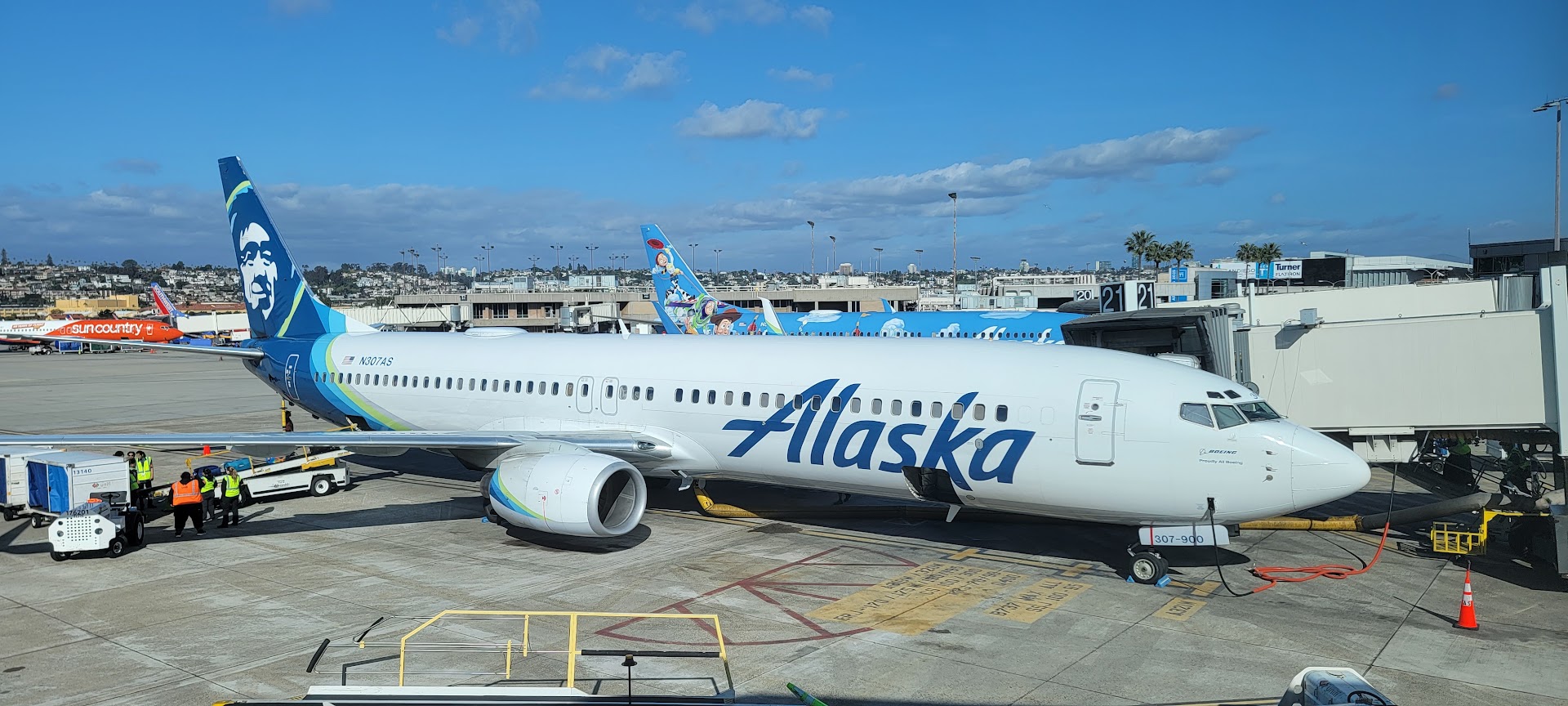
- Alaska Airlines has a market cap of under $5 billion, but a relatively strong balance sheet even after acquiring Hawaiian and fewer antitrust concerns than any other conceiveable merger partner.
An Alaska-JetBlue merger is the sort of airliners.net fantasy – an East Coast and West Coast airline brought together. I’m not sure, though, that the idea of connecting passengers from Yakima to Seattle to New York JFK to Martha’s Vineyard actually makes any sense. Alaska is focused on digesting Hawaiian. They outbid JetBlue for Virgin America, and then largely squandered that acquisition – failing to utilize Virgin America’s scarce gates in congested hubs or capitalize on positions in Los Angeles and San Francisco.
- American Airlines has a market cap of under $8 billion. They’re in a tougher position to afford JetBlue than United or Southwest. However they have the most to gain, potentially, from solidifying a position in New York. It would simultaneously make them competitive in that market again, which would pay dividends through its credit card relationship with Citi (the most important spend market in the country). It would also strike a blow to United’s partnership with JetBlue, which would be satisfying for all of the trolling United CEO Scott Kirby does to them.
If the predecessor CEO hadn’t destroyed their balance sheet and their business, borrowing money while funding stock buybacks and chasing the low-end of the market just as customers became interested in paying more for a better product, American would be better-positioned for the deal of a lifetime. Of course if he hadn’t done the math wrong on New York and Chicago they might not so desperately need JetBlue today.
There are potential antitrust problems if the Miami and Fort Lauderdale are seen as the same markets, but some divestiture in Fort Lauderdale seems plausible in that case.
United and JetBlue together would have the same U.S. domestic market share as American and Delta. They seem like the most likely tie-up, considering United’s existing partnership with JetBlue where an ultimate merger has been speculated for some time.
Alaska-JetBlue would together have just a 7% domestic market share, less than half of American and Delta, while Southwest-JetBlue would create a 22% market share.
Any Deal Has To Happen By Next Year
Any merger needs to get done quickly. If a Democrat wins in 2028, we presumably move back towards mainstream Democrat views on antitrust which were reflected during the Biden administration (and which opposed the American-JetBlue and JetBlue-Spirit deals).
Even if a Republican wins in 2028, it would (1) be risky to wait and make that bet, and (2) the most likely Republican nominee is Vice President J.D. Vance (currently favored in betting markets)
And Vance is far closer to current Democratic views on antitrust than traditional Republican ones, even expresslying praising Lina Khan – the intellectual architect of aggressive modern antitrust enforcement. He talks about antitrust less in traditional consumer-welfare and efficiency language and more in terms of workers, competition for smaller firms, and democratic influence. Put another way, he’s a national conservative focused on market concentration and a belief that large corporations undermine ‘middle America’.”
Any deals really seem to have a window of 2026 and 2027 to get done, since anything in 2028 risks review falling into the next administration. It took 10 months from deal announcement to close for both the Alaska-Hawaiian and American Airlines-US Airways mergers. It took 9 months for Alaska-Virgin America.



the route maps of AS and B6 would complement each other quite well, but then likely compete more directly with their beloved partner, AA
I agree that American has the most to gain. And they would encounter less antitrust friction than United or Southwest. American lacks the immediate capital while United is sitting on fat stacks of cash, so perhaps an all stock deal might be had in something which starts to look like a merger?
Good riddance!
Buh Bye jetBlue!
“American Airlines has a market cap of under $8 billion. They’re in a tougher position to afford JetBlue than United or Southwest.”
No. There is no budget. Capital markets are efficient. If the NPV is > 0 someone will lend. And you can’t borrow internally at a lower cost of capital.
“. If a Democrat wins in 2028, we presumably move back towards mainstream Democrat views on antitrust which were reflected during the Biden administration”
The latter is not correct. During the Biden regime the antitrust theories were halfbaked, unaccepted in the economomics commuinity, and the product of a Yale laww student who had never got them accepted by the economics profession. The Antitrust Division was so badly run, in particular, so little weight was placed on professikonal expertise, that dozens of career economists left.
If American or Southwest were competantly run they would go for this for access to the New York market.
@L3 – American doesn’t have as much discretion to do this without convincing lenders – they’ll need to do more convincing, and their cost of capital will be higher. But I agree with you that JetBlue’s assets should be worth more to another, larger airline, than they are to the standalone carrier and that American and Southwest should aggressively pursue this.
@jfhscott: “American lacks the immediate capital ”
Economic nonsense.There are capitsal markets.
@L3 – those crackpot theories very much became mainstream within the Democratic Party
I would still say that Alaska should seriously look at this…..they have the most to gain by this…to be truly the “5th national carrier”. This would complement thier 787 long haul flying with the 321LR….but the question is do they have the depth to swallow two carriers at the same time….they are still figuring out Hawaiian…..but opportunity knocks you have to answer!
I think AS can certainly play spoiler here….and from an antitrust perspective…this wouldnt face any real issues…..
All of these scenarios, including UA, require them to compete with DL at both JFK and BOS. Ask WN how well it has done competing in DL hubs. and the script will be flipped between AS and DL – but the mere fact that DL has been a pain in AS’ side for years proves DL has staying power.
If UA thinks that AA can’t make it at ORD because of being smaller, it is a fool’s errand to think that UA can compete with DL in any form.
B6 is still a lower cost airline than AA or UA which means many of B6′ current routes won’t work at AA or UA costs; they don’t work at B6 costs.
most likely outcome – B6 just shrivels and dies because no one can make a deal work.
@Tim Dunn I have my doubts that this merger will be achieved without any divestitures, but make no mistake if UA is able to take B6’s JFK holdings with limited slots to give up (i.e., the argument that they do not serve that NYC catchment with EWR holds up), then the game in NYC changes fundamentally.
DL is the leading carrier at LGA and JFK, but it is slot-restricted on what it can do and is basically maxed out. For instance, attempts to start a JV with WestJet were rejected unless DL would cede 8 slot-pairs.
UA is as large as DL at LGA and JFK in the NYC region with a more efficient EWR + niche LGA operation. Most industry insiders note that the EWR hub is the most profitable in NYC, but it has its limitations.
Now if UA is able to take B6’s 175 slot-pairs with its widebody fleet (with huge growth) and refine service, it will offer the largest network for NYC customers with the best network and options. DL would still be the leader at LGA, but there would be a legitimate better option for premium NYC travelers than DL.
Not to mention, if UA takes B6 in whole, the gap in size between UA and DL in NYC would be as large as the gap between DL and AA, i.e., sizeable. And given the slot restrictions, DL would not have a way to respond unless it grew at EWR which is not viable today due to FAA limitations, but even if it was appears a questionable proposition.
All hypotheticals for now, but make no mistake: if UA is able to take most of B6’s JFK operation, then that’s a massive hit to DL.
@ Tim — Ha! Finally, the day is coming. DL can’t do anything to stop it.
Hey Gary, remember when you couldn’t get dates correct and published a Kirby quote about JetBlue from JP Morgan a year ago as if it was from JP Morgan a week ago? We all know you couldn’t get hired at JetBlue so there is an obvious axe to grind. Why don’t you stop with the rampant speculation and also maybe make your site a little more about news you actually source and produce rather than linking to everybody else else’s work, even if that work is as crappy as Semafor’s is. 🙂