The Department of Transportation waived the last installment – $11 million – of the fine it imposed on Southwest Airlines for its December 2022 meltdown.
The airline had agreed to a $140 million penalty (but not really). It took DOT a year to come up with the punishment. Customers who were inconvenienced in the mess did not actually get anything from the penalty. It probably was not legal, but Southwest settled with its regulator. And now DOT says they’ve improved their operation significantly, and rewarding that incentivizes good operations.
Southwest’s Christmas 2022 Meltdown Was Unprecedented In Scale
When Southwest cancelled nearly 17,000 flights 3 years ago it cost them nearly $1 billion.
- While it began with weather, the airline melted down, losing track of crew and without systems that allowed them to rebuild their schedule.
- As the operation got away from them, they were forced to rebuild manually – too big a task to recover more than half of their operation in a day.
- Customers were refunded. They were reimbursed for out of pocket expenses, even where they purchased flights on other airlines. And passengers who merely suffered delays were given 25,000 Rapid Rewards points.
@SouthwestAir I have missed Christmas with my family after several delays and cancellations and I am now stranded at the Kansas City airport. Almost all of the flights for southwest have been canceled with hardly any explanation or anyone at the gates. This is baggage claim pic.twitter.com/Gzhtfca5Hy
— Caroline “Flynn” (@ceaflynn) December 26, 2022
That’s a screenshot of over 15 HOURS on hold with crew scheduling! Flight crews sleeping in airports because of cancelled flights was common. pic.twitter.com/pNtjHMSYk6
— Paul St.Onge (@stpaul77) December 26, 2022
Did Southwest Actually Do Anything Illegal To Warrant A Fine?
Southwest didn’t claim the meltdown was weather-related, even it as began with snow in Denver and past legal precedent might have let them skirt legal responsibility. They didn’t just refund tickets. They came out of pocket in a real way for customers, and for the most part they did so promptly.
However when 2 million passengers are displaced, there are going to be customer service lapses. Mainly, though, it was a massive business failure – insufficient planning for long tail events, insufficient investment in technology as the airline grew into a domestic behemoth, and insufficient experience among staff after experiencing significant turnover during the pandemic. But it wasn’t really illegal as such.
The Department of Transportation, though, said that Southwest:
- didn’t provide sufficient customer service, since passengers couldn’t get through to the airline (no airline, ever, has staffed sufficiently to handle phones for what happened). When Delta Diamond members were waiting up to 41 hours on hold DOT did not fine them.
- didn’t provide prompt enough flight updates
- didn’t provide refunds promptly in thousands of cases (there were perhaps 1/10th to 1/5th of a percent of processing outliers, even as Southwest went far beyond its legal obligations).
The Fine Was Really $35 Million, Not $140 Million
Of this $140 million, Southwest actually only had to pay $35 million to the government.
- $35 million fine
- $33 million credit for Rapid Rewards points they had given customers 11 months earlier
- $72 million credit for setting up a $90 million fund for compensating future inconvenienced passengers
DOT said the fine is 30 times larger than any previous consumer action they’d taken (they’ve historically been toothless) and is on top of refunds and reimbursements already provided in the immediate aftermath of the event. This out of sample action alone suggests DOT wasn’t acting consistent with legal precedent.
The $35 million actual fine was split into 3 payments: two each of $12 million which were collected by January 2025, and a remaining $11 million due by January 31, 2026.
The Government Used A Settlement To Impose Extra-Legal Regulation
With this settlement, the Department of Transportation extracted a PR win, and expanded its rulemaking authority unilaterally. According to then-DOT Secretary Buttigieg, airlines should expect government to extract a tax when customers get mad at them – rather than following a rule of law process (emphasis mine):
Today’s action sets a new precedent and sends a clear message: if airlines fail their passengers, we will use the full extent of our authority to hold them accountable. Taking care of passengers is not just the right thing to do — it’s required, and this penalty should put all airlines on notice to take every step possible to ensure that a meltdown like this never happens again.
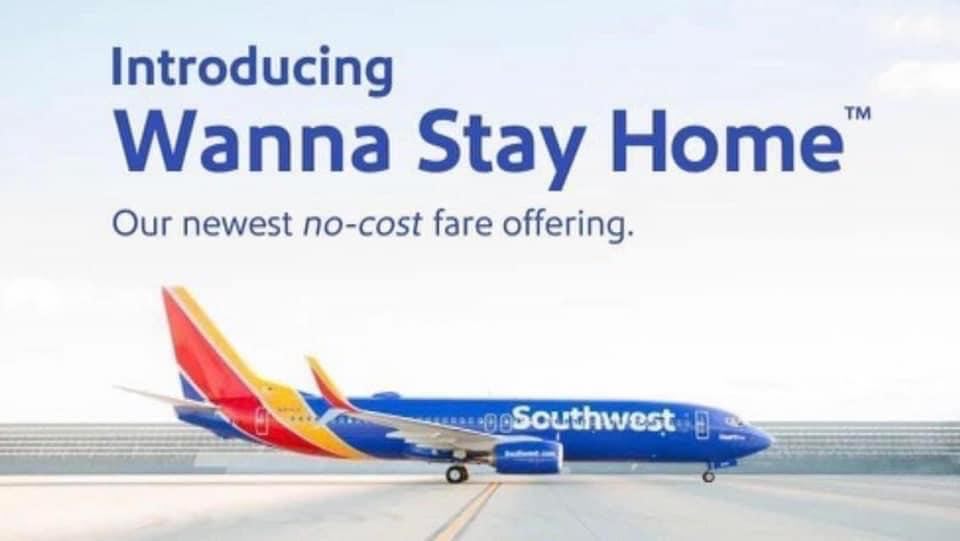
What DOT got is Southwest’s agreement that it would provide $75 travel vouchers in the future when passengers arrive three hours or more late due to a controllable delay or cancellation until they hit $90 million in vouchers. That’s something no other airline formally committed to, but it’s airline scrip requiring passengers to buy future travel (basically, customer service recovery and something customers frequently get when they complain anyway and sometimes even proactively got already). Southwest Airlines is promised that they will compensate customers in the future less than they did on their own 3 years ago.
This may be meaningful as a precedent, but it’s regulation by settlement instead of the usual notice and comment process and isn’t anything required by statute. That’s not really a ‘rule of law’ approach to regulation, and is troubling. If you want to know where precedent for violating rule of law norms now employed by the Trump administration came from, it didn’t start with the current President.
Moreover, it was bizarre because no airline I’m aware of has ever gone farther above and beyond to make up to customers after what happened as Southwest had done. And usually when these fines are imposed, they get credit for payments actually provided to customers and not just the frequent flyer point top off (roughly $300+ per passenger) that was provided.
DOT Needs To Focus On Cleaning Up Its Own House
It is not as though the Department of Transportation penalizes itself, compensates customers, or even meaningfully fixes problems when they cause the entire air travel system to melt down.
The FAA’s Air Traffic Organization, inside of DOT, forced a nationwide ground stop just two weeks after Southwest recovered, forcing cancellation of flights on all airlines rather than just one. During the government shutdown DOT required the air system to cancel a volume of flights similar to the Southwest meltdown. DOT has taken steps to make these shortages more acute.

Air traffic control failures led to 46 close calls in a month, and 300 near collisions in a year. They’ve failed at technology investments for twenty years and continue to use paper flight strips.
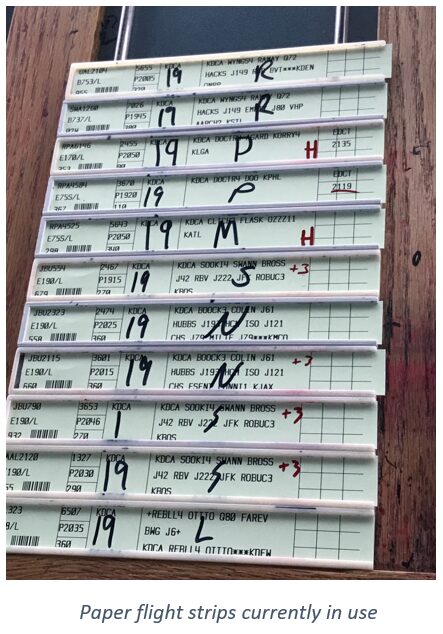
The Department of Transportation took a victory lap over a trumped up $140 million penalty, a scalp of sorts, they didn’t do much to benefit customers and they continued to distract from the very real things they’re responsible for in air travel that are dragging down the entire country’s travel.
The current administration is at least highlighting the problems with air traffic control, but isn’t doing enough, or restructuring to generate real accountability from the system. But they’re right to waive the remaining unpaid portion of the Southwest Airlines fine.



I am sure Elliott Management is thrilled by this decision.
This was all smoke and mirrors anyway. Mayor Pete virtual signaling and acting tough knowing it was all show. And for people saying this latest forgiveness was on Trump’s watch the vast majority, as Gary documented, was while Biden was in office and I fully suspect this last forgiveness was part of a verbal agreement when the “fine” was imposed.
@Maryland — Yeah, and so is whoever received the bribe for this… *cough* 47
@1990. Yeah, just in time for year end distribution. Not suspicious at all.
As a long-time Southwest Airlines shareholder, I’m really glad to see this! Hopefully the stock price will start climbing and we’ll see a boost in the dividend as well.
If money was paid to displaced passengers instead of the government that’s a good thing. The government will simply blow it or hand it over to corrupt NGOs.
@Retired Gambler — Is ‘mayor’ and ‘secretary’ Pete a ‘baddie’ because of ‘incompetence’ (which doesn’t seem so) or because of ‘who’ he is (and what he represents). Would be nice if you and the others would remove the masks and just tell us how you really feel. (Or, you gonna ‘virtual signal’ yourself with some form of “No, no… it’s not because of his… ‘background’… just think he mismanaged South Bend and the DoT…”) Someone ‘re-educate’ us.
Next time irops hits you and you are stuck in a cold airport because a cheap airline chose NOT to follow the recommendations to upgrade their system, just remember you supported this forgiveness and NOT to punish them. Enjoy your holiday sleeping on the floor.
You can always count on @George Romey and the others libertarians to both lament the lack of government intervention and also to prescribe less government intervention. You folks are disingenuous at best, but more likely malicious actors, hoping for chaos. Sheesh.
Now, where’s @Mike P, @Michael Mainello, @Mike Hunt, @David R. Miller, @Not Scott, @Walter Barry, @Mantis for some far-right ‘hot takes’ on thinly-veiled ‘hate’ masked as ‘intellectual’ conservatism. Psh. Y’all jokers.
Anecdata, but the one person I know IRL who was caught in the 2022 cancellations was reimbursed over $2000 and came out slightly ahead. It’s silly to believe that fines will produce any better or even comparable result in the future. Especially with Elliott running the show.
The Holiday Meltdown of 2022 of Southwest Airlines caught the attention of Elliott Hedge Fund Group and a year or so later Elliott made their move to get ownership stake in Southwest. Thank You Gary Kelly.