
One of the longest-ever ‘flights to nowhere’ operated on Thursday, and it shouldn’t surprise anyone that the 8-hour journey was the result of an operational screwup by Air India. It was like last year’s 9-hour Air India flight to nowhere from Chicago.
Air India flight 185 departed Delhi for Vancouer, and after more than seven hours in the air, and over Chinese airspace, it arrived back in Delhi. The airline only described it as an “operational issue” made “in line with established standard operating procedures.”
This intrigued me, because much of the reporting on the incident seemed to get the cause wrong. But I’ve sorted out what happened. They dispatched the wrong plane – one that wasn’t equipped for the journey.
- The airplane used for the flight was Boeing 777-200LR registered as VT-AEI.
- They normally fly a Boeing 777-300ER on the route.
- The widely-reported explanation is that Air India sent a 777-200LR when they only have Canadian approval for a 777-300ER. That seems incorrect.
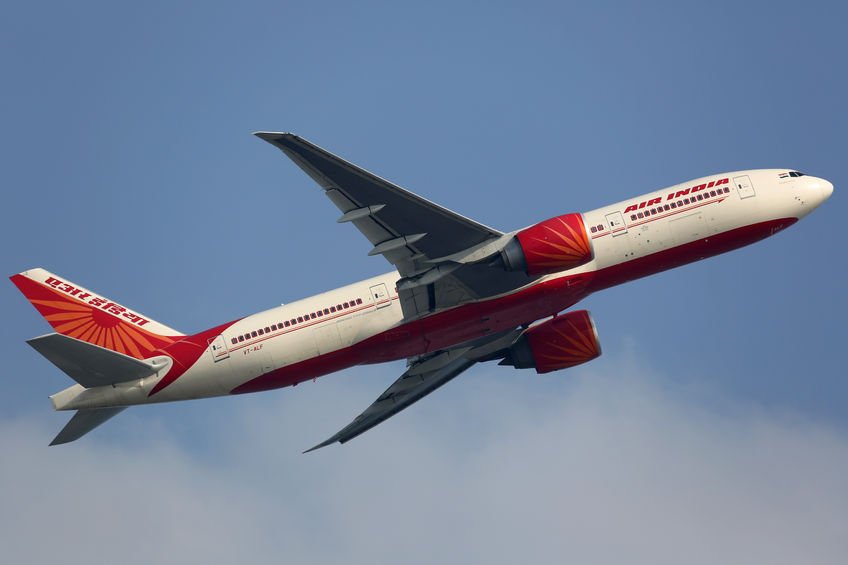
Air India Boeing 777, Copyright: boarding1now / 123RF Stock Photo
It was a regulatory issue, but not a Canadian paperwork issue. It’s a bit striking that nobody realized the problem until the flight was over China, although In August 2015 American Airlines did mistakenly used an Airbus A321 that wasn’t approved for long-distance overwater flying to operate an LA – Hawaii flight.
So what actually happened? Transport Canada does require a Canadian Foreign Air Operator Certificate which – for non-U.S. operators – documents each aircraft intended to be operated in Canada, and requires certificate amendments to adjust that list. However, Air India 777-200LRs have flown to Canada before! It doesn’t appear to be an issue of Air India Boeing 777-200LRs not being permitted into Canada, as much of the reporting suggests.
Instead, there appears to be an issue with a subfleet of the 777-200LR. Air India took delivery of 8 of these planes between 2007 and 2010, but sold 5 to Etihad in 2014. Then they leased 5 that Delta had retired during the pandemic. These are being returned. And it’s these ex-Delta 777-200LRs that appear to be the problem. VT-AEI, which turned around, is one of these ex-Delta planes.
- VT-AEE — ex N704DK (MSN 29739)
- VT-AEF — ex N702DN (MSN 29741)
- VT-AEG — ex N706DN (MSN 30440)
- VT-AEH — ex N707DN (MSN 39091)
- VT-AEI — ex N708DN (MSN 39254)
Air India flies routes over the Himalayas and the Hindu Kush. They’ll fly a route that goes near the Hindu Kush high terrain, avoiding both Afghanistan airspace and Pakistan airspace. However to do this requires additional oxygen on board. The legacy Air India planes have it, the Delta ones do not, and the Delta ones aren’t a permanent part of the fleet so haven’t received the investment.
The ex-Delta aircraft has installed passenger oxygen meant to last about 12 minutes. However, the emergency descent profile over high terrain can require more than that. Passenger oxygen requirements depend on whether an airplane can descend to a safe altitude quickly enough while maintaining terrain clearance.
India’s Directorate General of Civil Aviation fined Air India in January 2024 for operating these leased 777s on certain “long-range terrain critical routes” without the required emergency-oxygen arrangement. One ex-Delta jet was put onto a longer routing to the U.S. that avoided the Hindu Kush after a pilot caught the issue.
The problem here is that Air India sent a plane out to Canada that it shouldn’t have, because it lacked the required oxygen for the routing not because ‘Air India isn’t allowed to send 777-200LRs to Canada’.



Interesting.
I agree, Gary. Let’s blame Delta… bah!
Air India’s management should be ashamed. No wonder the CEO is on the way out.
Delta did not fly to DEL or S. Asia that required crossing the Himalayas w/ the LRs so did not equip the planes to fly extended over mountain use.
DL hasn’t operated the planes for 5 years so the onus is clearly on the current operator to have known what the planes could and could not do.
I have to agree with Tim Dunn. What does Delta have to do with the problem?
I love flying with Air Canada or West Jet both are great airlines. Thanks for the great service
OK DL worshippers…please show me where Gary blamed DL for AI’s (a misnomer in todays use of AI vernacular) dispatch screwup.
Wait, is my reading correct? They didn’t have the emergency O2 required to fly over the Himalayas, so, after flying over the Himalayas into China, they turned back and went over the Himalayas back home?
Whats surprising is VT-AEI used to fly on the DEL-SFO nonstop flight. So not sure if oxygen tanks are the issue. It could just be the Canadian authorities need to approve a specific aircraft type before it lands on their soil.
Tim
I agree the onus is on AI here.
Delta has a very weak network in Asia and pulled out of India several years ago. Its hinted at a return, but is up against United and AC and (when they resume normal operations), the ME3. So one can’t blame Delta for something they are weak at. But they will sell tickets from/to India on VA for 450-500K Skypesos, the same tickets that VA sells for 120K
Jon,
when DL deploys its 35Ks to India, UA is simply not competive. UA as well as any other US based carrier cannot compete with a carrier that operates almost 100 more seats.
and you do realize the ME3 are non-functional as connecting carriers right now?
While UA tries to sue Rolls-Royce for not honoring 10 year old pricing, DL will clean house all over Asia with the most capable and efficient ultra long range aircraft in the US carrier fleet.
the DL 35Ks will be in the fleet in less than 12 months.
Just in addition to my previous comment. The flight the following day 777-300ER took the same route. South of the Himalayas, Bangladesh, Myanmar, China, Japan, PACOTS to Vancouver. So I don’t think there is any issue with the routing on the flight in question on the 19th.
Tim
1) Delta shut down its India route promptly during COVID. United/Continental have been there for decades, and even AA flies there .
2) AC is now up to 2 flights daily
3) The new A35Ks wont be in service until next year, assuming delta even starts up in India and uses it here.
I suspect the ME3 or at lesat 2 of them at least will be functioning as carriers by the time delta gets flights to India (if it does). Note too that if airspace remains restricted, even a larger A350 wouldn’t be able to fly the southern corridor westward nonstop and the northern route would go to 19 hrs and be very prone to refueling stops, making the flight uneconomical.
As for non functioning, Etihad had 2+ flights daily to/from delhi and many to North America. That’s far more functioning than delta, which flies 0. I nearly flew it last week and wish I had, it would have been more comfortable than the nonstop.
I’m sure delta will appeal to the mathematically challenged who want to pay 500K Skypesos to fly to/from India rather than booking VA or Flying Blue directly.
and yet Delta has managed to generate higher profits than AA and UA on its international system.
You do realize that each of AA, DL and UA are for-profit, publicly held companies that have a fiduciary responsibility to their owners, the stockholders?
Apparently, continually serving markets IS NOT in the best interest of the owners of AA or UA.
You also realize that AA hasn’t operated its entire international system at a profit for years?
You also realize that UA hasn’t been profitable in every one of its global regions since 2016?
UA’s Latin American network hasn’t made money since covid and before that it was the Pacific? how does the largest company in a region lose money when other airlines, including DL, managed to make money?
And don’t tell us those numbers are all made up. They come directly from the DOT and align with each airlines’ SEC reported financials than hyou want to admit.
There are good reasons why UA reported just 2/3 of DL’s profits in 2025 despite a $1 billion labor cost advantage.
Running routes for sex appeal is not how you run a real business.
Tim
In your previous message uyou said that Delta was going to steamroll over its opponents in serving Asia with its A350s (doubtless charging 350000 Skypesos for economy). When I pointed out the flaws in that argument, you now revert to “TDelta is profitable, so who cares it they’re a midget internationally’?
Honestly, I don’t care that much about delta vs UA economics. I do care about Delta’s subpar international network and their charging 4-5 times what AF/KLM and VA do for the same seat. And offering SAudia to us — I would still much rather fly EY, war or no war.
There is no indication that the flight gets near the Hindu Kush mountain range. To get to it would take a flight over Pakistan. As it was, FlightAware shows the flight going south of the Himalayas, across Bangladesh, across more of India and to the Myanmar border, where it turned around. Possibly contacts in Myanmar indicated that the military was fighting and that safe passage across Myanmar could not be assured on the requested route. Altering the route may have required entry into China at a route not authorized. Furthermore, there could have been problems about whether there was enough fuel to get to Vancouver and with the current situation in various countries, landing to refuel may not have gone well.
you clearly don’t understand verb tenses.
You argued current tense when I said future tense.
and in the present and past tense, both AA and UA have a pretty long history of not operating profitably in one or more global regions
It is precisely because AA and UA clearly don’t understand the economics of the businesses they are in that they do what they do and it really doesn’t matter whether you or any consumer gets it.
Given that you are just another UA employee that participates in aviation social media, then the “all I care about is what DL charges” is not even true.
and who is this “us” of which you speak? You mean actual travelers that will pay a premium price which UA can’t get – which is why it makes billions less in revenue and profits despite flying 10% more ASMs.
Of course, you don’t like someone doing something that UA can’t.
While India and its people are not third world, Air India is a third world airline operating a first world aircraft. The “flag carrier” has shown numerous times that it can’t operate in a first world environment. They remind me of Bob Newhart’s routine on “The Mrs. Grace L. Ferguson Airline & Storm Door Company”. You must go up to the bathroom to weigh your luggage. They do away with “frills and extras” like radar and maintenance and “Those are ants, you idiot, we haven’t taken off yet.” The “captain” notes the stewardesses, “Trixie and Bubbles. I mean Miss Jones and Miss Savage.” Or, Johnny Carson used to refer to “Crashlandia” and “Trans Debris” airlines. Air India “forgets” emergency oxygen?? I’m surprised that EASA and other regulatory agencies haven’t banned them from their airspace. The fact that the aircraft(s) in question are ex-Delta is really a moot point.
Tim
‘Given that you are just another UA employee that participates in aviation social media, then the “all I care about is what DL charges” is not even true.
You’ve really lost it. I’m not an UA employee, only flew internationally twice with UA in the last 10 years, And once was last week, when flying through the ME was prone to delays.
‘and who is this “us” of which you speak? You mean actual travelers that will pay a premium’
No, I mean those mathematically challenged fanboys who want to pay 450K Skypesos for AF or VA seats that those airlines sell for around 100K. Or pay 500K for flights to Jeddah.
I myself praise AA miles because I use them to travel F or H on Qatar and EY. Now you’ll say I’m a AA employee.