
Enilria says that “Analysts Think More Chapter 11s Coming” to airlines and then estimates the risk for several ‘by 2027’ at:
- JetBlue: greater than 75%
- Frontier: 45% – 50%
- Allegiant: 36.7%
- American: 2.9% – 15%
- Alaska: Less than 3%
I think these percentages are overly scientistic, especially since they don’t quite appear to be representing real market probabilities implied from bond yeilds with true spread-implied number and whether a distressed exchange is actual default. Still, as a ranking exercise I think we’re looking at something reasonable for JetBlue and Frontier, and a suggestion that American and Alaska probably are not looking at anything of this sort.
JetBlue Has Greatest Bankruptcy Risk
Two weeks ago JetBlue founder Dave Neeleman warned that airline could go bankrupt this year and said that nobody would likely buy the whole thing becaue of $9 billion in debt. In other words, it would take chapter 11 addressing liabilities to repackage it for sale.
JetBlue CEO Joanna Geraghty says they are not contemplating a chapter 11 filing this year which of course begs the question about what 2027 looks like for them based on how macro conditions develop. They haven’t made money in six years.
Between long-term losses, high debt, and increased fuel expense – plus a weak market position in New York, a weakened position in Boston as Delta used their inability to simultaneously grow in New York and defend Boston during their American Airines partnership (hence the logic of buying Spirit’s planes and pilots in the first place), and possible subsidies to prop up their major competitor in Fort Lauderdale they’re in a difficult position.
Their credit rating has been downgraded to CCC+ (by Fitch) and they could be looking at a pre-tax loss greater than $1 billion this year.
However, they ended the first quarter with $2.4 billion of liquidity, excluding an undrawn $600 million revolver, and more than $6 billion of unencumbered assets. They secured a $500 million aircraft-backed financing commitment with an option to increase it by $250 million.
And their 2025 10-K shows scheduled debt maturities of:
- $755 million in 2026
- $411 million in 2027
- $516 million in 2028
- $1.768 billion in 2029.
That could forestall any balloon payment forced filing until 2029, giving them time to turn around their finances. They’re a weak player with huge challenges, but – and I don’t love second-guessing market pricing – I don’t see why a filing by 2027 is significantly more likely than not.

Frontier Airlines Is Next-Most Vulnerable
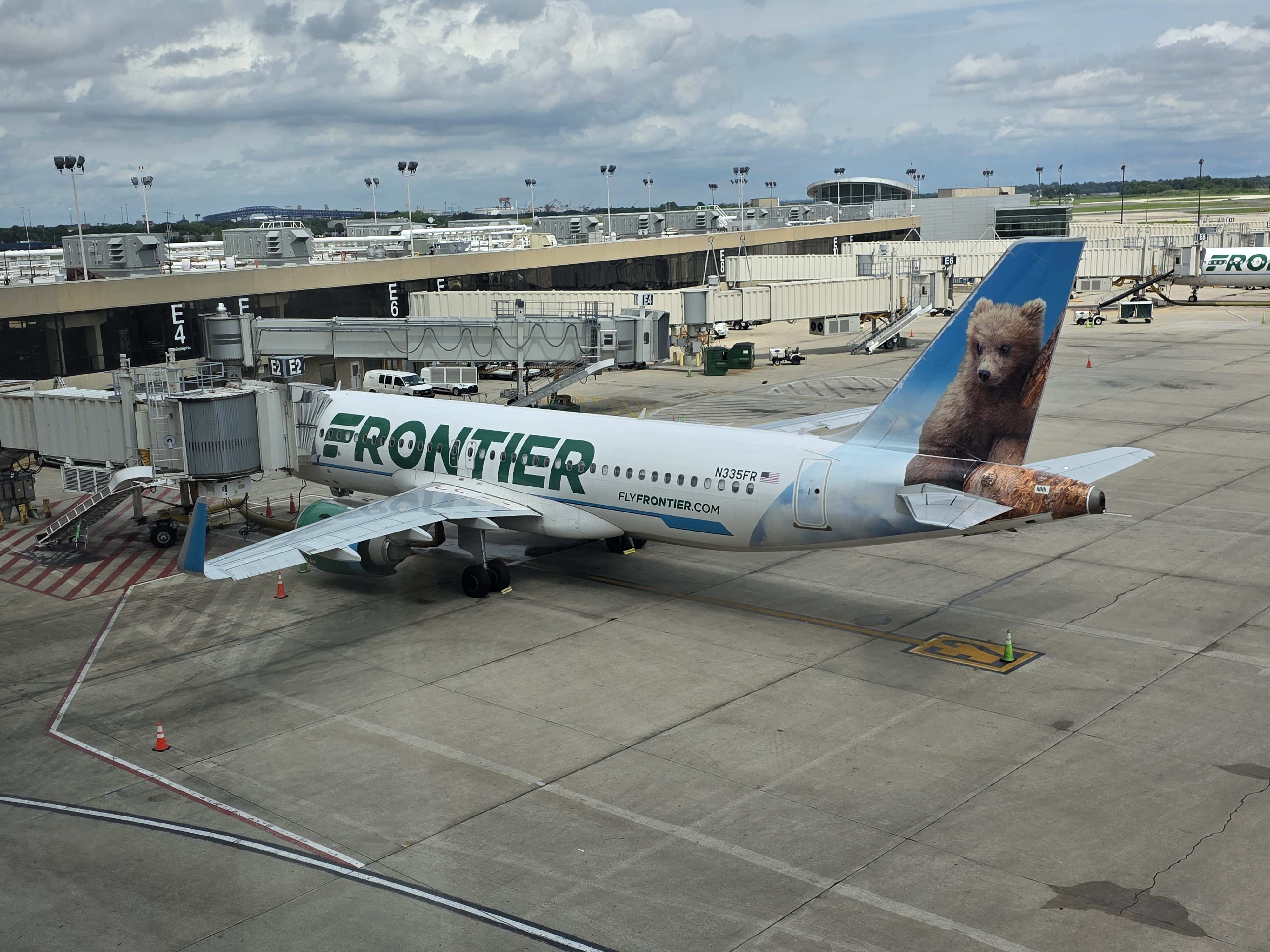
Bailing out Spirit Airlines props up Frontier’s largest ultra-low cost competitor. They’ve been substantially unprofitable for the past six years, helped by sale-leasebacks of aircraft (basically selling them for arguably more than they’re worth, booking profits, and increasing interest expense).
They’re not in a position to absorb higher fuel costs because of their negative margins, price-sensitive customers, and lack of premium products. Without business class, lounges, and international partnerships their cobrand credit card (the cash cow of the legacies) is not as lucrative as competitors.
They can handle their debt maturities of $303 million in 2026 and $63 million in 2027. The problem is aircraft lease payments of around $800 per year and purchase commitments of $1.4 billion this year and $2.1 billion next year. I would not be surprised to see them put off these commitments at a cost. They’re already returning aircraft and deferring future deliveries.
Frontier is vulnerable but to a risky economy and long-term elevated fuel prices, but current conditions don’t scream bankruptcy by 2027.
Allegiant Doesn’t Seem Likely
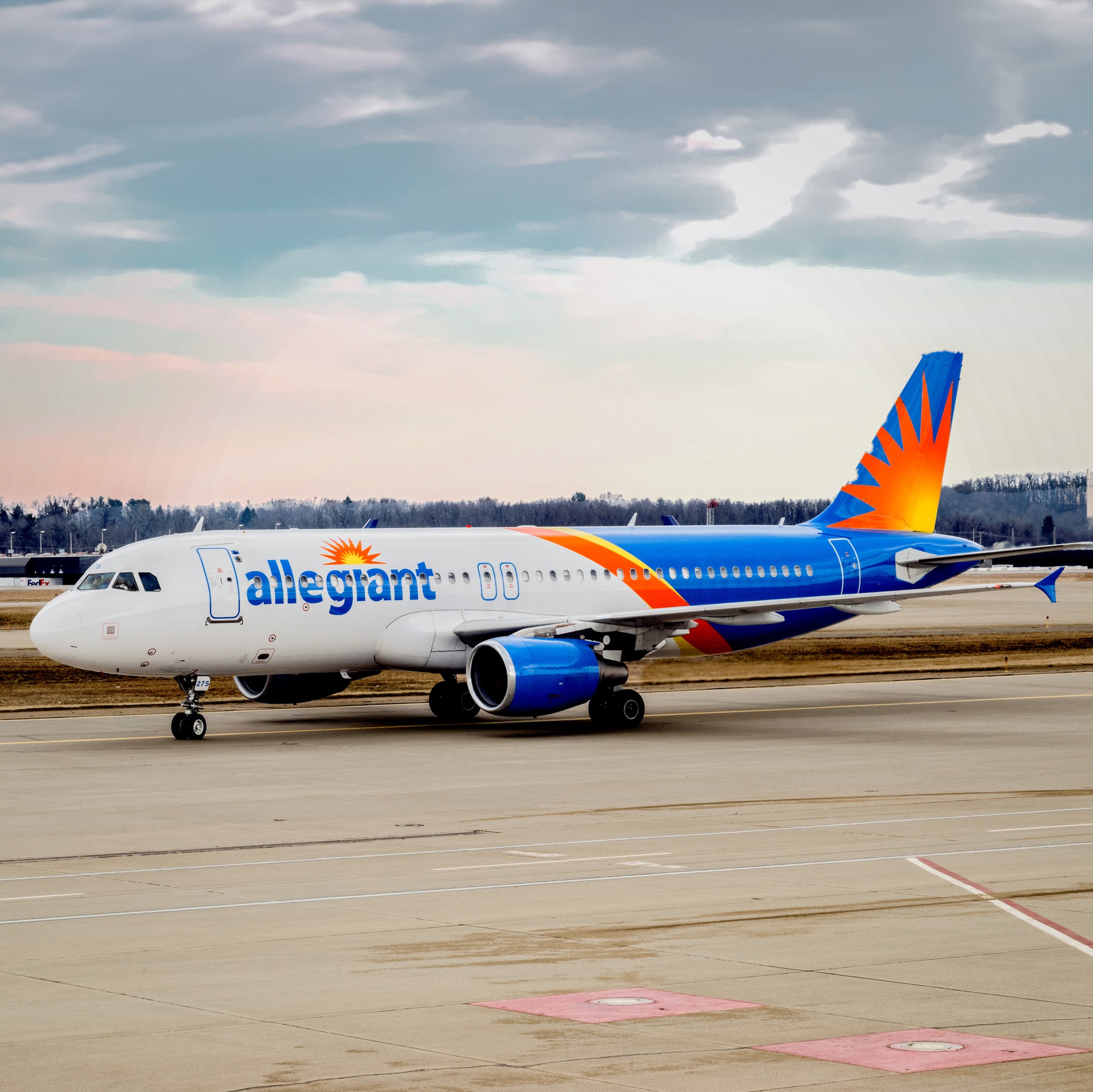
Allegiant is profitable. They have manageable debt and aircraft purchase obligations that they can presumably finance or defer (at a cost). They’re buying Sun Country and that’s expensive, but Sun Country’s operations shouldn’t be a significant drag. They had industry-ceiling margins before the current run up in fuel prices. I just don’t see giving them a one in three chance of default risk by 2027.
American Airlines Faces Risks – In 2028
I pointed out earlier the wall of debt maturities that American Airlines is facing, especially come 2028. I don’t see them being unable to refinance it, though. Total debt is down to less than $35 billion, though still huge they’ve managed through that level for a decade. If they’re unable to get premium revenue up in the face of rising fuel costs, though, losses and existing debt become more of a challenge.
- $3.6 billion due in 2026
- $4.5 billion in 2027
- $7.3 billion in 2028
- $4.0 billion in 2029
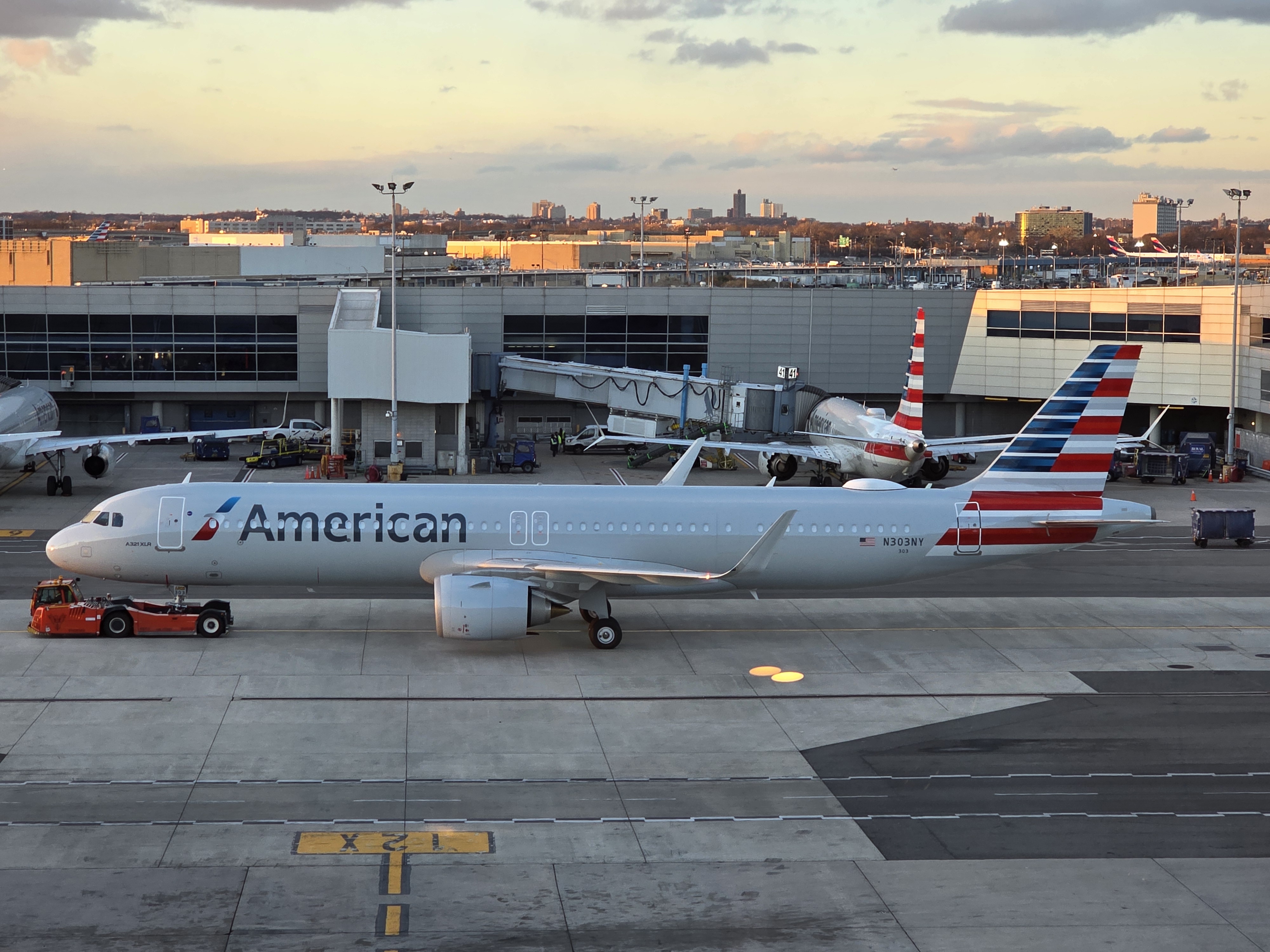
American has about $11 billion in liquidity. If you assume their reported $27 billion of unencumbered assets and first-lien borrowing capacity would actually be worse less under the kind of conditions we’re talking about, they should still be able to borrow. That doesn’t mean more borrowing makes sense for the long-term viability of the business, but they also shouldn’t be forced into chapter 11.



But, but… Joanna said not this year… *facepalm*
@Gary ‘(basically selling them for arguably more than they’re worth’
to who?
Flying JetBlue tonight. They have been good since I started flying them years ago. I hope they don’t go bankrupt but being absorbed by one of the big four would be just as bad. I hope they can grow again and add back the nonstop between LAX and BUF.
Bond yields are related to the market consensus of the probability of default. Enrilia is saying that his assessments of the probabilities are different. So he would require different yields to invest. Would you rather take the word of a single expert or millions of individual investors? [rhetorical question]
JetBlue has no future other than to be acquired. There’s a valuable franchisee there. However, what to do with the debt and any regulatory hurdles could be problematic.
Frontier offers nothing more than a bunch of passengers no one will ever make a dime on. I’d even question the percentage of their passengers that would qualify for a co branded credit card. The 321neos could be picked up cheap in a liquidation sale. Frontier is 12-18 months behind Spirit.
Avelo looks like another potential victim although even crazy Donald Trump wouldn’t touch that one. Ditto Breeze although not as bad.
AA is interesting. It will never be allowed to fail. There’d probably be a managed merger into UA or DL with the government providing backing, funding or loan guarantees. Or too big to fail.
@jns — Agreed. Love jetBlue’s generous legroom in Economy, live TV, free WiFi, Dunkin, Mint.
An industry-wide shakeout, purging the rottenness out of the system, is long overdue.
@Denver Refugee — You sure? What if all this does is just further entrench the oligopoly?
So what if it does? Chaos in an industry usually breeds alternatives (how many Novell, DEC or Sun systems do you still see these days?).
what about everyone’s favorite Sprit? And I’m with you, we (tax paying citizens) dont need to be buying an airline, espeically in the middle of a war and especially a low cost carrier, which is not a good model any longer.
B6 delenda est. Mint Is Shint. Chapter 11 is too good for then. Chapter 7 or die on the vine.
@Denver Refugee — So, you’re an accelerationist! I guess we’ll see…
@O’Hare Is My Second Home — No! Never! Mint is better than Polaris!
This all sounds like it’s talking about Eastern…a long, slow, miserable decline until they finally crash.
@Goforride — Shh… Eastern (name) is back… as a charter airline… formerly Dynamic Airways… and they even operated deportation flights to Honduras, using the same 767 the Patriots own, N225NE… *facepalm*
Someone should start regularly checking online futures markets to see if/when one of these sites creates an “event” for specific airlines going bankrupt that users can bet on.
Maybe Elizabeth Warren will step in again and try prevent any possible reorganization or purchase or Jet Blue or any other airline.. After all, Warren already caused around 40,000 jobs to be lost by working against combining of Spirit and Jet Blue. This stupid woman has proven herself to be dangerous to the economic health of the nation.
Warren alone is not to blame. Most or much of the blame falls on Trump for starting a war he did not need to start. This caused fuel to be in short supply, prices skyrocketing and airlines to lose more money than they should be. He should have kept the Iran Nuclear deal Obama made intact, and improved on it if he thought it was bad. instead of just eliminating it without an alternative plan in place. Now, we have no plan, have a war, strait is closed and the main objective now seems to be having them reopen the strait. That seems to be what would signal a win, when it used to already be open.
Spirit was not done in by high fuel prices. They were expected to liquidate even back in December, long before the run up in jet fuel. They did not have a business plan to stem the losses.