
Delta Air Lines led the industry in eliminating first class upgrades. Twenty years ago 90% of first class seats went to upgrades and awards. Ten years ago it was about half. Now only around 12% of seats are left for SkyMiles elite members. And that means on many routes and flights there are no upgrades at all.
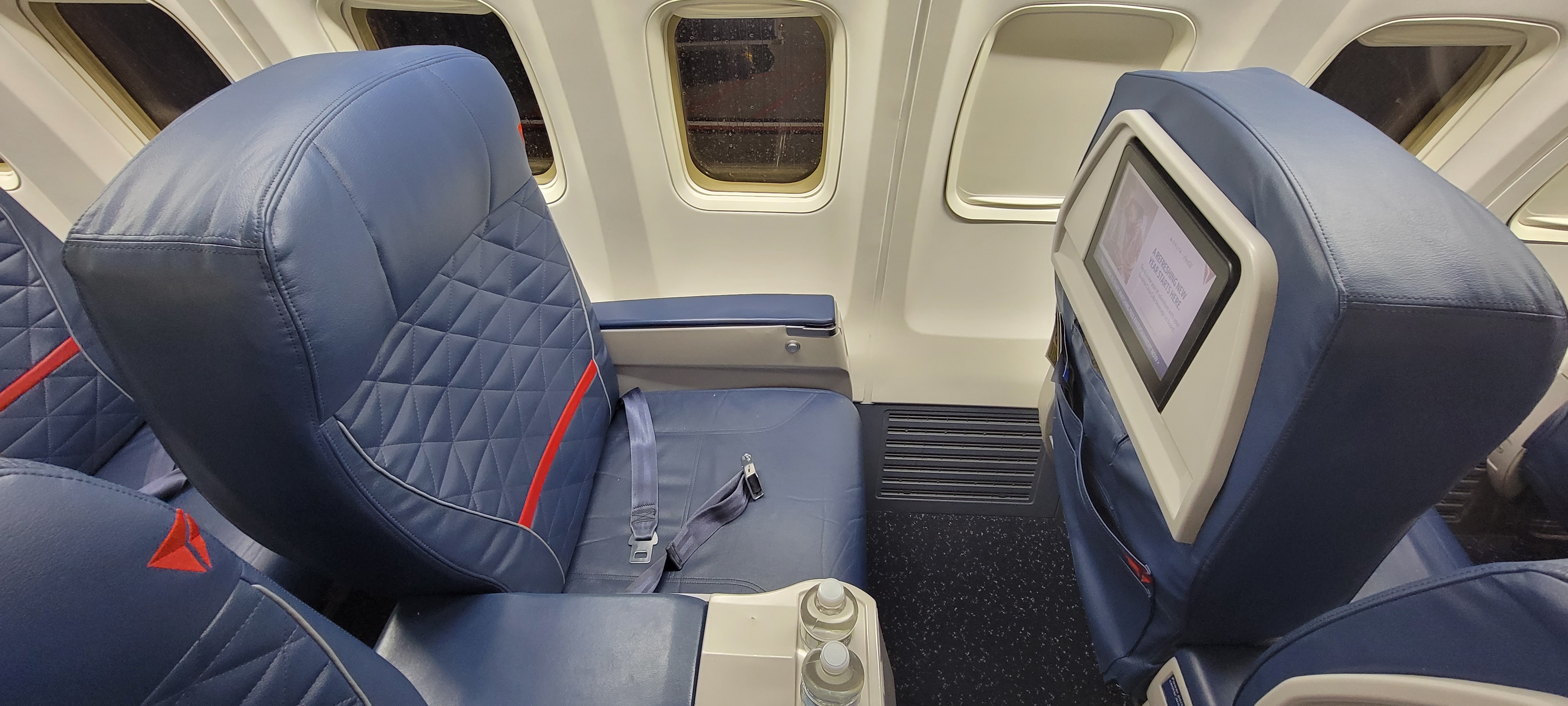
Other airlines have copied Delta, monetizing their first class cabins for ‘tens of dollars’ – they will sell once a year coach passengers an upgrade for $26 or $40 rather than giving it free to a $30,000 a year customer.
At just $102 to confirm Atlanta – Los Angeles up front, I don’t even mind that Delta monetizes all its premium seats and almost never provides upgrades anymore.
Definitely an interesting upgrade offer on their flagship suite for this route
by
u/schwa12 in
delta
The real effect of this is to make top status unappealing. It removes upgrades as the argument for status, and that used to be the main motivator. It’s mid-tier status that’s now the sweet spot:
- priority check-in (shorter lines with bags)
- priority boarding (overhead bin space)
- free checked bags
- extra legroom coach seat
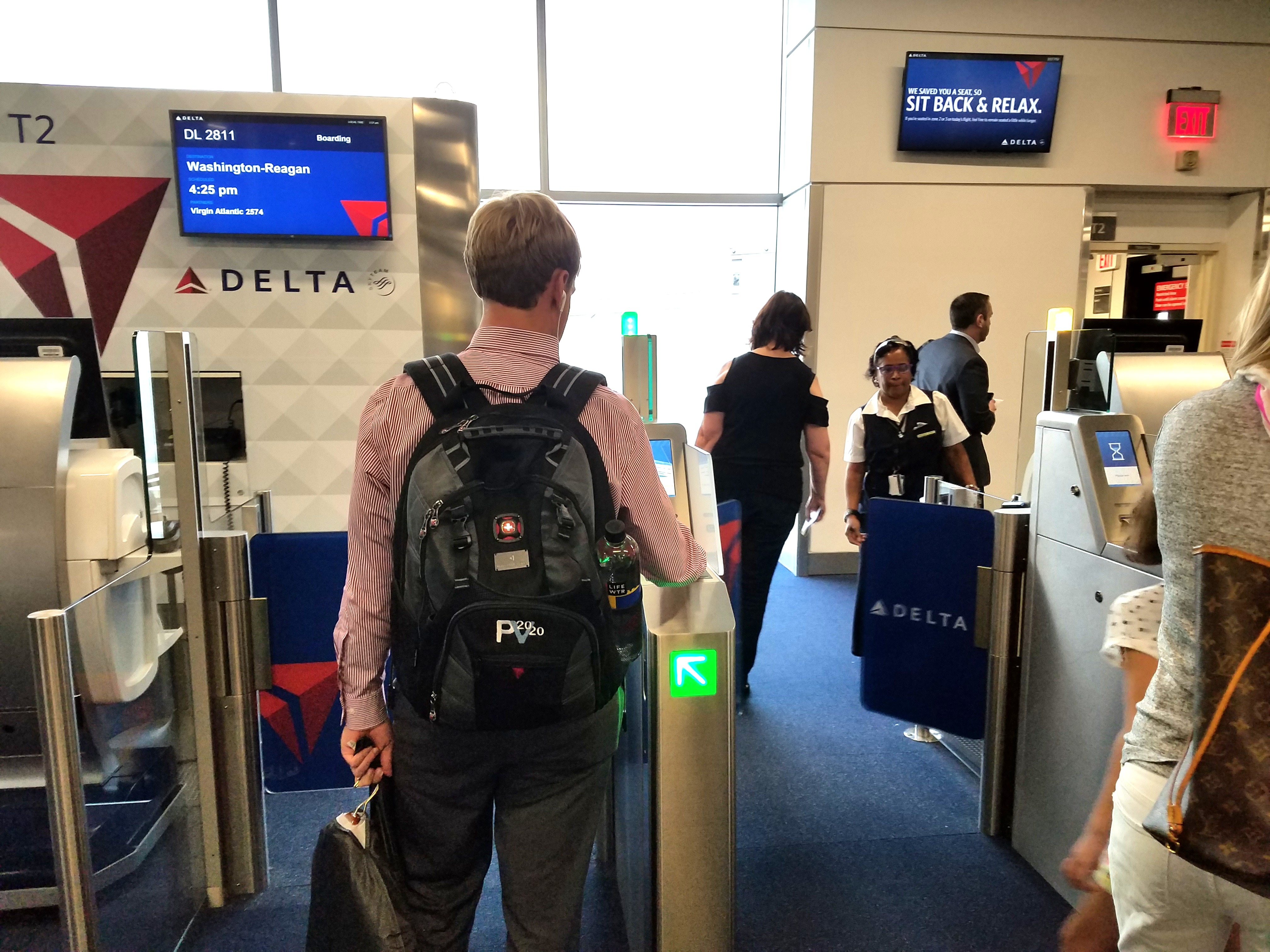
The value in being at the top of the list of flyers that do not clear for an upgrade is minimal. Still, the extra value in top status is not zero. I value being able to add an extra segment to an American Airlines itinerary as a backup when my flights are delayed, without having to make the decision to switch flights right away. For many flyers that’s pretty niche. For most it’s not worth chasing.
Delta works to convince flyers that extra legroom economy seats are an upgrade (“The biggest trick the devil in Atlanta ever played ws convincing flyers he doesn’t exist”). They even run an upgrade process to get into those seats. But that just reinforces the notion that status which is sufficient to get into these seats is all you need to work to attain.
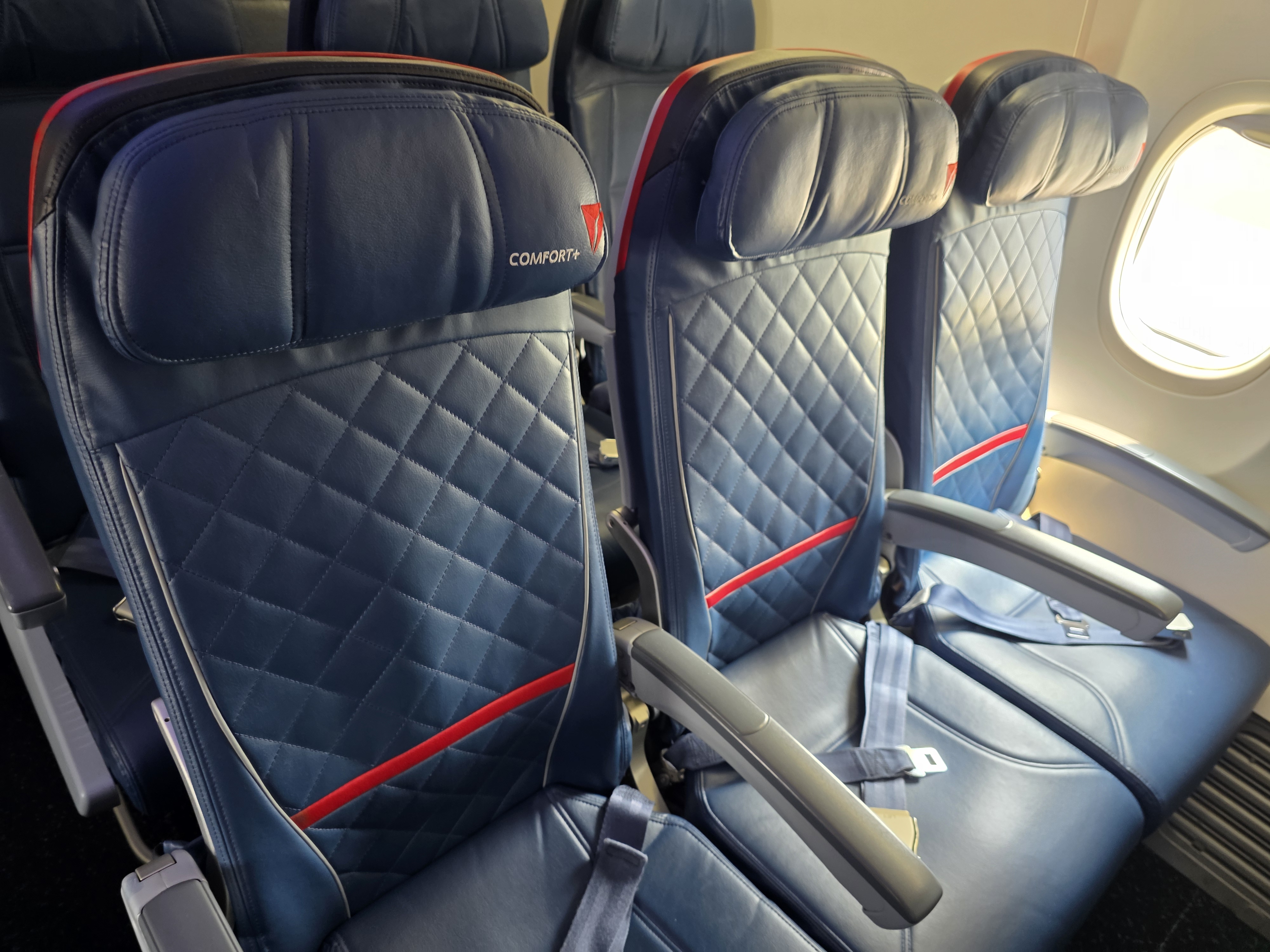
The problem for airlines isn’t just that this reduces the incentive for their best customers to keep flying with them. It’s that elite members are the ones most likely to get and spend on their credit cards. And they’ve been leaning into status as the biggest reason for these customers to focus their spending this way.
What I’d like to see is airlines return to offering meaningful benefits even in the face of monetizing unsold first class seats for tens of dollars to once a year customers rather than being willing to upgrade a $30,000 a year flyer into it.
- They could offer a discount on paid upgrades in lieu of complimentary upgrades.
American Airlines will already discount their tickets, including award tickets, all day long – employees and family members can book ‘AA20’ fares for 20% off. Other airlines have similar programs. So offering upgrades at 20% off for elites could make real sense. Similarly, cobrand cardmembers at Delta and United get discounts on award redemption (really, just charging non-cardmembers more). That model could be replicated with upgrades.
- They could bring back middle seat blocking on flights that aren’t full, keeping the seats next to top elite members empty until they’re actually needed at the gate. That’s easier to manage now that much of gate work is being automated.
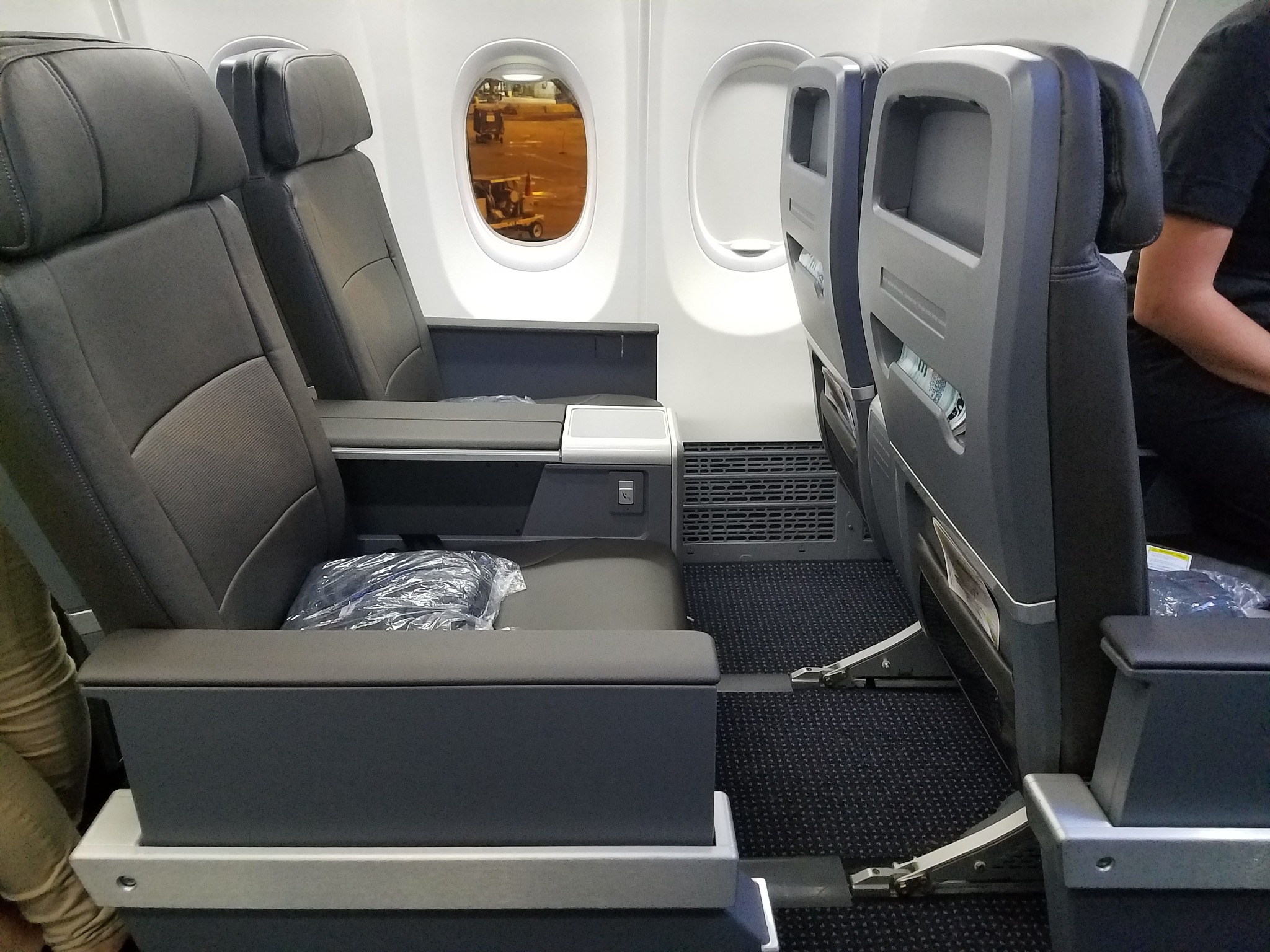
I use a $70 per hour rubric on whether it was worth paying to upgrade, though this is dependent on
- whether I think I’ll get the upgrade free, anyway (and the cheaper the upgrade, the more likely the airline thinks they won’t sell the seat) and
- what seat I already have (an exit row aisle makes me less likely to pay than a middle seat in back of regular coach).
The truth is though that on a flight up to 1,500 miles I’m perfectly happy with an exit row aisle, secured with status. And I’ve been.. fine? First class gets me a bit of extra seat width, but the meal isn’t worth the buy up and I’m generally not day drinking on domestic flights. I plug in and focus on work for the full flight and barely notice my surroundings.



Look on the bright side, Gary: You didn’t need that silly ole Concierge Key after all! *wink*
“they will sell once a year coach passengers an upgrade for $26 or $40 rather than giving it free to a $30,000 a year customer.”
Suppose we live in a Tim (Delta) Dunn world and Delta-is-always-right. Then this action is just a reveal that premium passengers are worth less than $26.
Selling first class for so cheap kind of ruins the allure of chasing status, huh? What’s the point anymore?
Gary – times have changed. The flying public has changed. There is no bimodal distribution you imply; no dichotomy between once-a-year flyer vs. $30,000 spenders.
Everybody wants to fly as much as they can now.
They took your advice to invest their money into peak experiences.
@L3 — Is Tim on vacation? He hasn’t been around in a little while. Hope it’s somewhere nice. Or, maybe he took their a359 to HKG and Xi re-educated him… @Mike Hunt, is travel to Hong Kong still advisable as an American?
@Manhattan West (EWR) — I should’ve asked you instead. How is the mainland treating foreigners these days? Are they scooping up tourists from Canada and Europe while the US is a no-go zone for a while? Or have the fuel shortages hit everyone hard? “Just asking questions.”
@1990: Xi will assert the right to extract all the data on your phone in HK, even for transiting passengers. I saw someone recommend to not go Cathay Pacific.
Great practical advice. Thanks!
@L3 — Is that… what Xi said? (Sorry, couldn’t resist). Yeah, Gary even posted about it a little while back. CX is a great airline for long-haul to E. Asia, but that is concerning. I suppose our government and corporations and data brokers are basically doing the same surveillance, too. Wish we had better privacy protections.
$100 for cross country upgrade to Delta One?! That’s freaking awesome for a free agent. I love it.
Have yet to receive an upgrade on any AA flight this year as EXP. It’s just been 17A. Which means I’ve decided to aim for Platinum Pro and be happy if I only hit Platinum same tangible perks as EXP and I can concentrate spend that will reward me better elsewhere. My lone flight on a status matched UA 1K ended up 12th on the list LAX-SFO on a Wednesday 3pm flight.
@UnitedEF — Yikes. That’s unlucky. @Gene, WFBF?
The sad reality is that most people – including airline elites – aren’t very savvy and don’t demand value for money. Delta figured this out when they gutted their frequent flyer awards (the birth of skypesos) and suffered no downside.So why “give away” stuff if your customers are too clueless or indifferent to care?
My Delta Diamond status ends next year. We have already adopted the WFBF mentality and shop based upon price and convenience. Flew my first American flight in over 15 years and it was just fine. Two of our last three international flights were not on Delta (and the one was only because I had a global upgrade to use). Our next international flight is already booked and also not Delta. They have shown no loyalty to long term clients and now we are reciprocating.
The true cost of these loyalty programs is being exposed; airlines were literally leaving millions of dollars of revenue behind by giving away their best product for free.
It looks like Delta has learned the lesson, no wonder they’re the most profitable US airline!
At the end of the day frequent travelers will travel whether they will be upgraded or not, but some who could afford business class would buy economy with the knowledge of being upgraded; now they are outright buying business class, increasing Delta’s revenues even more. And it’s not like frequent business travelers who are no longer being upgraded are now buying Spirit or American Airlines or Southwest Airlines; they’ll still be flying Delta or United.
No wonder nowhere else in the world are people being upgraded like they were in the USA
Just returned from Boston to Atlanta and Delta quoted over $500 for a last minute one-way, decided to book the Frontier non-stop the following day in row one (middle seat blocked) for $50.
Even stayed an extra night near Logan at the Avid Logan for little more than $100. Invested the $300 savings in SPY.
Wash, Rinse. Repeat.
Sums it up perfectly. And really is this so different from the 90s when you could buy e-sticker upgrades for $25/500 miles (later $50)?
The other thing on these cheap first upgrades to infrequent fliers is that airlines are also slightly cannibalizing their checked bag fees. If you can get two bags with your cut-rate first class buy up, why not just do that instead of paying whatever the prevailing rate is to check your bag(s)?!
Airline pricing for premium seats is absolutely wonky, and completely inexplicable.
I booked seats for myself and my partner CDG-DTW, returning home from a niece’s wedding and some dinners with friends. (European castle weddings seem to be the thing this year.)
I looked at AF, which has non-stop flights between Paris and Detroit. I looked at fares using miles, as cash pricing is exorbitant.. On my date of travel, I could secure Premium Economy for 95K miles and about $700 fees for each of us. I could (and did) secure Business Class for 60K miles and $900 per pax. BTW – PE for cash is $4K and Business is $6K on the same flight, per Kayak.
I didn’t think 95K and fees was exorbitant for PE, especially given the prices for fuel. But, business class for 35K miles LESS and only $200 more per pax is just crazy.
For the US based airline loyalty is being tied to profitability, not how much you fly the airline. I person that flys less but spends $50K on International business (say 4-5 trips a year) plus has the cc is far more preferential than a road warrior forced to buy only coach (usually it’s billable travel) through a corporate cc (for spend control) and doesn’t have the financial resources to pay for upgrades out of pocket (no not all road warrior jobs pay $350K+ a year).
@Retired Gambler — Zut alors! That does seem fancy. Did you check FlyingBlue with Air France? Sometimes they have decent redemptions in J.
@George Romey — So $50K is all it takes for Concierge Key these days? Well, well, well… Gary, there’s still hope!
With all the rule changes and games played with the airlines FF programs, I find that once I get to free bags, the benefits just aren’t worth the hoops you have to jump through for status when it comes domestic flying any more. I stopped playing the game a while ago.
@Bob Smith — You may be the wisest among us. Unless there is a confirmed, tangible benefit, it is all a bit of a racket.
Yes, status no longer matters and that is very sad. Upgrades for the cheap and FF’s left out in the cold. No longer ANY reason to be loyal to Delta, AA, United or the rest. The airlines, like the hotel programs are ruined,
If you want first class buy it and quit whining people. I was a 40 year road warrior and benefited greatly from upgrades as, at various times, top level in American’s, Delta’s (Royal Medallion anyone else), Continentals’s and USAirway’s programs. However times have changed and we aren’t going back to the past. Makes no sense to whine or reminisce about things you can’t change. Just adapt and mine on.
Well, I’ll stay loyal to Delta … because I have to, living as I do in a Delta hub (MSP).
And I’m spending other people’s money.
I’ve had Diamond status for the last 5 straight years, with very little outlay by me (OPM, as I said).
What no one has mentioned so far, is that Delta elites get a special customer service phone number to call … where the longest wait time I’ve had to endure is ONE minute!
That means a lot when your flight is canceled or delayed!
Where are these $26 upgrades Gary keeps writing about? I still haven’t seen anything close to that on AA. AA is currently pitching me economy to first on LAS-PHX (255 miles, 76 minutes) for $1,100 or 102.3K miles on their app. I’ll take my chance on the complimentary upgrade on that one.
Is this just Delta offering upgrades that low? As others say all the time, if you want to be in first, buy first.
I don’t have a problem with airlines wanting to make money on moves from Y to F. But, I can’t figure why, if they’re going to offer a $120 price to upgrade from LAX-ATL, they don’t first offer it to elites. Far game, you high staus pax get first crack at these bargains or just take your diminished chance it doesn’t get taken by someone later and there are no upgrade seats.
I have stated before, everytime I fly, I look at the upgrade list (out of curiosity, I pay for F/J). There will be, say, 1 or 2 seats that might be available and 30 on the list. 28 of 30 will not get the upgrade. Sell the upgrade: 30 of 30 don’t. 93% disappoint versus 100% isn’t much different. And in the latter case, the airlines has a few extra bucks.
I HOPE someone at DELTA is reading this too…I have been a loyal Delta flyer for years, but the change is noticeable and does NOT encourage me to want to continue as a Delta-only business flyer.
Let’s be realistic. The chances of getting a free upgrade on such a route are slim, even with top status and no upselling, because so many people are willing to pay full price. If I could buy it for $100, I would do so without complaining about it usurping my Diamond Medallion status.
I’m a Diamond Medallion Delta Flyer and it is NOT worth it. I’ll spend my $40k flight budget elsewhere from now on